
Apply for the African Centre for Vector Genomics Fully Funded Molecular Vector Surveillance Training in Cameroon: Apply by 9 June 2026 @Unknown
The African Centre for Vector Genomics has announced a fully funded international training programme in Molecular Vector Surveillance aimed at strengthening Africa’s scientific capacity to combat vector-borne diseases such as malaria and dengue.
The specialised programme will be hosted by the Centre for Research in Infectious Diseases and is funded by the Gates Foundation. The initiative forms part of broader continental efforts to improve disease surveillance, insecticide resistance monitoring, and evidence-based vector control strategies across Africa.
Applications for the programme are currently open, with the deadline set for 9 June 2026.
Programme Aims to Strengthen Africa’s Disease Surveillance Capacity
According to organisers, the AVecGen training programme seeks to equip African scientists, researchers, and public health professionals with advanced molecular and laboratory skills needed to study disease vectors and respond to emerging public health threats.
The programme is expected to support:
- Improved molecular surveillance of malaria and dengue vectors.
- Better understanding of vector population dynamics.
- Enhanced monitoring of insecticide resistance.
- Development of evidence-based disease control strategies.
- Increased scientific collaboration across African institutions.
The initiative also aligns with AVecGen’s long-term mission of building sustainable scientific expertise capable of responding to evolving health challenges linked to climate change, urbanisation, and shifting mosquito populations.
Intensive Training to Cover Advanced Molecular Techniques
Participants selected for the programme will undergo intensive practical and theoretical training focused on molecular entomology and vector genomics.
Key training areas include:
- General concepts of insect genomes and genomics.
- Transcriptomics and genomics for mosquito studies.
- Molecular surveillance of malaria transmission risk.
- Molecular mechanisms behind insecticide resistance.
- Mosquito population genetics and gene flow analysis.
Organisers said the programme is designed to bridge laboratory research with real-world public health applications, enabling participants to translate scientific findings into practical vector control interventions.
Fully Funded Opportunity for African Scientists
The AVecGen training programme will be fully funded for all selected participants.
Benefits provided include:
- Coverage of travel expenses.
- Accommodation during the training period.
- Access to laboratory facilities and practical sessions.
- Opportunities to network with leading researchers and practitioners.
The programme will run in person for 10 days at the Centre for Research in Infectious Diseases in Yaoundé, Cameroon, beginning in August 2026.
Programme Encourages Diversity and Inclusion
AVecGen has emphasised its commitment to diversity, equity, and inclusion in the selection process.
The organisation is particularly encouraging applications from:
- Women scientists and researchers.
- Early-career scientists.
- Researchers from underrepresented regions.
- Applicants from resource-limited settings across Africa.
According to organisers, building inclusive scientific communities is critical to advancing sustainable public health research and strengthening disease surveillance systems throughout the continent.
Eligibility Requirements for Applicants
To qualify for the training programme, applicants must meet several academic and professional requirements.
Eligible applicants must:
- Be citizens of an African country.
- Have a background or strong interest in entomology, vector biology, genetics, or related disciplines.
- Possess basic understanding of molecular biology and genetics.
- Demonstrate familiarity with laboratory techniques.
- Have basic computer literacy skills.
- Show motivation to apply acquired skills in research or public health practice.
The organisers clarified that prior advanced experience in molecular entomology is not mandatory, although applicants should demonstrate readiness to fully benefit from the programme.
Wide Range of Professionals Eligible to Apply
The training programme is open to applicants from diverse scientific and public health backgrounds.
Target participants include:
- Researchers in molecular biology and genetics.
- Entomologists and vector biology specialists.
- Public health professionals.
- Vector control practitioners.
- MSc and PhD students.
- Early-career researchers.
- Staff from national malaria control programmes.
- Personnel from governmental, academic, and research institutions.
The organisers hope the programme will help strengthen regional collaboration among scientists working on infectious disease control and vector surveillance.
Important Application Dates Announced
Interested candidates are required to submit their applications through the programme’s official online application platform.
Key dates include:
- Application Deadline: 9 June 2026.
- Notification of Shortlisted Candidates: 18 June 2026.
- Training Start Date: August 2026.
The training programme comes at a time when African countries continue to face growing challenges from vector-borne diseases, climate-related health risks, and increasing insecticide resistance among mosquito populations.
By expanding access to advanced molecular surveillance training, AVecGen and CRID aim to strengthen Africa’s capacity to generate high-quality scientific evidence and improve disease prevention strategies across the continent.
VISIT OFFICIAL WEBSITE HERE
For more opportunities such as these please follow us on Facebook, Instagram, Twitter, LinkedIn and WPChannel
Disclaimer: Global South Opportunities (GSO) is not the organization offering this opportunity. For any inquiries, please contact the official organization directly. Please do not send your applications & CVs to GSO, as we are unable to process them. Due to the high volume of emails, we receive daily, we may not be able to respond to all inquiries. Thank you for your understanding
JOIN GSO WHATSAPP CHANNEL NOW
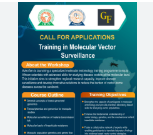
Apply for the African Centre for Vector Genomics Fully Funded Molecular Vector Surveillance Training in Cameroon: Apply by 9 June 2026
@Unknown
Location
Global
Work Mode
fellowship
Posted
about 2 hours ago
Beware of scams! When applying for jobs, you should NEVER have to pay anything. Learn more.
Get jobs in your inbox
Join over 10,000 subscribers receiving our weekly newsletter.
You might also like
Apply for the Prestigious 2027 Canon Foundation Japan-Africa Research Fellowship Programme
Africa Research Fellowship Programme
University of Chicago Harris Applied Data Fellowship (ADF) Opens Rolling Applications for Data and Policy Professionals 2026
Unknown
Eastern and Southern Africa Regional Youth Exchange on SRHR 2026/27: Call for Applications
Unknown
Wang Gungwu Visiting Fellows Programme 2027 in Singapore: Fully Funded Fellowship for Researchers and Policy Makers
Unknown
Free Online Courses
University of Birmingham
Women Delegates Negotiation Training
United Nations Convention to Combat Desertification (UNCCD)