
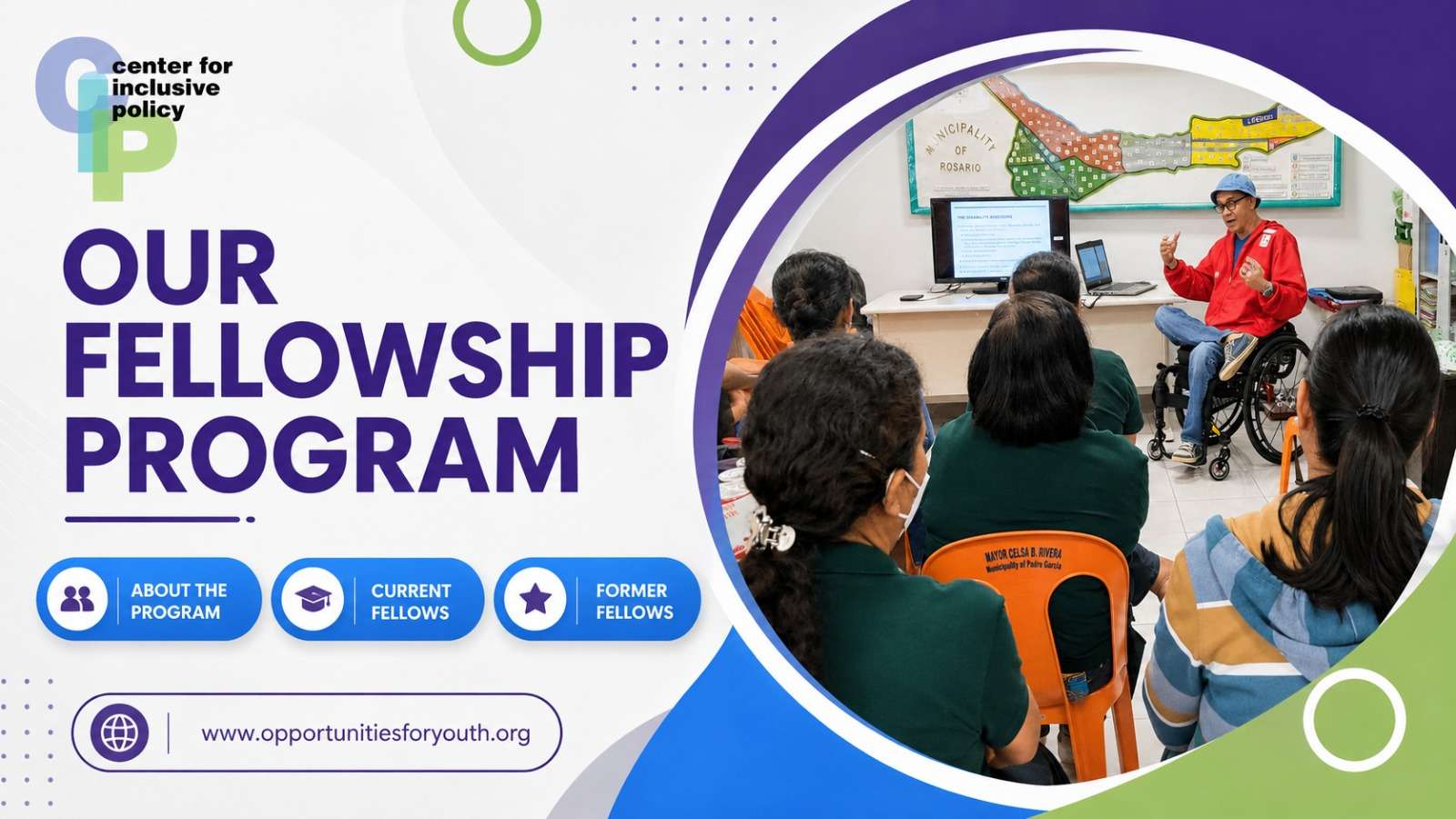
CIP Fellowship Programme @Unknown
Emerging researchers with disabilities from low- and middle-income countries (LMICs) now have an outstanding opportunity to strengthen their research skills, expand their policy influence, and contribute to disability-inclusive development through the CIP Fellowship Programme 2026.
Applications are currently open for this highly impactful 12-month online fellowship, which aims to empower persons with disabilities who are passionate about research, social policy, disability rights, and inclusive development. Through mentorship, financial support, specialized training, and access to a global network, fellows will gain the tools necessary to become influential voices in disability policy and evidence-based advocacy.
The fellowship begins on October 1, 2026, and applications must be submitted by July 31, 2026, at midnight EDT.
What Is the CIP Fellowship Programme?
The CIP Fellowship Programme is a year-long online initiative designed to strengthen the research and policy skills of emerging researchers with disabilities living in low- and middle-income countries.
The programme focuses on building local research capacity while ensuring that persons with disabilities are actively involved in generating evidence, influencing policies, and shaping disability-inclusive development initiatives.
Unlike fellowships designed for senior academics, this programme specifically targets individuals who already possess basic research experience and want to further develop their expertise, professional networks, and leadership potential.
The fellowship recognizes that persons with disabilities are uniquely positioned to conduct research that reflects lived experiences and local realities. By supporting emerging researchers, the programme contributes to more inclusive and representative disability research worldwide.
Fellowship Objectives
The CIP Fellowship Programme is built around three key objectives.
1. Strengthening Local Research Capacity
The programme seeks to empower researchers with disabilities to:
- Design locally relevant research projects
- Generate evidence rooted in lived experiences
- Address disability-related challenges within their own countries
- Produce research that informs policy and practice
By supporting local researchers, the fellowship ensures that disability policy discussions are informed by context-specific evidence rather than external assumptions.
2. Connecting Fellows to Global Policy Discussions
Selected fellows will become part of international conversations on:
- Disability rights
- Inclusive development
- Social protection
- Community support systems
- Independent living
- Inclusive policymaking
The fellowship aligns with the principles of the United Nations Convention on the Rights of Persons with Disabilities (CRPD) and helps ensure that fellows can contribute to global disability policy discussions.
3. Mentoring Disability Advocates and Researchers
The programme provides structured mentorship to individuals working in disability advocacy, policy development, and social research.
Through expert guidance, fellows will:
- Strengthen research skills
- Expand professional networks
- Improve policy engagement capabilities
- Enhance their ability to influence disability-inclusive policies
Fellowship Benefits
Selected fellows receive a comprehensive package of financial and professional support.
Monthly Fellowship Stipend
Each fellow will receive:
- USD $1,000 per month
- Funding provided for 12 months
This represents a total stipend of:
- USD $12,000 over the fellowship period
Additional Research and Professional Development Funding
Fellows may also access:
- Up to USD $2,000 for research-related costs
- Conference participation support
- Funding for additional training opportunities
- Sponsorship for professional development activities
Reasonable Accommodation Support
The programme is committed to accessibility and inclusion.
Reasonable accommodation costs necessary for participation will be fully covered, helping ensure equal access for all fellows.
Expert Training Curriculum
Participants gain access to:
- A structured online training programme
- Sessions led by leading international researchers
- Capacity-building workshops
- Research methodology training
- Policy engagement guidance
Individual Mentorship
Each fellow is matched with a mentor who will:
- Guide their research project
- Provide professional advice
- Support skill development
- Offer feedback throughout the fellowship year
Global Networking Opportunities
Fellows also receive opportunities to:
- Participate in CIP research projects
- Collaborate with international researchers
- Join a growing network of disability advocates
- Engage with policy professionals worldwide
Research Areas of Interest
The fellowship is seeking applicants interested in disability-related research and policy issues.
Priority areas include:
Disability Data
Research on:
- Disability statistics
- Data collection methods
- Disability measurement
- Evidence-based policymaking
Social Protection
Projects focused on:
- Income support
- Disability benefits
- Social welfare systems
- Poverty reduction strategies
Care and Support
Research examining:
- Care systems
- Family support
- Personal assistance services
- Long-term support arrangements
Inclusive Budgeting
Studies exploring:
- Public expenditure
- Disability-inclusive budgeting
- Resource allocation
- Fiscal inclusion
Community Support Systems
Research on:
- Local support structures
- Community-based services
- Inclusive development approaches
- Social participation
Independent Living
Projects focused on:
- Autonomy
- Accessibility
- Community inclusion
- Rights-based support systems
New Disability Data Fellowship Track
In addition to the standard fellowship programme, CIP is recruiting participants for a specialized Disability Data Fellowship.
This innovative track focuses on strengthening skills related to:
- Quantitative data collection
- Disability-inclusive data systems
- Data interpretation
- Data-driven advocacy
- Statistical analysis
- Research communication
Fellows will receive practical experience and training on how disability data can be used to promote inclusion and influence policy decisions.
Participants will also develop the capacity to support governments, organizations, and institutions in collecting and utilizing disability-inclusive data.
Who Should Apply?
The fellowship is looking for individuals who meet the following criteria:
Required Eligibility
Applicants must:
- Be a person with a disability
- Be based in a low- and middle-income country or the Global South
- Hold an undergraduate degree
- Possess basic research skills
- Be interested in social policy and disability equality
- Be connected to the disability movement
- Be motivated to strengthen research skills
- Have sufficient English proficiency for participation
Language Requirements
Applicants should have:
- Working written English skills
- Ability to understand everyday English communication
- Basic spoken English communication skills
Importantly, spoken English proficiency is not required for sign language users, as interpretation support will be provided.
No Age Restrictions
One of the most inclusive aspects of the programme is that there is:
- No minimum age beyond educational requirements
- No upper age limit
Applicants of all ages are encouraged to apply.
Who Is Not Eligible?
The fellowship is not intended for:
- Senior researchers
- Established academics
- Researchers with extensive United Nations agency experience
- Applicants whose work is unrelated to disability issues
- Applicants from countries restricted under OFAC regulations
Application Requirements
Applicants must submit the following materials.
1. Research Proposal (Maximum Three Pages)
The proposal must focus on disability policy in the applicant’s own country and include:
- Introduction
- Research question
- Methodology
- Data and methods
- Expected results
- Timeline demonstrating completion within 12 months
Formatting requirements:
- Arial font size 12
- 2.5 cm margins on all sides
- Maximum three pages
2. Updated Curriculum Vitae (CV)
Applicants should provide a current CV outlining:
- Educational background
- Research experience
- Professional achievements
- Relevant disability advocacy work
3. Cover Letter
The cover letter should explain:
- Motivation for applying
- Research interests
- Career goals
- Commitment to disability inclusion
4. Two References
Applicants must provide two professional or academic references who can speak to their qualifications and potential.
Guidance on AI Use
The programme does not prohibit the use of artificial intelligence tools.
However, applicants are strongly advised not to rely on AI-generated:
- Research questions
- Research methodologies
Instead, CIP encourages applicants to present their original ideas clearly and concisely, preferably using bullet points where appropriate.
How to Apply
Click here for more and to apply
Applicants should ensure that all required documents are included before submission.
Important Deadline
Application Deadline
July 31, 2026 (Midnight EDT)
Late applications may not be considered, so interested candidates are encouraged to prepare and submit their materials well before the deadline.
Final Thoughts
The CIP Fellowship Programme 2026 represents a transformative opportunity for emerging researchers with disabilities across low- and middle-income countries. With financial support worth up to USD $14,000, expert mentorship, accessibility accommodations, specialized training, and access to a global network of disability advocates and researchers, the programme equips fellows with the skills and resources needed to influence policy and advance disability rights.
For aspiring researchers committed to creating inclusive societies and evidence-based disability policies, this fellowship offers a unique platform to develop expertise, strengthen leadership capacity, and contribute to meaningful change at local, national, and international levels.
For more global fellowship opportunities click here
CIP Fellowship Programme
@Unknown
Location
USA / Global
Work Mode
continent
Posted
about 3 hours ago
Beware of scams! When applying for jobs, you should NEVER have to pay anything. Learn about job scams.
Get jobs in your inbox
Join over 10,000 subscribers receiving our weekly newsletter.
You might also like

Technology Fellow: AI and Philanthropy
Ford Foundation
Pallas Foundation Fellowship Fall 2026
Pallas Advisors
New Commons Incubator for Indigenous Languages and Cultures 2026: Fully Supported Six-Month Program for Indigenous-Led Teams Developing Data Commons Projects
The GovLab

Graduate Fellowship in Ecology and Evolution
Simons Foundation

Policy Futures Programme 2026–2027 in the UK: Earn a £30,000 Salary While Launching Your Career in Public Policy Research
2027 in the UK: Earn a £30,000 Salary While Launching Your Career in Public Policy Research
