
Back to jobs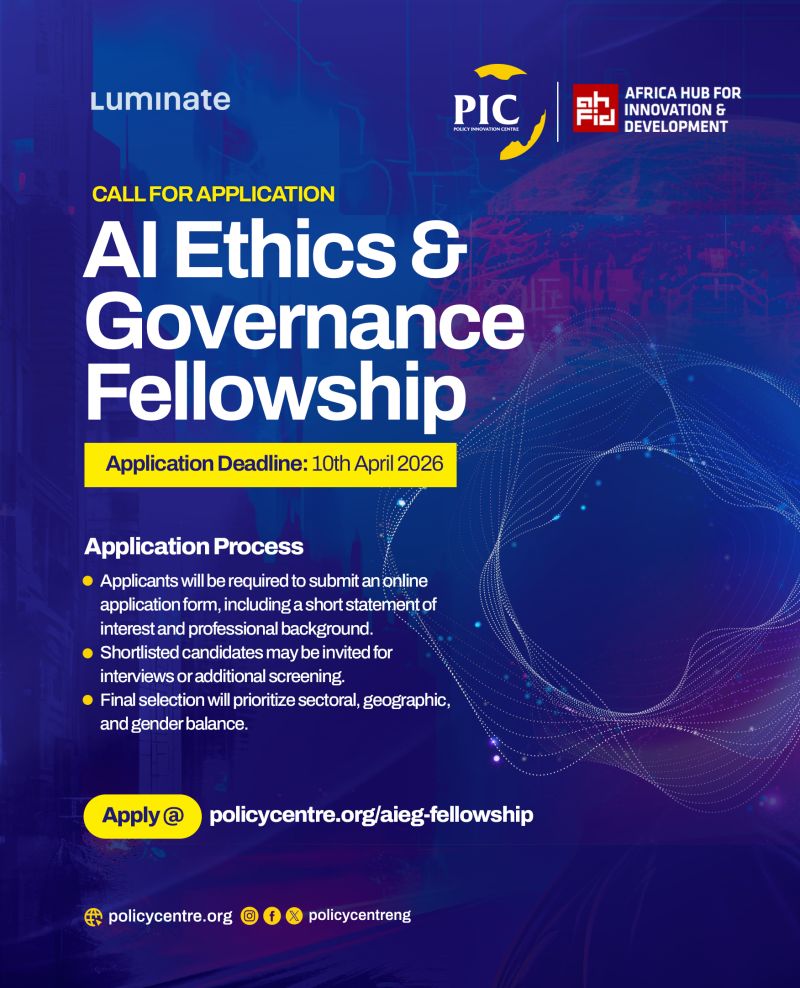
Fully Virtual AI Ethics & Governance Fellowship – Pan-African Program: Apply by 10 April 2026 @Pan-African Program: Apply by 10 April 2026
about 4 hours ago·Pan-African Program: Apply by 10 April 2026 is hiring a Fully Virtual AI Ethics & Governance Fellowship – Pan-African Program: Apply by 10 April 2026·📍 Location: Global
Overview
The AI Ethics & Governance Fellowship is a transformative, Pan-African initiative designed to equip leaders with the knowledge, tools, and networks needed to develop responsible, rights-based AI governance frameworks tailored to African contexts. The program blends advanced training, mentorship, and hands-on projects to prepare participants to shape AI policy and governance across the continent.
Eligibility Criteria
- Be a Nigerian citizen or African residing on the continent.
- Commit 6–8 hours weekly for three months to the virtual program.
- Have reliable internet connectivity and access to a laptop or equivalent device.
- Demonstrate interest or experience in AI, digital policy, ethics, governance, or technology regulation.
- Be willing to participate fully virtually and engage in peer learning and mentorship.
- Possess basic digital literacy for virtual collaboration and document management.
- Women and youth are strongly encouraged to apply.
- Candidates currently in policy-influencing roles, technology deployment, or AI research are preferred.
- Be proficient in English, the program delivery language.
Key Outcomes
- Learn to design AI governance frameworks that are contextually relevant to African countries.
- Build practical policy tools, audits, and accountability systems for AI-driven technologies.
- Gain access to a pan-African network of AI policy leaders, fostering collaboration and peer learning.
- Complete a capstone project with tangible, real-world policy impact.
Benefits
- Advanced training in AI ethics, policy, and governance.
- Mentorship from African and global experts in AI and policy.
- Opportunity to work on a hands-on capstone project that produces real policy outcomes.
- Certificate of completion issued by the program partners.
- Access to a pan-African alumni network and professional peer community.
How to Apply
- Submit an online application form, including a short statement of interest and professional background.
- Shortlisted candidates may be invited for interviews or additional screening.
- Final selection considers sectoral, geographic, and gender balance.
Deadline
10 April 2026
Fully Virtual AI Ethics & Governance Fellowship – Pan-African Program: Apply by 10 April 2026
@Pan-African Program: Apply by 10 April 2026
fellowship
fellowships
Location
Global
Job Type
fellowship
Posted
about 4 hours ago
Beware of scams! When applying for jobs, you should NEVER have to pay anything. Learn more.
You might also like
Learn Online for FREE!! FAO eLearning Academy provides Free, Multilingual, Certified Online Courses
Unknown
Global
fellowship
University of Oxford is Seeking for a CSAE Predoctoral Fellow – Apply By 6 April 2026
Apply By 6 April 2026
Global
fellowship
Changemakers for Equality Programme 2026–2027: Applications Now Open for Young Social Innovators
2027: Applications Now Open for Young Social Innovators
Global
fellowship
CARIBEquity Investment Training Program 2026: Strengthening Investor Capacity and Unlocking Capital in the Caribbean
Unknown
Global
fellowship
Black in Business Program 2026: A Fully Funded Opportunity to Grow Your Business, Increase Revenue, and Create Jobs
Unknown
Global
fellowship
Call for Applications: Chatham House Academy Fellowships 2026–2027
2027
Global
fellowship