
Postdoctoral Research Fellow in AI and Climate Science @University of Cape Town
The University of Cape Town has announced applications for two prestigious Postdoctoral Research Fellowships focused on the use of Artificial Intelligence (AI) and Machine Learning (ML) in climate science and climate risk management.
The fellowships will be hosted by the Climate System Analysis Group within the Department of Environmental and Geographical Science at UCT.
The positions are supported through the Quadrature Climate Foundation Postdoctoral Science Fellowship Programme, which funds early-career researchers conducting high-impact climate adaptation research.
The initiative aims to strengthen research capacity at the intersection of AI, climate science, policy, and humanitarian action, particularly within the African context.
Research Focus on Climate Risk and Artificial Intelligence
The fellowships are designed for researchers interested in applying AI and ML technologies to pressing climate-related challenges.
According to the announcement, successful fellows will work on areas including:
- Climate vulnerability modeling and mapping
- Extreme weather forecasting and prediction
- Climate impact modeling
- Anticipatory action and humanitarian response
- Climate adaptation and resilience planning
- AI-supported climate risk management systems
Researchers will also examine broader issues associated with AI deployment, including ethics, algorithmic bias, explainability, and responsible use of data.
The Climate System Analysis Group says the program seeks to develop innovative approaches that combine climate science with practical decision-making tools for vulnerable communities and policymakers.
Three Major Research Challenge Areas
The fellowship program identifies three major thematic areas for potential research.
1. Translating Climate Science into Actionable Decision-Making
The first challenge area focuses on improving how climate science and climate modeling outputs are translated into practical information for climate risk management.
Potential research topics include:
- Climate risk narratives and storytelling frameworks
- Integration of climate models with social and economic vulnerability data
- Compounding and cascading climate-related events
- Seasonal to long-term climate risk analysis
- Humanitarian and policy applications of climate science
This work builds on previous climate risk narrative research developed through international climate adaptation programs.
2. AI and Machine Learning Applications in Climate Risk Management
The second focus area examines the opportunities and risks of applying AI and ML to climate science and disaster preparedness.
Research opportunities include:
- AI-assisted forecasting systems
- Vulnerability and exposure analysis
- Climate impact prediction models
- Automated climate data interpretation
- Ethical AI frameworks for climate applications
The program also encourages critical research into potential risks associated with AI systems, including bias, errors, hallucinations, and transparency concerns.
3. Climate Risk Management Across Timescales
The third thematic area addresses the growing concern that short-term climate responses may unintentionally increase long-term vulnerability or maladaptation.
Potential research areas include:
- Aligning disaster risk reduction with climate adaptation policy
- Long-term climate resilience planning
- Integrated approaches to humanitarian response and adaptation
- Multi-timescale climate information systems
- Strategies to reduce maladaptation risks in vulnerable communities
Researchers will be encouraged to develop evidence-based approaches that bridge short-term disaster management and long-term climate adaptation planning.
Fellowship Structure and Research Environment
Successful fellows will spend their first three months working closely with researchers from the Climate System Analysis Group and the Red Cross Red Crescent Climate Centre to refine their research focus.
The fellowship offers access to a multidisciplinary research environment that spans:
- Climate modeling
- Hydrology and agricultural systems
- Vulnerability and resilience studies
- Social science and adaptation research
- High-performance computing infrastructure
Fellows will also engage with humanitarian and policy-focused work through the Red Cross Red Crescent Climate Centre, gaining exposure to topics such as:
- Anticipatory humanitarian action
- Social protection systems
- Climate and conflict dynamics
- Humanitarian policy and resilience planning
Eligibility Requirements
Applicants must have completed a doctorate within the past five years and must not previously have held a full-time permanent academic or professional post.
Eligible academic backgrounds include:
- Climate science and forecasting
- Climate system analysis
- Machine learning and data science
- Artificial intelligence development or applications
Applicants are expected to demonstrate:
- Strong research and publication records
- Excellent English communication skills
- Interdisciplinary collaboration experience
- Commitment to climate justice and adaptation in Africa
Additional desirable skills include:
- Advanced Python programming
- Scientific visualization expertise
- Knowledge of explainable AI and AI ethics
- Teaching or training experience
Applicants must also have legal authorization to reside and work in South Africa, as visa sponsorship is not available for the positions.
Fellowship Funding and Benefits
The fellowship provides substantial research support for a two-year period.
Key benefits include:
- Annual funding between R500,000 and R540,000
- Additional support for conference travel and research activities
- Access to IT and high-performance computing resources
- Tax-exempt fellowship funding under South African regulations
The fellowship does not include employment benefits such as medical aid or retirement contributions.
Application Process and Deadline
Applicants are required to submit the following in a single PDF document:
- A motivation letter outlining research interests and suitability
- A detailed academic CV
- Publication records and scholarly outputs
- Contact details for two academic referees
- A published writing sample
Applications and enquiries should be sent to Dr Christopher Jack at cd.jack@uct.ac.za with the subject line:
“QCF PDRF Fellowship”
The University of Cape Town has stated that it reserves the right to reject incomplete or ineligible applications or to make no appointments.
For more opportunities such as these please follow us on Facebook, Instagram, Twitter, LinkedIn and WPChannel
Disclaimer: Global South Opportunities (GSO) is not the organization offering this opportunity. For any inquiries, please contact the official organization directly. Please do not send your applications & CVs to GSO, as we are unable to process them. Due to the high volume of emails, we receive daily, we may not be able to respond to all inquiries. Thank you for your understanding
JOIN GSO WHATSAPP CHANNEL NOW
JOIN THIS WHATSAPP CHANNEL NOW

Postdoctoral Research Fellow in AI and Climate Science
@University of Cape Town
Location
USA / Global
Work Mode
opportunity
Posted
about 7 hours ago
Beware of scams! When applying for jobs, you should NEVER have to pay anything. Learn about job scams.
Get jobs in your inbox
Join over 10,000 subscribers receiving our weekly newsletter.
You might also like

United Nations (OHCHR) Opens Recruitment for Human Rights Officer (P-3) Role in Pretoria Focused on Southern Africa
3) Role in Pretoria Focused on Southern Africa
Global Health Introductory Fellowship Opens Applications Ahead of 21 June Deadline: Free Online 6-Week Programme Aims to Strengthen Global Health Understanding and Policy Skills
Week Programme Aims to Strengthen Global Health Understanding and Policy Skills
Technical Operations Internship
Greenpeace International

Biodiversity COP17 Reporting Fellowship
Earth Journalism Network

Research Grants for PhD Candidates and Early Career Researchers
German Academic Exchange Service
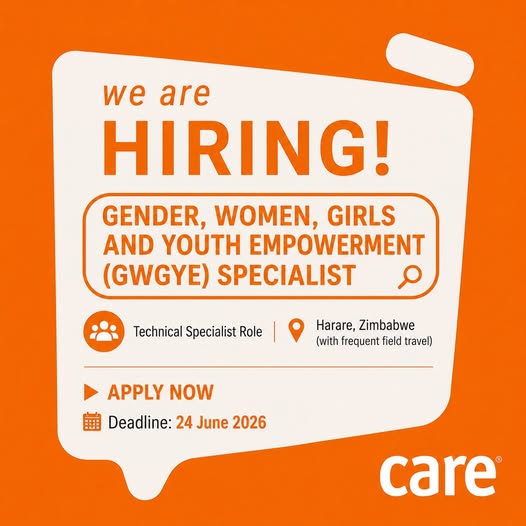
Gender, Women, Girls and Youth Empowerment Specialist
CARE International Zimbabwe