
Spencer Foundation Research-Practice Partnerships Grant 2026: Up to $400,000 for Collaborative Education Research and Educational Change @Practice Partnerships Grant 2026: Up to $400,000 for Collaborative Education Research and Educational Change
The Spencer Foundation Research-Practice Partnerships Grant 2026 is a major funding opportunity for researchers, educators, policymakers, community organizations, universities, school systems, and other stakeholders working together to improve education through evidence-based research.
Designed to strengthen long-term collaboration between academic researchers and education practitioners, the Research-Practice Partnership Grants Program supports projects that address pressing education challenges while centering equity, shared decision-making, and practical change. Successful applicants can receive up to $400,000 in funding for projects lasting up to three years.
The programme is open to applicants from the United States and around the world, making it a valuable opportunity for education-focused partnerships in Ghana, across Africa, and internationally.
About the Spencer Foundation Research-Practice Partnerships Grant
The Research-Practice Partnership, often called RPP, Grants Program is offered by the Spencer Foundation to support collaborative education research. The programme recognizes that meaningful and sustainable improvements in education often require researchers, practitioners, policymakers, families, communities, and institutions to work together over time.
Rather than supporting research that is designed only by academics, this grant encourages partnerships where multiple stakeholders contribute their knowledge, lived experience, professional expertise, and perspectives. The aim is to generate research that is academically rigorous while also responding directly to real challenges in education policy and practice.
The Spencer Foundation views research-practice partnerships as an important way to create new knowledge, improve educational systems, and support learners, educators, families, and communities. Projects may focus on education in schools, universities, community centres, museums, parks, workplaces, informal learning environments, and other spaces where teaching and learning take place.
The programme is especially interested in partnerships that can demonstrate a history of meaningful collaboration and a shared commitment to long-term educational change.
Funding Amount and Project Duration
Successful Research-Practice Partnership Grant applicants may receive funding of up to $400,000.
The proposed project duration must not exceed three years. This allows partnerships to develop, test, expand, and evaluate research activities while also investing in the relationships, systems, communication structures, and capacity needed to sustain their work.
The total grant budget may include indirect costs or overhead charges of up to 15 percent. Applicants must ensure that their total budget, including allowable indirect costs, remains within the $400,000 funding limit.
What Types of Projects Can Be Funded?
The Spencer Foundation expects research to be the central component of every proposed project. However, the grant can also support related activities that strengthen the partnership and improve the likelihood that research findings will lead to meaningful educational change.
Funded projects may include new research studies or the expansion of existing research activities. Examples may include participatory research involving learners and families as co-researchers, design-based research focused on classroom practice, policy implementation research, needs assessments with community partners, randomized studies of educational interventions, and descriptive research examining learner outcomes.
The programme welcomes a wide range of research methods and approaches. Applicants are encouraged to select methods that are appropriate for their research questions, partnership structure, community context, and desired educational outcomes.
In addition to research, the grant may support research infrastructure. This can include the development of surveys, assessment tools, data systems, research instruments, data archives, matching systems, consent forms, data privacy protocols, ethics review processes, and shared research procedures.
Funding may also support outreach, communications, and relationship-building activities. Partnerships may use funds to convene researchers, teachers, learners, families, community members, policymakers, and other stakeholders to co-design research agendas. Projects may also hire communications specialists, develop dissemination strategies, prepare public reports, produce research publications, or create materials that help communities understand and use research findings.
Capacity development is another important area that may be funded. For example, a partnership may use the grant to strengthen the ability of practitioners to use research evidence and data in everyday decision-making. Funding may also support graduate students, early-career researchers, educators, and professionals who need training in collaborative research, public scholarship, research communication, or partnership-based approaches to education improvement.
Strong Focus on Educational Equity
A central feature of the Spencer Foundation Research-Practice Partnerships Grant is its focus on equity in education.
Applicants are expected to explain how their partnership addresses inequalities in education and how the proposed work seeks to disrupt the reproduction or deepening of inequities. This means proposals should consider who experiences barriers in education, why those barriers exist, and how research and partnership activities can contribute to more inclusive, fair, and effective educational systems.
The Foundation encourages partnerships that engage community-based organizations, families, policymakers, scholars, institutions of higher education, rural communities, and settings outside the United States. This creates an important opportunity for international partnerships, including those working on education access, quality, inclusion, teacher development, learning outcomes, policy reform, community engagement, and educational equity in African countries.
Eligibility Requirements for Applicants
Applicants must submit proposals for research and related activities that support a collaborative partnership between academic researchers and education practitioners.
The Principal Investigator and Co-Principal Investigators should have an earned doctorate in an academic discipline or professional field, or professional experience that is appropriate for the programme. A practitioner or policymaker serving as a PI or Co-PI does not necessarily need a doctorate if they have suitable professional experience.
Graduate students can participate in the research team and may receive support through the project. However, graduate students cannot be listed as the Principal Investigator or Co-Principal Investigator.
The Principal Investigator must be affiliated with a non-profit organization or a public/government institution that can serve as the administering organization if the grant is awarded. The Spencer Foundation does not award grants directly to individuals.
Eligible administering organizations may include public or non-profit colleges and universities, school districts, research institutions, government institutions, and non-profit organizations. For organizations outside the United States, an equivalent non-profit status is required.
The PI can be either the researcher or the practitioner/policymaker within the partnership. However, at least one Co-PI should come from the other partner organization or sector. This requirement helps ensure that the project is genuinely collaborative and does not operate as a one-sided research arrangement.
Application Deadline for the Spencer Foundation RPP Grant 2026
Applications for the 2026 Research-Practice Partnerships Grant opened on May 12, 2026.
The pre-proposal deadline is July 10, 2026, at 12:00 PM Noon Central/Chicago Time.
Applicants whose pre-proposals are selected will be invited to submit a full proposal. The deadline for invited full proposals is October 28, 2026, at 12:00 PM Noon Central/Chicago Time.
Applicants should note that the programme accepts pre-proposals once each year. It is therefore important to begin preparing early, especially because strong applications require evidence of a functioning partnership, a clear governance structure, shared research priorities, and a compelling explanation of how the project will improve education.
How to Apply for the Spencer Foundation Research-Practice Partnerships Grant
The application process begins with a pre-proposal submitted through the Spencer Foundation’s online application portal.
The pre-proposal narrative must be submitted as one PDF document and should not exceed 1,350 words. It should be double-spaced and use a font size of at least 11 points.
Applicants are expected to include a description of the education problem or issue being addressed, the significance of the problem, the role of equity in the project, the history and structure of the partnership, the research questions, and a summary of the proposed research and partnership activities.
The pre-proposal should also explain the project’s contribution to theoretical and empirical knowledge, as well as its contribution to understanding equity-oriented research-practice partnerships.
Applicants must also submit a draft budget and budget justification. The budget and justification should not exceed two pages. References are also strongly encouraged and may be included separately.
Applicants should ensure that all PIs and Co-PIs are registered and connected to the proposal in the SmartSimple application system before submission.
Only applicants invited after the pre-proposal review stage will be allowed to submit a full proposal.
Why This Grant Matters for Education Partnerships
The Spencer Foundation Research-Practice Partnerships Grant is more than a funding opportunity. It is an opportunity for education stakeholders to build stronger, more equitable, and more sustainable ways of solving education challenges.
For universities, schools, government agencies, non-profits, teacher education institutions, and community organizations, the programme provides resources to move beyond short-term projects and develop research partnerships that can generate practical solutions over time.
For partnerships in Ghana and across Africa, the grant can support research on issues such as access to quality education, inclusive education, teacher development, digital learning, educational leadership, school-community relationships, learning outcomes, gender equity, rural education, policy implementation, and youth development.
Applicants should focus on building a proposal that clearly demonstrates trust between partners, shared governance, a strong research plan, meaningful community engagement, and a realistic pathway from research findings to improved policy or practice.
Deadline: 10th July,2026
For more information about this opportunity, click here.
For more global opportunities, click here.
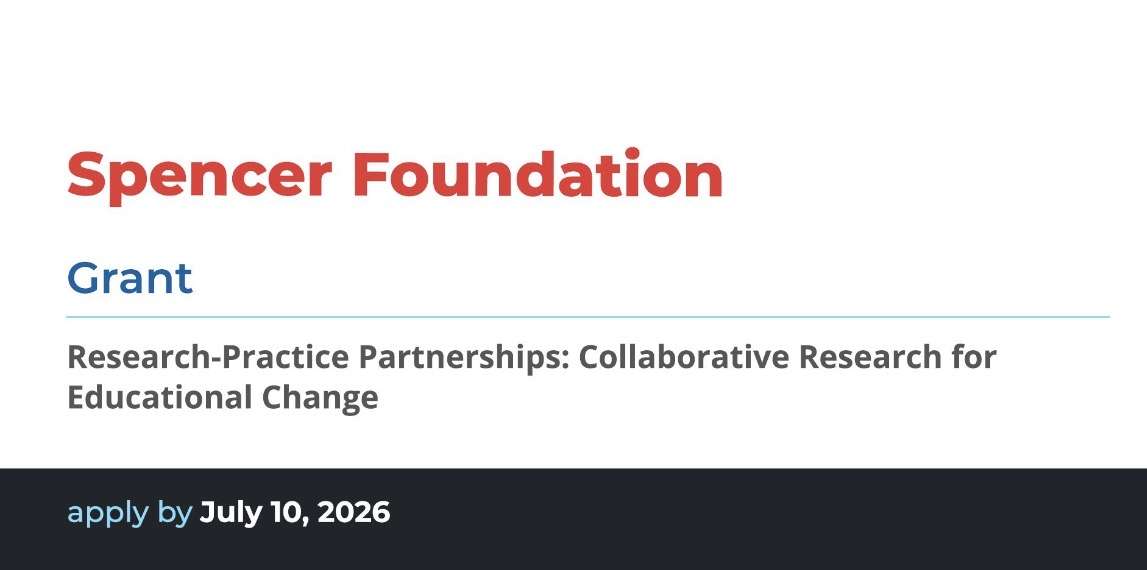
Spencer Foundation Research-Practice Partnerships Grant 2026: Up to $400,000 for Collaborative Education Research and Educational Change
@Practice Partnerships Grant 2026: Up to $400,000 for Collaborative Education Research and Educational Change
Location
USA / Global
Work Mode
africa
Posted
about 6 hours ago
Beware of scams! When applying for jobs, you should NEVER have to pay anything. Learn about job scams.
Get jobs in your inbox
Join over 10,000 subscribers receiving our weekly newsletter.
You might also like
Global Fellowship for Young Ocean, Waterway, and Climate Change Leaders
Bow Seat Creative Action for Conservation

Female STEM Student Teachers’ Scholarship
Leaders in Teaching Uganda Program

Paid IOM Internships 2026: International Organization for Migration (IOM) Global Internship Programme – Remote & On-Site Opportunities Worldwide
Remote & On-Site Opportunities Worldwide
African Union Development Agency (AUDA-NEPAD) Jobs 2026: Multiple Vacancies Open in South Africa and Rwanda
African Union Development Agency (AUDA-NEPAD)
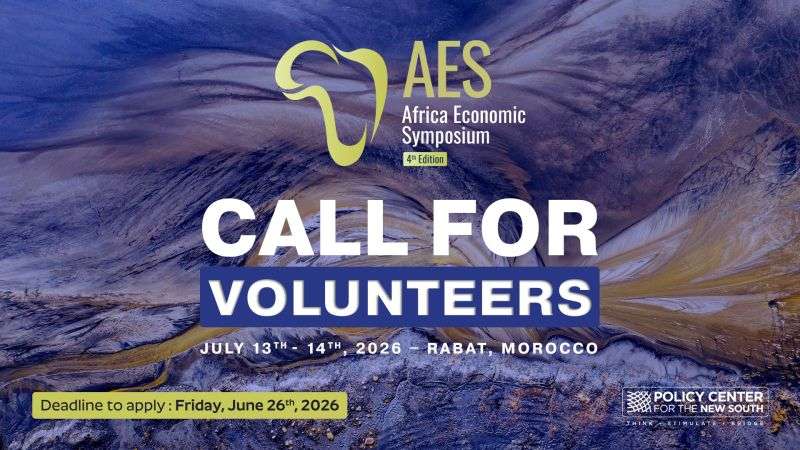
Africa Economic Symposium (AES) 2026 Volunteer Opportunity in Morocco: Gain Hands-On Experience at One of Africa’s Premier Economic Events
One of Africa’s Premier Economic Events
IIE Scholar Rescue Fund (IIE-SRF) Fellowship 2026: Complete Application Guide for Threatened and Displaced Scholars Worldwide
SRF) Fellowship 2026: Complete Application Guide for Threatened and Displaced Scholars Worldwide