







Training on Litigation of Sexual and Reproductive Health Rights in Africa 2026 | Fully Funded Legal Capacity-Building Opportunity in Kenya @Building Opportunity in Kenya
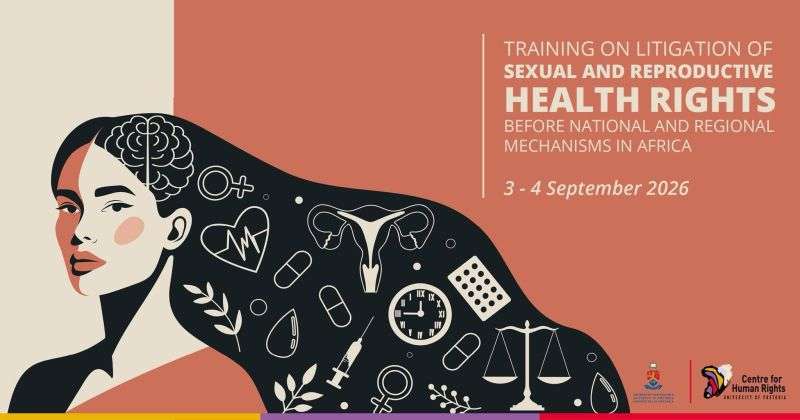
The Centre for Human Rights at the University of Pretoria is inviting applications for an intensive regional training programme focused on strengthening the ability of legal professionals and human rights advocates to advance sexual and reproductive health and rights (SRHR) through strategic litigation.
The Training on Litigation of Sexual and Reproductive Health Rights Before National and Regional Mechanisms in Africa is designed to equip participants with practical skills needed to use legal systems, courts, and human rights mechanisms to promote justice, accountability, and protection of rights across Africa.
The two-day residential training will bring together legal practitioners, human rights defenders, researchers, civil society actors, and adjudicators working in the field of SRHR.
Successful applicants will receive full support covering participation-related expenses, including travel, accommodation, meals, and other approved costs.
Application Deadline: Wednesday, 1 July 2026
Training Dates: 3–4 September 2026
About the Training Programme
The Centre for Human Rights, Faculty of Law at the University of Pretoria, is organising this capacity-building programme as part of its ongoing commitment to strengthening:
- Sexual and reproductive health and rights advocacy
- Human rights accountability
- Strategic litigation
- Access to justice
- Legal protection for vulnerable communities
The training responds to the continuing gap between awareness of SRHR standards and the practical ability to use litigation and legal mechanisms to secure meaningful change.
Although important progress has been made in recognising SRHR protections, many individuals and communities continue to face barriers in accessing justice and enforcing their rights.
Training Location and Schedule
Training Location: Nairobi, Kenya
Dates:
- Arrival: 2 September 2026
- Training sessions: 3–4 September 2026
- Departure: 5 September 2026
The programme will be delivered as a residential training, allowing participants to engage deeply with facilitators, experts, and fellow advocates.
Funding and Support for Selected Participants
The Centre for Human Rights will cover participation costs for successful applicants.
Support includes:
- Economy-class travel ticket
- Accommodation
- Visa-related costs
- Meals during the training period
- Airport pick-up and drop-off
- Other approved participation-related expenses
Participants will therefore be able to attend without covering the major costs associated with participation.
Purpose of the Training
The programme is designed to move beyond general awareness and provide practical litigation skills that participants can apply in their professional work.
The training aims to strengthen participants’ ability to:
- Identify strategic SRHR cases
- Develop effective litigation strategies
- Use national and regional human rights mechanisms
- Engage with courts and accountability institutions
- Advocate for implementation of legal decisions and remedies
Key Areas Covered During the Training
Participants will explore practical approaches to SRHR litigation, including:
1. Strategic Case Identification
Participants will learn how to:
- Identify cases with potential legal and social impact
- Assess opportunities for strategic litigation
- Build stronger legal arguments around SRHR violations
2. Litigation Strategy Development
The training will strengthen skills in:
- Preparing litigation approaches
- Developing advocacy strategies
- Using evidence effectively
- Connecting legal arguments with human rights frameworks
3. National and Regional Human Rights Mechanisms
Participants will gain knowledge on:
- Domestic legal systems
- Regional African human rights mechanisms
- Accountability pathways
- Using legal institutions to advance SRHR protections
4. Supporting Justice Outcomes
The programme will also focus on:
- Monitoring implementation of decisions
- Strengthening advocacy after court judgments
- Ensuring legal victories translate into practical improvements
Why This Training Is Important
Across Africa, many communities continue to experience challenges accessing sexual and reproductive health rights protections.
The training recognises the need to strengthen legal action for groups facing discrimination and exclusion, including:
- Women and girls
- Adolescents and young people
- Persons with disabilities
- LGBTIQ+ persons
- Sex workers
- People living in rural and underserved communities
- Other groups experiencing intersecting forms of discrimination
By improving litigation capacity, participants can contribute to stronger human rights protections and more effective accountability systems.
Who Should Apply?
Applications are encouraged from professionals and advocates who are actively engaged in SRHR-related work.
Eligible participants include:
- Lawyers
- Human rights litigators
- Civil society organisations
- Community advocates
- Researchers
- Legal support professionals
- Judges or adjudicators involved in SRHR matters
Applicants should demonstrate how the training will:
- Strengthen their professional capacity
- Improve their organisation’s work
- Benefit communities they serve
- Support stronger SRHR advocacy outcomes
Application Requirements
Applicants must show:
- Current involvement in SRHR-related litigation or advocacy
- Relevant professional experience
- Interest in strengthening legal accountability
- Potential impact of applying the training within their organisation or community
Because spaces are limited, applicants are encouraged to submit strong applications explaining their motivation and expected impact.
Selection Timeline
Important dates:
- Application Deadline: 1 July 2026
- Selection Notification: 17 July 2026
- Training Dates: 3–4 September 2026
How to Apply
Click here for more and to apply
Interested applicants should complete the application form through the official programme application portal before the deadline.
This training provides a valuable opportunity for African legal professionals and human rights advocates to strengthen their ability to use law as a tool for justice, equality, and social change.
Click here for more global training opportunities
Training on Litigation of Sexual and Reproductive Health Rights in Africa 2026 | Fully Funded Legal Capacity-Building Opportunity in Kenya
@Building Opportunity in Kenya
Location
USA / Global
Work Mode
continent
Posted
about 3 hours ago
Beware of scams! When applying for jobs, you should NEVER have to pay anything. Learn about job scams.
Get jobs in your inbox
Join over 10,000 subscribers receiving our weekly newsletter.
You might also like

Women Who SPARK Awards 2026
U2030
Postdoctoral Research Fellow
University of Oxford
2026 Bolder Futures Fellowship: AI for Social Good — Fully Remote, Fully Transformative
Fully Remote, Fully Transformative
19 Fully-Funded PhD Opportunities at University College Cork Under the Rinn Artificial Intelligence Programme (Starting October 1, 2026)
University College Cork Under the Rinn Artificial Intelligence Programme (Starting October 1, 2026)

Digital Transformation Trainer
The Hague Academy for Local Governance
Humanitarian Diplomacy Internship
International Federation of Red Cross and Red Crescent Societies