
U.S. Department of State Launches Up to $60 Million Funding Opportunity to Strengthen Uganda’s Health System Through the Health Foreign Assistance MOU Implementation Plan @Unknown
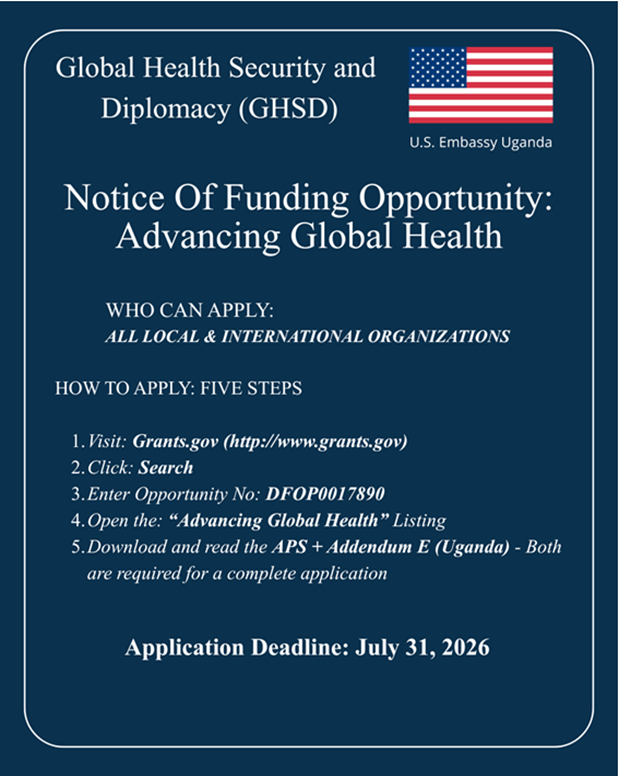
The U.S. Department of State, through its Bureau of Global Health Security and Diplomacy (GHSD), has announced a major funding opportunity under the Advancing Global Health Annual Program Statement (APS) aimed at supporting the implementation of the Health Foreign Assistance Memorandum of Understanding (MOU) between the United States Government and the Government of Uganda.
With up to $60 million in available funding and up to 15 anticipated awards, this initiative seeks to accelerate Uganda’s transition toward a sustainable, accountable, and government-led health system capable of maintaining and expanding gains in public health outcomes.
Organizations with the expertise, capacity, and commitment to strengthening health systems are invited to submit Statements of Interest (SOIs) for projects that align with the priorities outlined in the Uganda MOU Implementation Plan.
Funding Overview
Funding Opportunity Details
- Funding Opportunity Title: Advancing Global Health
- Funding Opportunity Number: DFOP0017890
- Addendum Title: Health Foreign Assistance Memorandum of Understanding (MOU) Implementation in Uganda
- Administering Agency: U.S. Department of State, Bureau of Global Health Security and Diplomacy (GHSD)
- Total Funding Available: Up to $60,000,000
- Number of Awards: Up to 15
- Project Duration: Up to 5 years
- Application Process: Two-step process
- First Step: Submission of a Statement of Interest (SOI)
Important Deadlines
- Deadline for Questions: June 17, 2026
- Statement of Interest (SOI) Deadline: July 31, 2026, at 5:00 PM EDT (GMT-4)
Applicants are encouraged to carefully review all program guidance and amendment documents before submitting questions or applications.
Why This Funding Opportunity Matters
Uganda is currently implementing a transformative five-year health transition framework covering the period from April 2026 through December 2030.
The framework is designed to:
- Strengthen national health systems
- Improve disease prevention and epidemic control
- Enhance healthcare service delivery
- Increase accountability and transparency
- Expand government ownership of health programs
- Ensure long-term sustainability of health investments
The initiative supports Uganda’s efforts to maintain progress in:
- HIV prevention and treatment
- Tuberculosis control
- Malaria prevention and response
- Maternal, newborn, and child health (MNCH)
- Immunization services
- Outbreak preparedness and response
- Health security systems
A key feature of the MOU is the gradual transition from donor-driven implementation models toward government-led and performance-based programming, enabling Uganda to take greater ownership of its healthcare future.
Key Areas of Investment
The Department of State is seeking innovative and capable partners to support two major implementation tracks.
Track 1: Sustainable Faith- and Community-Based Health Systems
Faith-based and community-based health facilities play a critical role in Uganda’s healthcare landscape.
These institutions contribute significantly to:
- HIV treatment services
- Tuberculosis case detection
- Malaria treatment
- Child immunization programs
- Maternal healthcare
- Outbreak detection and response
However, many remain dependent on externally funded projects.
This funding opportunity aims to help these institutions become financially sustainable and operationally resilient.
Objective 1: Establish and Scale Sustainable Community-Based Health Financing Mechanisms
Organizations may propose initiatives that create sustainable financing models capable of reducing dependence on donor funding.
Potential activities include:
Community Health Insurance Development
- Establishing new community health insurance schemes
- Strengthening governance and oversight systems
- Developing digital enrollment platforms
- Implementing claims management systems
- Building actuarial capacity
- Improving financial management systems
Income Generation and Revenue Diversification
Organizations are encouraged to:
- Link community health insurance schemes with income-generating initiatives
- Strengthen financial resilience among participating communities
- Reduce premium payment defaults
- Improve long-term sustainability
Equitable Access
Projects should also:
- Conduct willingness-to-pay studies
- Introduce sustainable user fee structures
- Establish transparent waiver systems for vulnerable populations
Objective 2: Sustain Integrated Service Delivery in Faith- and Community-Based Facilities
Recipients will help ensure uninterrupted delivery of critical health services during the transition period.
Priority service areas include:
- HIV treatment and prevention
- Tuberculosis services
- Malaria programs
- Maternal and child health
- Immunization
- Global health security interventions
Expected activities include:
Integrated Care Models
- One-stop healthcare services
- Reduction of fragmented service delivery
- Alignment with Ministry of Health integration strategies
Strengthening Health Facility Systems
Support may include:
- Electronic medical records
- Laboratory networks
- Diagnostic systems
- Commodity management
- Human resource management systems
Workforce Development
Organizations may support:
- Clinical mentorship programs
- Continuous quality improvement initiatives
- Performance monitoring systems
- Skills enhancement and professional development
Objective 3: Build Faith- and Community-Based Organization Capacity
Applicants may focus on strengthening institutional capacity across health facility networks.
Potential interventions include:
Organizational Capacity Building
- Governance strengthening
- Financial management systems
- Strategic planning
- Institutional development
Revenue Diversification
Projects may support:
- Dedicated health budgets
- Financial sustainability plans
- Leveraging affiliated financial institutions
- Community mobilization initiatives
Transition Planning
Organizations will be expected to develop plans that gradually shift operational costs toward domestic funding sources.
Track 2: Enabling Systems for Accountable, Government-Led Programming
This track focuses on strengthening the systems required to support Uganda’s transition to performance-based and government-led health programming.
Objective 4: Strengthen and Scale Digital Health Systems
Applicants may support the deployment, integration, and transfer of national digital health systems to government ownership.
Systems include:
- Electronic Medical Records (EMRs)
- eAfya
- ClinicMaster
- Laboratory Information Systems
- ALIS
- LabExpert
- DHIS2-based surveillance systems
- National Data Warehouse
- eCHIS
- iHRIS
- National supply chain management systems
Projects should ensure:
- Full interoperability
- Government ownership
- Sustainable operations
- Transition of staffing and recurrent costs
Objective 5: Expand Sustainable Power Solutions for Health Facilities
Organizations may support the installation and maintenance of sustainable energy solutions for up to 700 health facilities by 2029.
Potential interventions include:
- Solar power systems
- Energy-efficient infrastructure
- Backup power solutions
- User training programs
- Maintenance systems
All technology solutions should be supported by lifecycle cost analysis and coordinated with relevant government authorities.
Objective 6: Institutionalize Supply Chain Accountability and GS-1 Traceability
The Department seeks support for modernizing Uganda’s health supply chain.
Activities may include:
GS-1 Implementation
- Product identification systems
- Serial number tracking
- End-to-end medicine traceability
Digital Integration
- Linking traceability systems with LMIS platforms
- Automated alerts and monitoring
- Improved data reconciliation
Annual Supply Chain Audits
Recipients may conduct audits covering:
- Procurement and contract management
- Warehousing and inventory management
- Distribution and transportation
- Data quality and information systems
Objective 7: District-Level Risk Assessments and Performance Verification
Applicants may support:
Government Readiness Assessments
- Financial management evaluations
- Funds-flow analyses
- IFMIS readiness assessments
- Internal controls verification
Risk Mitigation Planning
Organizations will help local authorities:
- Identify risks
- Develop mitigation measures
- Strengthen governance systems
Independent Verification
Recipients may conduct:
- Quarterly reviews
- Semi-annual reviews
- Annual verification exercises
- Performance-based payment verification
Objective 8: Indoor Residual Spraying (IRS) Quality Assurance
Projects may focus on malaria prevention through quality assurance support for Indoor Residual Spraying programs across 35 districts.
Key responsibilities may include:
- Spray planning support
- Household coverage verification
- Environmental compliance monitoring
- Safety assurance
- Efficacy testing and verification
The goal is to verify:
- At least 85% household spray coverage
- 100% spray efficacy in sampled households after 30 days
Guiding Principles for Applicants
All proposed projects should align with the Department of State’s guiding principles, including:
Sustainability and Country Ownership
Projects should:
- Strengthen Ugandan institutions
- Promote domestic financing
- Reduce long-term dependence on external support
Protection of Essential Services
Programs must safeguard:
- HIV services
- Tuberculosis services
- Malaria interventions
- Maternal and child health programs
- Immunization programs
Data-Driven Accountability
Projects should:
- Generate quality data
- Improve decision-making
- Strengthen accountability systems
Integrated Service Delivery
Applicants should prioritize:
- Coordination
- Efficiency
- Reduced duplication
- People-centered approaches
Local Partnerships
Organizations should collaborate with:
- Government institutions
- Local NGOs
- Community-based organizations
- Faith-based organizations
- Private sector partners
Evidence-Based Programming
Activities must be informed by:
- Local evidence
- National priorities
- Context-specific realities
Application Process
The funding opportunity uses a two-stage application process.
Step 1: Submit a Statement of Interest (SOI)
Organizations must submit a concise SOI outlining:
- Proposed objectives
- Project approach
- Expected outcomes
- Organizational capacity
Step 2: Invitation for Full Proposal
Selected applicants may be invited to submit a full proposal for further consideration.
Interested organizations may submit SOIs addressing one or multiple objectives.
Final Thoughts
This significant investment represents one of the most ambitious efforts to strengthen Uganda’s health systems while advancing long-term country ownership and sustainability. Organizations with expertise in health systems strengthening, digital health, supply chain management, health financing, governance, community health, and public health service delivery have a unique opportunity to contribute to Uganda’s transition toward a resilient, accountable, and government-led health system.
With up to $60 million in funding available, successful applicants will play a critical role in supporting healthcare transformation, improving service delivery, strengthening epidemic preparedness, and ensuring that health gains are sustained for generations to come.
For more information on this grant opportunity visit here
For more grant opportunities on OFY, click here
U.S. Department of State Launches Up to $60 Million Funding Opportunity to Strengthen Uganda’s Health System Through the Health Foreign Assistance MOU Implementation Plan
@Unknown
Location
USA / Global
Work Mode
africa
Posted
about 4 hours ago
Beware of scams! When applying for jobs, you should NEVER have to pay anything. Learn about job scams.
Get jobs in your inbox
Join over 10,000 subscribers receiving our weekly newsletter.
You might also like
ACET Youth Policy Lab 2026: Fully Virtual Pan-African Policy Innovation Challenge for Young Leaders Driving Africa’s Future
African Policy Innovation Challenge for Young Leaders Driving Africa’s Future
WHO Youth Council 2026–2028: Global Call for Youth Organizations to Shape International Health Policy
2028: Global Call for Youth Organizations to Shape International Health Policy
Fully Funded PhD in Gender, Peace and Security at the Swedish Defence University 2027 | Salary, Research Funding and International Applicants Welcome
the Swedish Defence University 2027 | Salary, Research Funding and International Applicants Welcome
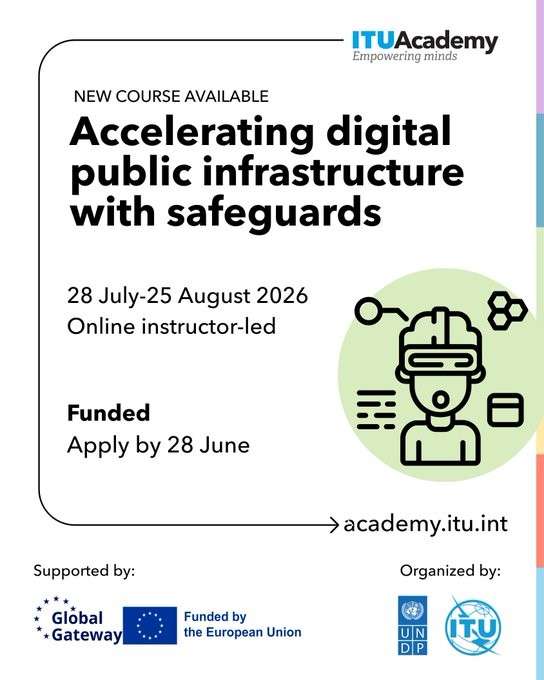
Accelerating Digital Public Infrastructure with Safeguards 2026: Free ITU and UNDP Global Online Course for Government Officials, Policymakers, ICT Specialists, and Digital Transformation Leaders
Unknown

The Law & AI Academic Fellowship: A Premier Pathway Into U.S. Legal Academia
Unknown
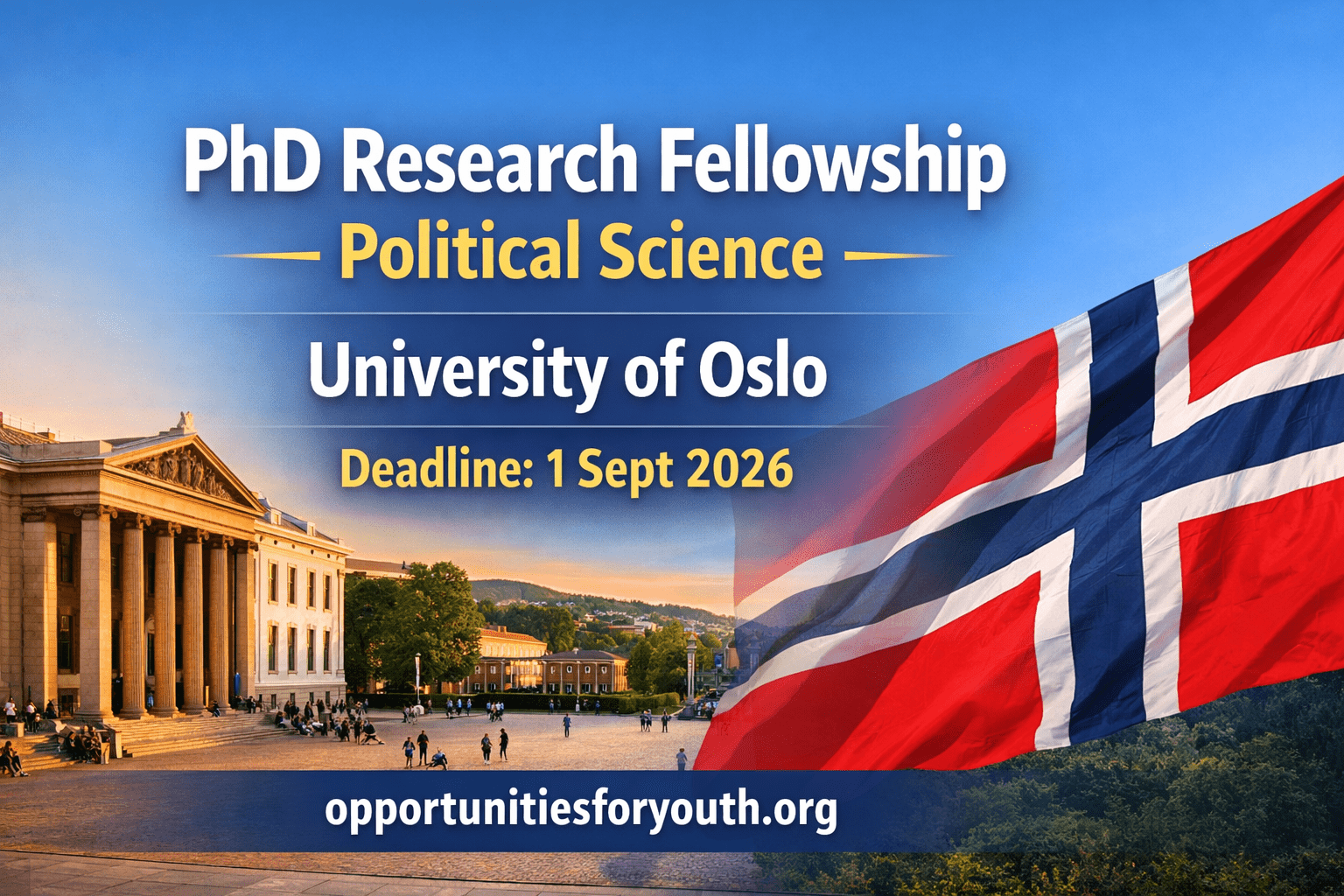
PhD Research Fellowship in Political Science at the University of Oslo: A Comprehensive Opportunity for Emerging Scholars
the University of Oslo: A Comprehensive Opportunity for Emerging Scholars