
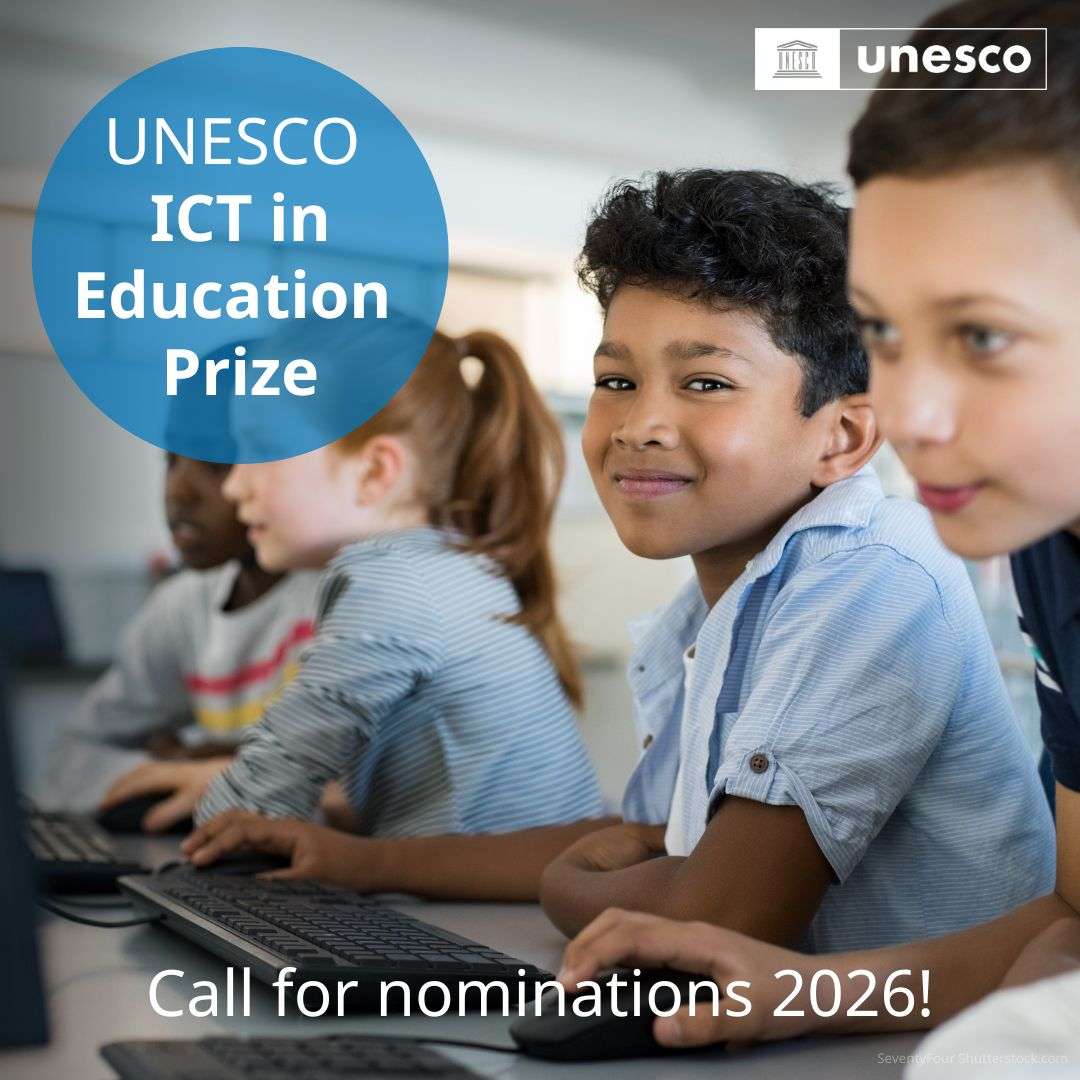
UNESCO ICT in Education Prize 2026: Win US$25,000 for Innovative AI Projects Transforming Creativity and Critical Thinking in Education @Unknown
Artificial Intelligence is rapidly transforming the future of education, reshaping the way learners think, create, solve problems, and interact with knowledge. As AI tools become increasingly powerful in generating content, solving complex problems, and automating intellectual tasks, educators worldwide are facing an urgent question: How can education preserve and strengthen human creativity, imagination, and critical thinking in the age of AI?
To address this important challenge, the UNESCO has officially opened nominations for the 2026 edition of the UNESCO King Hamad Bin Isa Al-Khalifa Prize for the Use of ICT in Education. The prestigious international award seeks to recognize outstanding projects that demonstrate how artificial intelligence can enhance—not replace—human thinking and creativity in learning environments.
The 2026 edition is themed:
“Reimagining Creativity and Critical Thinking with Artificial Intelligence”
This global opportunity aims to spotlight innovative educational projects that use AI responsibly while empowering learners and teachers to strengthen imagination, reasoning, discernment, creativity, and problem-solving skills.
The prize offers international recognition, a diploma, and a financial reward of US$25,000 for each of the two selected winners.
About the UNESCO ICT in Education Prize
The UNESCO ICT in Education Prize was established to celebrate groundbreaking initiatives that effectively use information and communication technologies (ICT) to improve education systems and learning outcomes globally.
For the 2026 edition, UNESCO is focusing specifically on how AI can be integrated into education without diminishing the human capacity for critical thought and creativity.
According to UNESCO, education has a central role to play in ensuring that AI serves as a tool for expanding human agency rather than becoming a substitute for independent thinking. While AI systems can now compose essays, generate ideas, solve equations, and produce information instantly, there is growing concern that learners may become overly dependent on these technologies.
The prize therefore seeks projects that encourage learners to:
- Think independently
- Explore creatively
- Question information critically
- Solve problems innovatively
- Engage thoughtfully with AI systems
- Preserve imagination and originality
Why This UNESCO Prize Matters
Artificial intelligence is becoming deeply integrated into classrooms, universities, online learning platforms, and informal education spaces worldwide. However, many educators and policymakers are concerned about the “flattening effect” AI could have on human creativity and intellectual development if used improperly.
This UNESCO initiative highlights the importance of balancing technological advancement with human-centered learning.
Winning projects are expected to demonstrate how AI can:
- Support creative learning experiences
- Encourage analytical reasoning
- Strengthen imagination and curiosity
- Promote ethical and thoughtful AI use
- Complement human intelligence rather than replace it
The award also provides a platform for global visibility, helping successful initiatives inspire educators and institutions around the world.
Prize Benefits
Selected winners of the UNESCO ICT in Education Prize 2026 will receive:
1. Financial Reward
Each of the two winners will receive:
- US$25,000
2. International Recognition
Winning projects will gain:
- Global exposure through UNESCO platforms
- International credibility and prestige
- Recognition from leading education and AI experts
3. Official Diploma
Awardees will receive an official UNESCO diploma recognizing their achievement and contribution to education innovation.
4. Award Ceremony Participation
Winners will be recognized during an international award ceremony scheduled for September 2026.
Theme Focus: Reimagining Creativity and Critical Thinking with AI
The 2026 edition specifically seeks projects that demonstrate meaningful and innovative engagement with AI systems in educational settings.
UNESCO is particularly interested in initiatives showing how:
- Teachers use AI to improve creativity-based learning
- Students use AI responsibly to enhance learning outcomes
- AI tools support deeper thinking and inquiry
- Educational systems preserve human reasoning and imagination
- Learning environments encourage originality despite AI automation
Projects can come from:
- Formal education settings
- Non-formal learning spaces
- Informal education environments
- Community learning initiatives
- Digital education ecosystems
Who Can Apply?
Applications are open to a broad range of participants, including:
- Individuals
- Schools and universities
- NGOs
- Research institutions
- Educational organizations
- Innovation hubs
- Other entities working in education and AI
However, applicants must meet the following condition:
Project Requirement
The submitted project must:
- Already be operational
- Have existed for at least one year
- Align with the 2026 theme on creativity, critical thinking, and AI
Important Nomination Requirement
One of the most important aspects of the application process is that self-nominations are not allowed.
Applications must be submitted through:
- A UNESCO National Commission from a Member State, or
- An NGO officially partnered with UNESCO
UNESCO encourages applicants to contact the relevant National Commission or partner NGO early in the application process.
Additionally:
- Governments of UNESCO Member States
- NGOs in official partnership with UNESCO
may nominate up to three projects.
Selection Process
An international jury will review all eligible nominations and evaluate projects based on:
- Innovation
- Educational impact
- Relevance to the 2026 theme
- Sustainability
- Effectiveness in promoting creativity and critical thinking through AI
The final winners will be selected by the Director-General of UNESCO following the jury’s recommendations.
Deadline for Applications
Nomination Deadline:
29 May 2026 (23:59 CEST)
Applicants are strongly encouraged to begin the nomination process early because coordination with National Commissions or UNESCO partner NGOs may require additional time.
How to Apply
Interested applicants should:
- Prepare documentation about their project
- Ensure the project aligns with the 2026 theme
- Contact a UNESCO National Commission or official UNESCO partner NGO
- Request nomination support
- Submit the application through the authorized nominating body
Official Links and Contact Information
For full application details and nomination guidelines, visit the official UNESCO Prize webpage and UNESCO website.
For inquiries:
- Email: ictprize@unesco.org
This opportunity represents a major global platform for innovators shaping the future of AI in education responsibly and creatively.
Whether you are an educator, institution, or organization developing transformative AI learning experiences, the UNESCO ICT in Education Prize 2026 offers a unique opportunity to gain international recognition and contribute to the future of human-centered education.
Discover more global award opportunities on OFY, VISIT HERE
UNESCO ICT in Education Prize 2026: Win US$25,000 for Innovative AI Projects Transforming Creativity and Critical Thinking in Education
@Unknown
Location
USA / Global
Work Mode
africa
Posted
21 days ago
Beware of scams! When applying for jobs, you should NEVER have to pay anything. Learn about job scams.
Get jobs in your inbox
Join over 10,000 subscribers receiving our weekly newsletter.
You might also like

Internet Law and Policy Foundry Fellowship 2026–2028: Fully Detailed Guide to the Prestigious Global Professional Development Opportunity
2028: Fully Detailed Guide to the Prestigious Global Professional Development Opportunity

Mary Douglas Research Scholarships 2026 at UCL: Fully Funded PhD Opportunity in Anthropology in the United Kingdom
UCL: Fully Funded PhD Opportunity in Anthropology in the United Kingdom
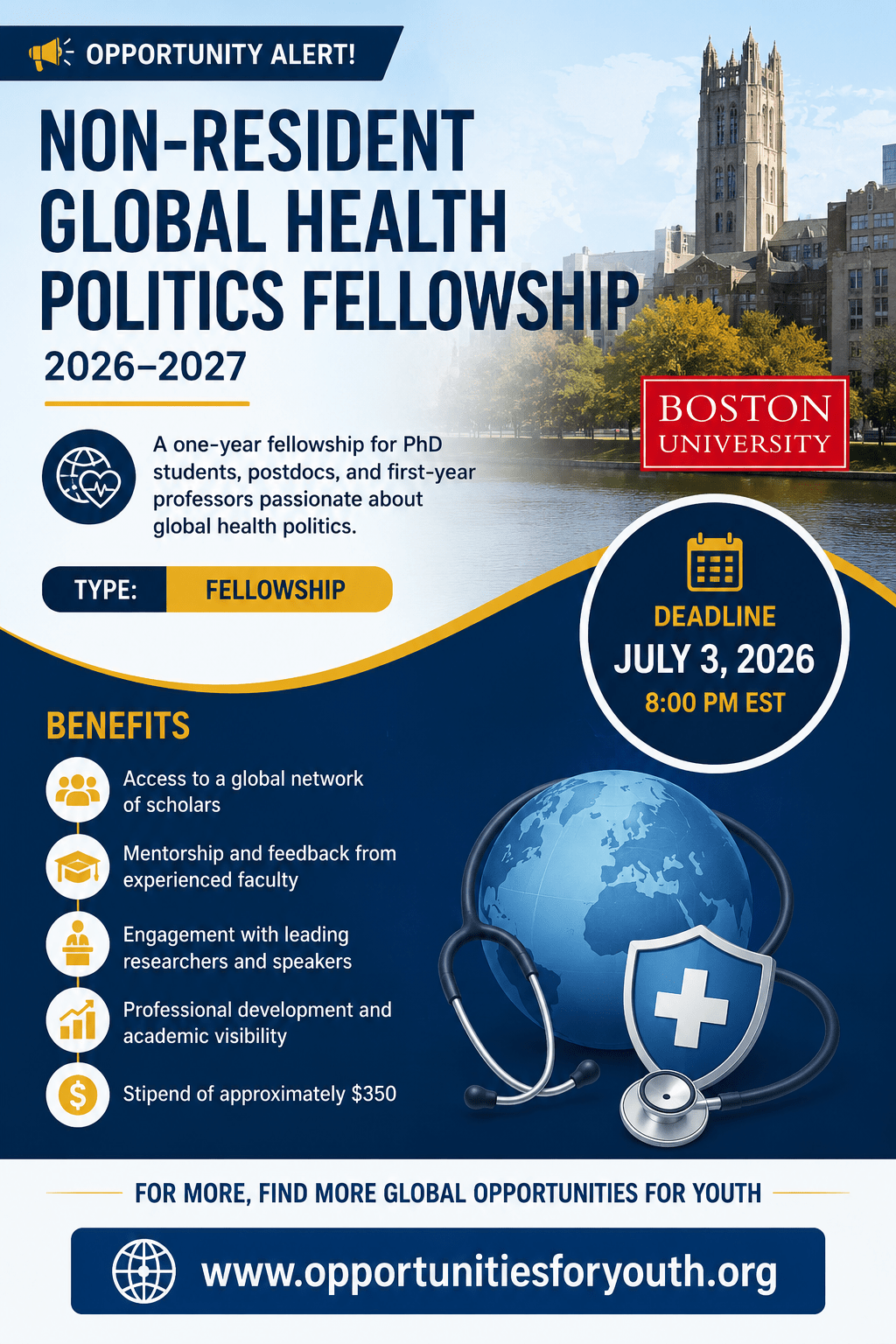
Boston University Non-Resident Global Health Politics Fellowship 2026–2027: Fully Explained Guide for PhD Students, Postdocs, and Early-Career Scholars
Resident Global Health Politics Fellowship 2026–2027: Fully Explained Guide for PhD Students, Postdocs, and Early-Career Scholars

Albright International Leaders Program
Aspen Institute
Yale University Scholarships 2026-27(Fully-funded for Undergraduate, Masters and PhD)
Yale University
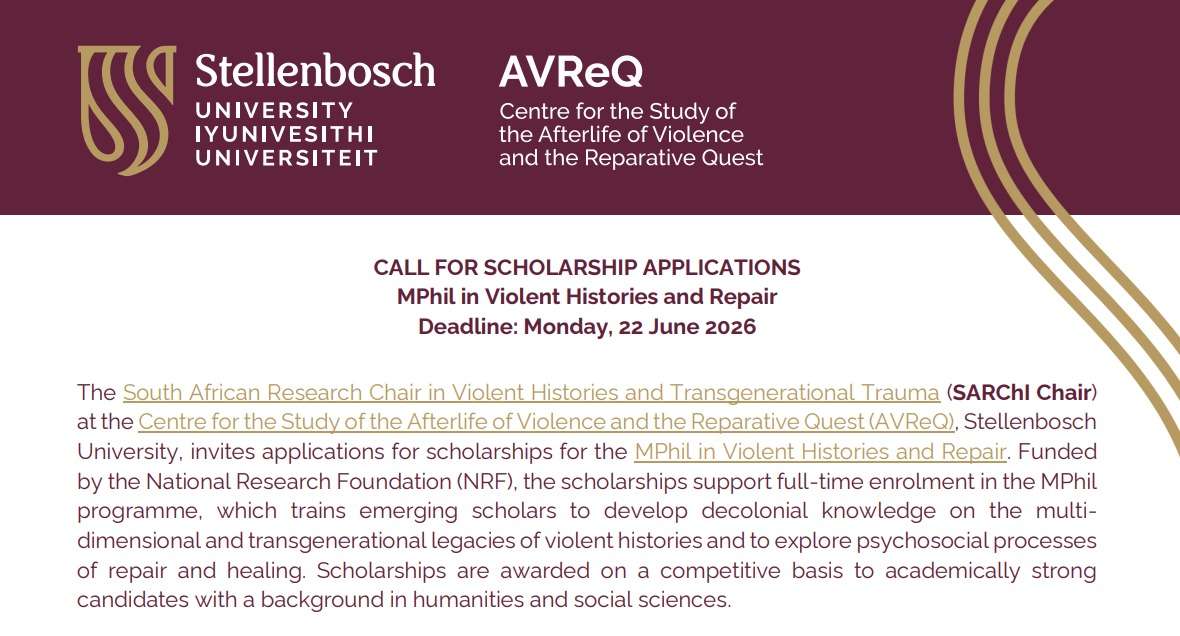
MPhil in Violent Histories and Repair Scholarships
Stellenbosch University