
United Nations Internet Governance Forum (IGF) Fellowship Programme 2026 in Geneva, Switzerland (United Nations) @Unknown
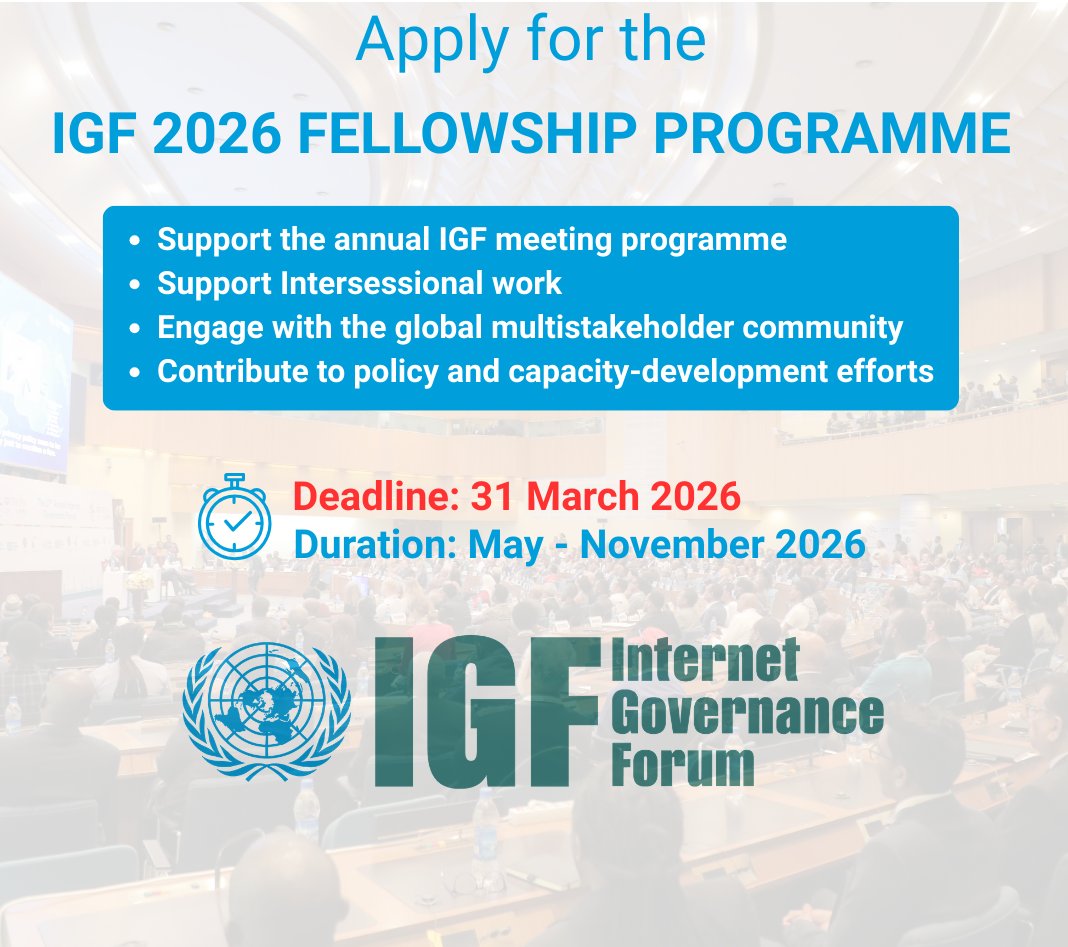
The Internet Governance Forum (IGF) Fellowship Programme 2026 is now open for applications. This United Nations fellowship opportunity allows professionals from developing countries to work with the IGF Secretariat at the United Nations Office in Geneva, Switzerland and gain hands-on experience in Internet governance, digital policy, and multistakeholder global cooperation.
The fellowship is administered by the United Nations Department of Economic and Social Affairs (UN DESA) and financed through the IGF Trust Fund.
Key Details
-
Host Organization: United Nations – Internet Governance Forum (IGF) Secretariat
-
Location: Geneva, Switzerland
-
Programme Duration: 6 months (May – November 2026)
-
Fellowship Type: UN Fellowship Programme
-
Funding: Financed through the IGF Trust Fund (administrative support, insurance, and programme support provided through UN DESA)
-
Application Deadline: 31 March 2026
Applicants must submit their CV, motivation letter, and nomination form to:
About the Internet Governance Forum (IGF)
The Internet Governance Forum (IGF) is a permanent forum of the United Nations initially convened by the United Nations Secretary-General in 2006. Institutionally, it is placed under the Department of Economic and Social Affairs (DESA). The IGF Secretariat supports the implementation of the IGF process, while the development of the annual IGF meeting’s agenda is guided by the IGF Multistakeholder Advisory Group (MAG).
The Fellowship Programme is part of the IGF’s mandated objective to develop capacity in Internet governance in developing countries. Fellows are selected through an open-to-all stakeholders application process, implemented in collaboration with the relevant regional IGFs, in accordance with the criteria outlined further below.
The UN Fellow will work with the IGF Secretariat, which covers a wide range of activities, such as the clearance process of the renewal of the IGF MAG, implementing the programme for the IGF annual meeting and the intersessional work including capacity development, liaising with the donor’s network to the IGF, closely working with the governmental entities that host the annual IGF meeting, and providing substantive Internet governance-related information to the UN DESA and Executive Office of the United Nations Secretary-General.
The IGF Fellowship Programme is financed through the IGF Trust Fund and processed by UN DESA. The objective of the programme is to contribute to enhancing the effectiveness of development aid by fostering the participation of skilled professionals from the developing countries, least developed countries (LDCs), landlocked developing countries (LLDCs) and transitional economies in analytical, research and operational activities of Internet governance. Through this initiative, Fellows are integrated in the work of the IGF Secretariat based at the United Nations Office at Geneva, Switzerland. They are expected to enhance their professional competence and knowledge, enrich their work methods and techniques and, after their fellowship, assist their country community in their local Internet governance requirements.
There are up to two (2) programme cycles within the year which last six (6) months each. It may start within the specified six (6) months of the year or from January to June and/or from July to December of the year. The selection of candidates, as per the requirements outlined further below, is done in consultations with the relevant national and regional IGF coordinators and guidelines provided by the IGF Secretariat’s Head of Office. The selection of regions eligible to the IGF Fellowship programme is done by rotation of regions. A relevant regional and sub-regional IGF initiatives will be consulted throughout the process to facilitate outreach.
| Interested candidates from all stakeholder and regional groups are invited to apply for a fellowship by sending their CV, a motivation letter and this nomination form to vacancies [at] intgovforum [dot] org by 31 March 2026. |
Duties, responsibilities and output expectations
Under the guidance and supervision of the IGF Secretariat’s Head of Office, the fellow will perform the following functions:
- Provide substantive and organizational support to the implementation of project objectives, as assigned by the Head of IGF Secretariat, including liaison and dialogue with IGF networks membership and other stakeholders, drafting programme papers and reports; due date, continuous.
- Do research work and focus specifically on development issues related to Internet governance, in particular, those affecting developing countries, least developed countries (LDCs), landlocked developing countries (LLDCs) and transitional economies; due date, continuous.
- In preparation for the IGF 2026, contribute to the substantive elements of the agenda of the IGF Multistakeholder Advisory Group (MAG); due date, continuous.
- Provide support to the preparatory process for organizing the 21st annual IGF meeting, to be hosted in the last quarter of 2026; due date, continuous.
- Perform other substantive tasks as assigned by the supervisor.
The above will imply interaction with the staff working within the unit/section, staff of international organizations working on related issues, academics and representatives of civil society groups, NGOs, technical community and the business sector.
In performing these duties, fellows must comply with the requirements (guidelines) outlined in the Letter of Acceptance and dedicate their full time to the fellowship programme. They must not engage in political, commercial or any other activities other than those governed by the programme. They must not accept another fellowship programme, work, and non-IGF Secretariat meeting participation while under the IGF Fellowship programme. The fellows have no vacation leave except sick leave supported by a medical certificate.
Duration
The proposed duration of the fellowship programme is six (6) months between May and November 2026.
Learning elements
Upon the completion of the assignment, it is expected that the UN Fellow will be able to deliver the following outputs:
- Apply rules and procedures of multilateral cooperation in general and multistakeholder processes, in particular;
- Better understand Internet governance issues and processes;
- Draft position papers, studies and reports;
- Better understand the role of all stakeholders (Government, civil society, private sector, technical community) in Internet governance arrangements;
- Exchange information and capabilities with participants in the IGF.
Content and methodology of the supervision
The UN Fellow’s work will be continuously supervised through monthly regular programme meetings. The UN Fellow will be required to submit a monthly progress report to the assigned supervisor to assess Fellow’s performance. Weekly or ad-hoc interactions with the assigned supervisor will be considered depending on the work priority.
Travels
The Fellow will not be required to undertake missions to neighbouring countries or to other duty stations. Duty station is in Geneva.
Qualifications and experience
- Education: University degree in ICT or international affairs related with a strong emphasis on technology and/or telecommunication policy is required.
- Work experience: A minimum of 2 years of relevant professional work experience in Internet governance related processes is required. Experience in policy making will be considered an advantage.
- Languages: Fluency in English (both oral and written) is required. Working knowledge of French is desirable.
- Other Necessary Skills: Ability to write clearly and concisely on Internet governance issues; good understanding of the development aspects of Internet governance issues; skills in developing sources for data collection and data analysis; ability to plan and organize his/her own work in support of and in coordination with other members of the team; sound knowledge of Internet and basic software for website management, word processing and spreadsheets; good interpersonal and communication skills; ability to establish and maintain effective working relations with people of different national and cultural backgrounds.
Competencies
- Professionalism: Knowledge of Internet governance issues. Ability to conduct research and provide recommendations on Internet governance issues. Ability to demonstrate conceptual, analytical and evaluative skills and conduct independent research and analysis, identifying and assessing issues, formulating options and making conclusions and recommendations. Shows pride in work and in achievements; demonstrates professional competence and mastery of subject matter; is conscientious and efficient in meeting commitments, observing deadlines and achieving results; is motivated by professional rather than personal concerns.
- Teamwork: Works collaboratively with colleagues to achieve organizational goals; solicits input by genuinely valuing others’ ideas and expertise; is willing to learn from others; places team agenda before personal agenda; supports and acts in accordance with final group decision, even when such decisions may not entirely reflect own position; shares credit for team accomplishments and accepts joint responsibility for team shortcomings.
- Communication: Speaks and writes clearly and effectively; listens to others, correctly interprets messages from others and responds appropriately; asks questions to clarify, and exhibits interest in having two-way communication; tailor language, tone, style and format to match audience; demonstrates openness in sharing information and keeping people informed.
- Planning and Organizing: Develops clear goals that are consistent with agreed strategies; identifies priority activities and assignments; adjusts priorities as required; allocates appropriate amount of time and resources for completing work; foresees risks and allows for contingencies when planning; monitors and adjusts plans and actions as necessary; uses time efficiently.
- Client Orientation: Considers all those to whom services are provided to be “clients” and seeks to see things from clients’ point of view; establishes and maintains productive partnerships with clients by gaining their trust and respect; identifies clients’ needs and matches them to appropriate solutions.
- Commitment to Continuous Learning: Keeps abreast of new developments in own occupation/profession; actively seeks to develop oneself professionally and personally.
- Respect for Diversity: Ability to work effectively with multi-disciplinary and multi-cultural tams.
Management arrangements
The Fellow will perform his/her duties under the general guidance of the IGF Secretariat’s Head of Office in Geneva. UN DESA Training and Fellowships Section will be the approving office of proposed candidates to the IGF Fellowship Programme. It will be responsible for all the administrative issues pertaining to fellowships, including the security aspects and the medical insurance of the fellows. These offices will be in close contact with the UNDP country offices. Recipient organization is responsible to provide fellows with the necessary facilities to properly perform their assignments, including office space, access to a computer and e-mail address.
Reporting
Fellows’ performance will be assessed through the analysis of their monthly and final reports. At the end of the fellowship, the fellow is required to submit a progress report indicating the work accomplished during the assignment. The report will help evaluate the overall fellowship period. The Fellow’s direct supervisor will also submit written evaluation of fellow’s performance to UN DESA Capacity Development Office.
Fellows are not staff members. As such, they do not enjoy the benefits and entitlements stipulated in the UN Staff Rules and Regulations. Fellows are governed by the UN DESA Policies and Procedures on Fellowships, Study Tours and Group Training which can be found on-line at: http://esa.un.org/techcoop/fellowships/index.html
Information about living conditions in Switzerland
Switzerland, officially the Swiss Confederation, is a country situated in western, central, and southern Europe. It consists of 26 cantons, and the city of Bern as the seat of the federal authorities. The sovereign state is a federal republic bordered by Italy to the south, France to the west, Germany to the north, and Austria and Liechtenstein to the east. Switzerland is a landlocked country geographically divided between the Alps, the Swiss Plateau and the Jura, spanning a total area of 41,285 km2 (15,940 sq mi) (land area 39,997 km2 (15,443 sq mi)). The Swiss population of approximately 8.5 million people is concentrated mostly on the plateau.
Switzerland’s public transport network is safe and efficient. Trains, trams, buses and boats cover the entire country. There are also extensive cycling routes. The rail network in Switzerland is well organized and the Swiss Federal Railways, offers a multitude of options. The bus and tram system is also well organized and the http://www.tpg.ch/ offers detailed information.
A valid passport with visa is required to enter the country. It is recommended to consult the local embassy for more information: https://www.eda.admin.ch/en.
The climate in Switzerland is moderate, with clearly distinguishable seasons. For more information about the weather, consult: https://www.meteoswiss.admin.ch/home/climate/the-climate-of-switzerland.html
The official currency of the country is: Swiss franc. Credit cards are generally accepted everywhere.
Switzerland has four national languages: German, French, Italian and Romansh. English, though not an official language, is often used to bridge the divides, and a significant proportion of official documentation is available in English.
Generally, Switzerland is considered to be a safe country.
Source: https://www.intgovforum.org/en/content/igf-2026-fellowship-programme
United Nations Internet Governance Forum (IGF) Fellowship Programme 2026 in Geneva, Switzerland (United Nations)
@Unknown
Location
Global
Job Type
continent
Posted
about 13 hours ago
Beware of scams! When applying for jobs, you should NEVER have to pay anything. Learn more.
You might also like
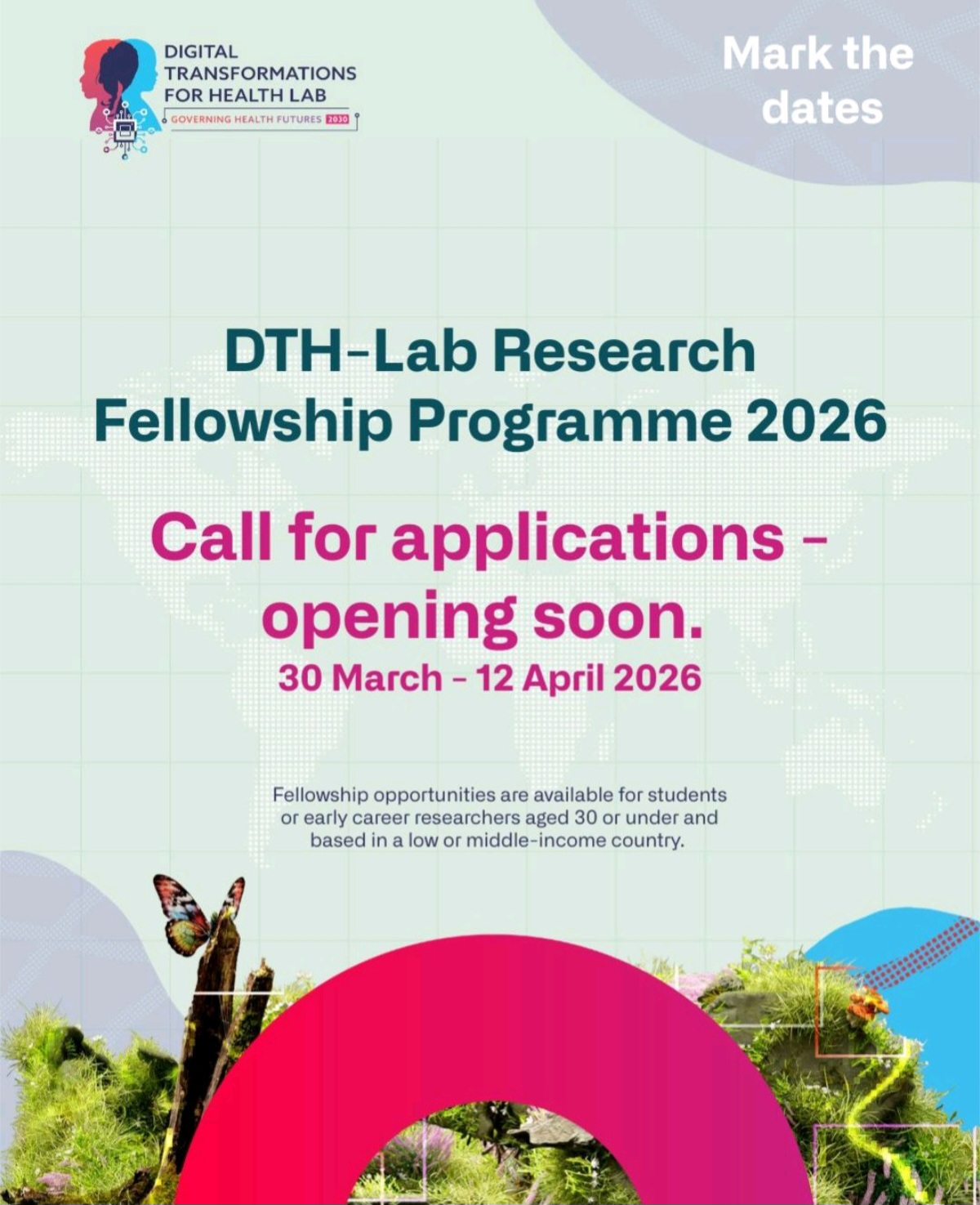
Fully Funded 2026 DTH-Lab Research Fellowship for Students and Early-Career Professionals
Lab Research Fellowship for Students and Early-Career Professionals
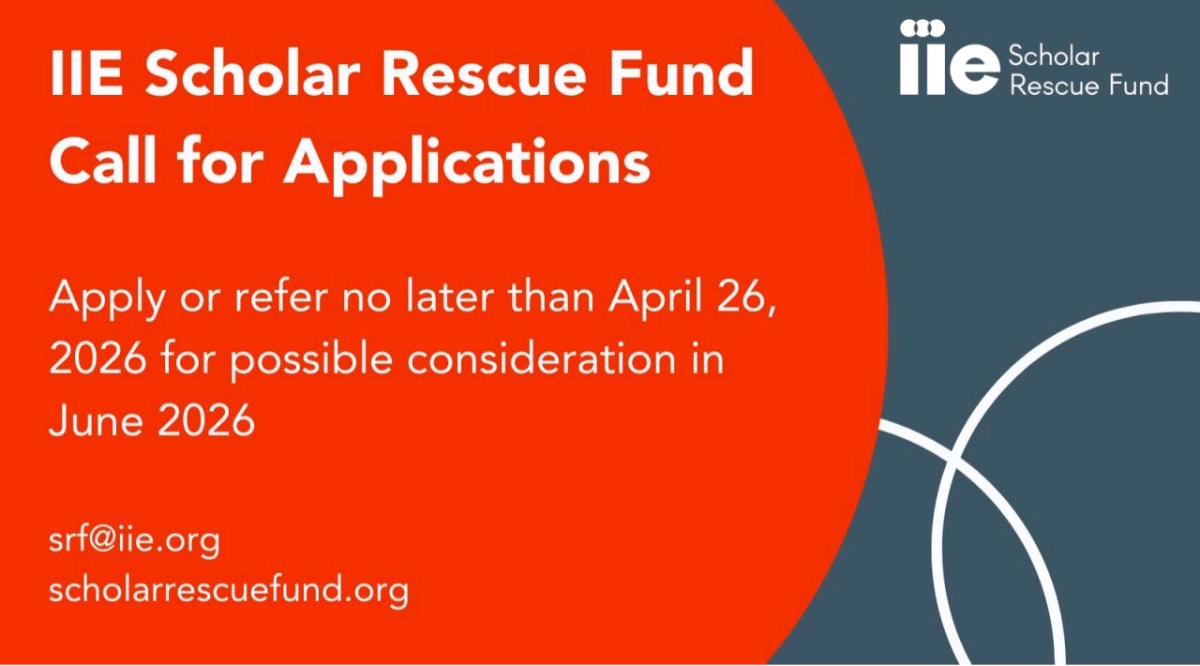
Fully Funded Scholar Rescue Fund Fellowship 2026: A Global Lifeline for Threatened Scholars and Academics Worldwide
Unknown

Apply Now: NYC DCAS Summer Internship Hiring Expo 2026 for Students and Young Professionals
Unknown

Smithsonian Latino Museum Futures Internship 2026 in Washington, D.C. (Paid $550 Weekly Stipend + Housing)
Unknown

ITCILO Paid Internships 2026 in Italy Open to Applicants Worldwide | International Training Centre of the ILO Internship Programme
Unknown

Nestlé Needs YOUth Mentorship 2026: Fully Funded Global Mentorship Opportunity for Young Entrepreneurs and Innovators
Unknown