








Africa Education Teachers’ Fellowship 2026: Fully Funded Pulitzer Center Fellowship for Teachers in Africa with Monthly Stipend ·Unknown
The Pulitzer Center has officially opened applications for the Africa Education Teachers’ Fellowship 2026, an exciting six-month professional development opportunity designed to empower primary and secondary school teachers across Africa. This unique fellowship equips educators with the practical knowledge, teaching strategies, and mentorship needed to integrate journalism into classroom learning, helping students develop critical thinking, media literacy, civic engagement, climate awareness, and ethical media consumption skills.
The fellowship is a hybrid program that combines virtual learning, classroom implementation, peer collaboration, and action research. Selected teachers will also receive a monthly stipend to support the implementation of innovative classroom projects while becoming part of a growing network of education leaders across the African continent.
If you are a teacher passionate about education, journalism, literacy, media education, environmental awareness, or climate education, this fellowship offers an exceptional opportunity to transform your teaching practice while contributing to the future of education in Africa.
About the Pulitzer Center Africa Education Teachers’ Fellowship
The Africa Education Teachers’ Fellowship is a six-month hybrid professional development program created by the Pulitzer Center to strengthen teaching and learning across African schools through journalism-based education.
The fellowship recognizes that journalism can be a powerful educational tool that helps students:
- Develop critical thinking abilities.
- Improve literacy and communication skills.
- Become responsible consumers of information.
- Understand environmental and climate issues.
- Participate actively in civic life.
- Learn ethical media practices.
Rather than focusing solely on traditional classroom instruction, the fellowship encourages teachers to use investigative learning, storytelling, questioning, evidence-based discussions, and media analysis to enrich students’ educational experiences.
Participants will engage in both online and classroom-based activities throughout the fellowship period while collaborating with educators from multiple African countries.
Fellowship Objectives
The fellowship seeks to build a community of innovative educators capable of integrating journalism into teaching and learning.
Its major objectives include helping teachers:
- Incorporate journalism into classroom instruction.
- Strengthen students’ media literacy.
- Improve critical thinking among learners.
- Foster civic participation and responsible citizenship.
- Increase awareness of environmental and climate issues.
- Promote ethical media consumption.
- Encourage inquiry-based and evidence-driven learning.
Ultimately, the fellowship aims to prepare educators who can inspire students to think critically about the world around them.
What Fellows Will Learn
Throughout the six-month program, selected teachers will gain practical knowledge and professional skills in several important areas, including:
Journalism in Education
Participants will learn how journalism can become an effective classroom teaching tool by encouraging students to:
- Ask meaningful questions.
- Investigate issues.
- Evaluate evidence.
- Verify information.
- Develop informed opinions.
Media Literacy
Teachers will learn strategies to help students:
- Recognize misinformation.
- Evaluate media sources.
- Understand digital media.
- Become responsible media consumers.
Critical Thinking
The fellowship emphasizes classroom activities that help students:
- Analyze complex issues.
- Solve problems creatively.
- Make evidence-based decisions.
- Engage respectfully in discussions.
Civic Engagement
Participants will explore methods that encourage students to become informed and active citizens capable of contributing positively to their communities.
Climate and Environmental Education
Teachers interested in rainforest conservation, environmental sustainability, and climate education will gain practical classroom approaches for teaching these important global topics.
Classroom Innovation
Educators will develop creative classroom projects that combine journalism with existing curriculum subjects to create more engaging learning experiences.
Fellowship Structure
The Africa Education Teachers’ Fellowship is delivered through a hybrid model that combines virtual learning with practical classroom implementation.
The program includes:
1. Virtual Learning Sessions
Participants will attend online learning modules led by experienced facilitators.
2. Classroom Implementation
Teachers will apply newly acquired skills directly in their own classrooms through journalism-based learning activities.
3. Peer Learning
Participants will collaborate with teachers from different African countries to exchange ideas, experiences, and best practices.
4. Action Research
Teachers will evaluate and reflect on how journalism-based teaching influences student engagement and learning outcomes.
5. Professional Networking
At the end of the fellowship, participants will become members of an expanding network of innovative educators across Africa.
Benefits of the Fellowship
Successful applicants will receive numerous professional and financial benefits throughout the fellowship.
These include:
- Six months of structured professional development.
- Hybrid learning experience combining online sessions and classroom practice.
- Mentorship from experienced educators.
- Guidance from professional journalists.
- Opportunities to design innovative classroom projects.
- Participation in collaborative peer-learning activities.
- Membership in a growing continental network of educators.
- Monthly stipend to support classroom project implementation.
- Enhanced teaching skills in journalism and media literacy.
- Professional recognition through participation in a prestigious Pulitzer Center initiative.
Who Can Apply?
The fellowship is specifically designed for active teachers who are passionate about improving classroom learning through journalism and media education.
Applicants should demonstrate interest in one or more of the following areas:
- Journalism
- Literacy education
- Media education
- Rainforest education
- Climate education
- Environmental education
Applicants should also demonstrate a strong commitment to:
- Fully participating throughout the six-month fellowship.
- Completing all fellowship activities.
- Implementing journalism-based classroom projects.
Eligible Countries
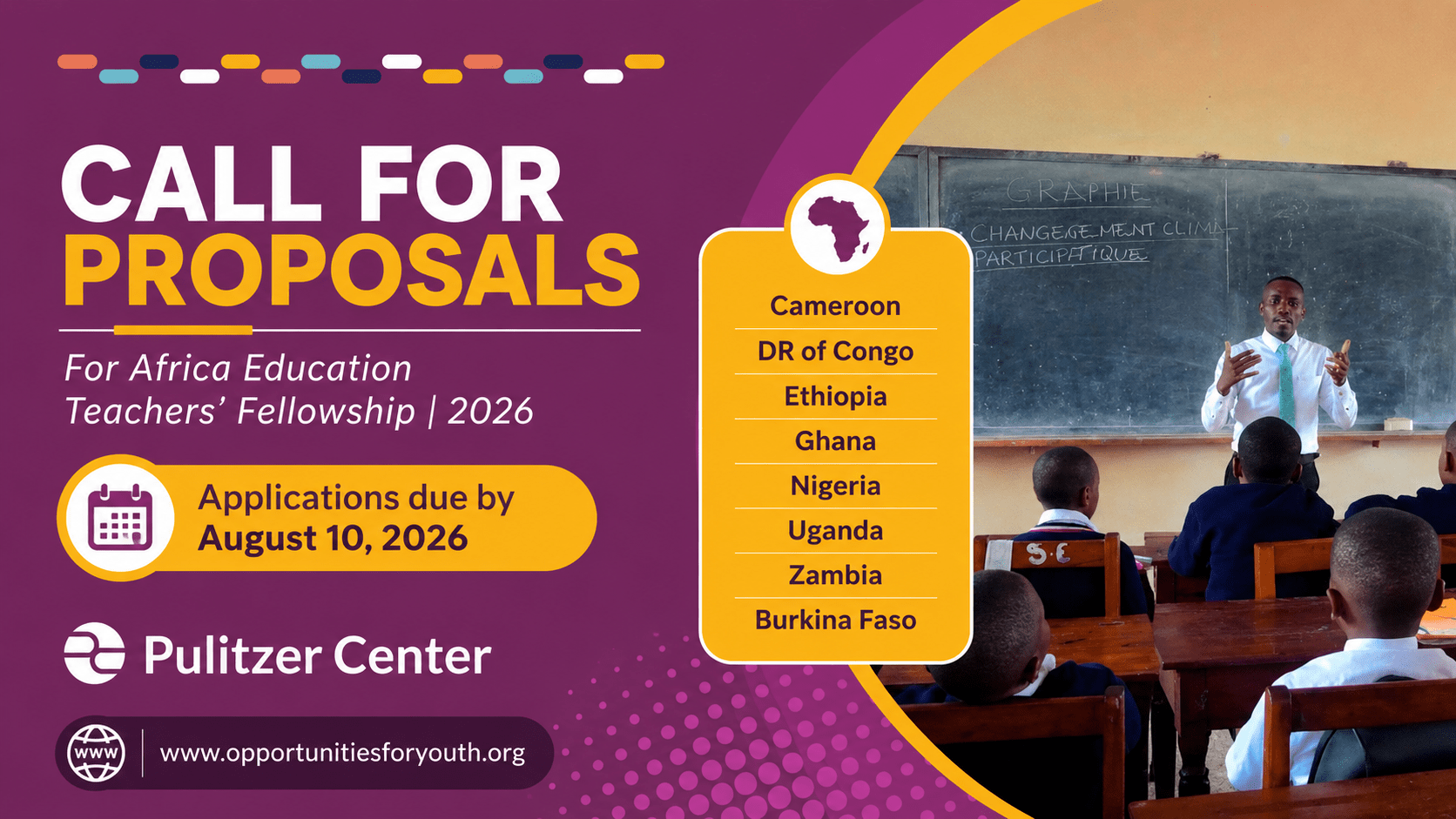
Applications are invited from primary and secondary school teachers currently working in the following African countries:
- Burkina Faso
- Cameroon
- Democratic Republic of Congo
- Ethiopia
- Ghana
- Nigeria
- Uganda
- Zambia
The fellowship welcomes applications submitted in either:
- English
- French
Fellowship Duration
The fellowship will run for:
Six months
During this period, fellows will participate in professional learning, classroom implementation, mentoring, collaboration, and project development.
Fellowship Format
The program follows a hybrid format, consisting of:
- Virtual learning sessions
- Classroom practicum
- Collaborative learning
- Mentorship
- Action research
This flexible structure allows teachers to continue working while participating in fellowship activities.
Cohort Size
The 2026 fellowship will select:
10 teachers
Due to the limited number of available places, applicants are encouraged to prepare strong applications that clearly demonstrate their commitment to education innovation.
Why Journalism Matters in Education
The Pulitzer Center believes journalism is more than reporting news—it is a powerful educational approach that encourages curiosity, evidence-based thinking, responsible citizenship, and informed decision-making.
Through journalism-based teaching methods, educators can help students:
- Ask better questions.
- Evaluate information critically.
- Identify misinformation.
- Understand global issues.
- Become active citizens.
- Develop communication skills.
- Strengthen literacy.
- Engage with environmental challenges.
These competencies are increasingly important in today’s rapidly changing information landscape.
Click HERE to read more.
Monthly Stipend
One of the unique advantages of this fellowship is that selected participants will receive a monthly stipend to support the implementation of their classroom projects.
This financial support enables fellows to translate their learning into meaningful educational activities that directly benefit students.
How to Apply
Applicants may complete the application in either English or French.
For inquiries, applicants may contact: eselemani@pulitzercenter.org
Subject line: Africa Education Teachers Fellowship – [Your Name]
Application Deadline
The deadline for applications is August 10, 2026.
Interested teachers are strongly encouraged to submit their applications well before the deadline to avoid last-minute technical issues.
Click HERE to apply.
Conclusion
The Pulitzer Center Africa Education Teachers’ Fellowship 2026 offers an exceptional professional development opportunity for African educators seeking to transform their teaching through journalism, media literacy, civic engagement, and climate education. Through expert mentorship, collaborative learning, classroom innovation, and financial support, the fellowship equips teachers with practical tools to inspire critical thinking and responsible citizenship among students.
With only 10 fellowship positions available, this highly competitive program provides not only valuable professional growth but also the opportunity to join a continent-wide network of forward-thinking educators committed to improving education across Africa. Teachers who are passionate about innovation, lifelong learning, and empowering the next generation are encouraged to apply before the August 10, 2026 deadline.
Click HERE for more fellowship opportunities.
Africa Education Teachers’ Fellowship 2026: Fully Funded Pulitzer Center Fellowship for Teachers in Africa with Monthly Stipend
@Unknown
Location
USA / Global
Work Mode
fellowship
Posted
about 6 hours ago
Beware of scams! When applying for jobs, you should NEVER have to pay anything. Learn about job scams.
Get jobs in your inbox
Join over 10,000 subscribers receiving our weekly newsletter.
You might also like
Pulitzer Center Africa Education Teachers’ Fellowship 2026 Invites Applications from African Educators
Unknown
Jefferson Scholars Foundation Graduate Fellowships Support Outstanding Scholars at the University of Virginia
the University of Virginia

Jefferson Scholars Foundation Undergraduate Scholarships at the University of Virginia Offer Fully Funded Study Opportunities – Apply By 1 December 2026
the University of Virginia Offer Fully Funded Study Opportunities – Apply By 1 December 2026
Open Source AI Fellowship 2026: Two-Year Opportunity to Advance AI Policy, Research, and Open Source Innovation
Year Opportunity to Advance AI Policy, Research, and Open Source Innovation

ISSER Pre-Doctoral Fellowship 2026–2027 at the University of Ghana: Fully Funded Research Opportunity for Early-Career Researchers
the University of Ghana: Fully Funded Research Opportunity for Early-Career Researchers
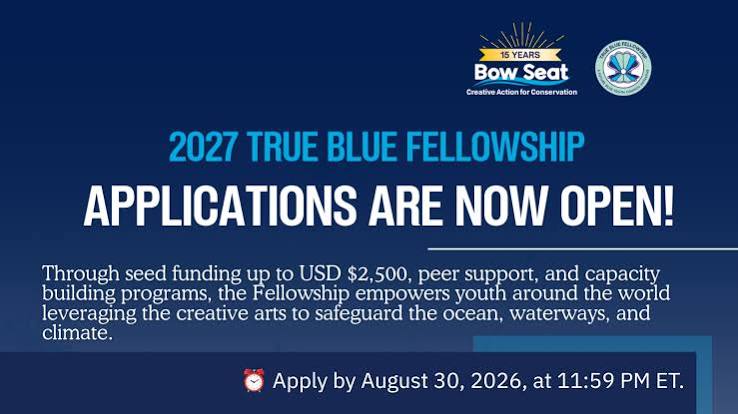
Bow Seat True Blue Fellowship 2027: Apply for Up to $2,500 to Lead Creative Climate and Ocean Action Projects
Unknown