








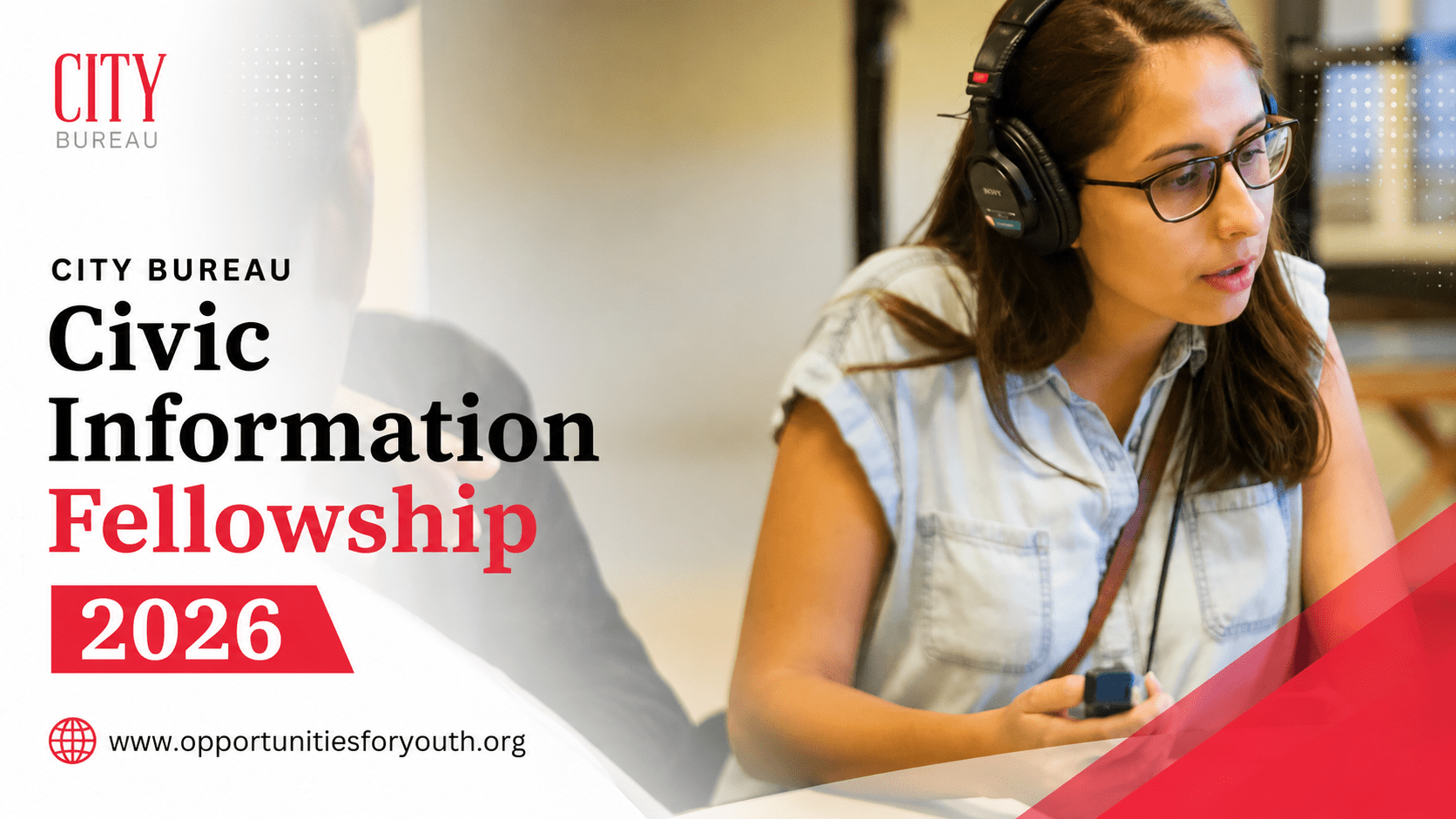
City Bureau Civic Information Fellowship 2026: Apply for the Paid Sixalism Program in Chicago ·Unknown
City Bureau is accepting applications for its Fall 2026 Civic Information Fellowship, a paid, six-month professional development and community engagement program designed for people interested in journalism, civic participation, storytelling, public policy and community organizing.
The fellowship provides participants with practical training, individualized coaching and hands-on experience in identifying and addressing the information needs of Chicago communities. Fellows will work alongside City Bureau staff and other cohort members to research civic issues, engage with residents and create projects that help people access and use important local information.
The Fall 2026 fellowship cycle is scheduled to begin on September 8, 2026. Applications must be submitted by 11:59 p.m. on August 11, 2026. City Bureau has stated that late applications will not be accepted. About City Bureau
City Bureau is a Chicago-based civic media laboratory that develops people-powered journalism practices and supports their adoption in communities across the United States.
The organization envisions communities in which people have access to the information, resources and tools they need to make informed decisions, shape their futures and participate meaningfully in democratic and civic life.
City Bureau’s work is rooted in the belief that local journalism should strengthen relationships, expand access to information, recognize community knowledge and contribute to a more equitable and participatory democracy. The organization was founded in Chicago and continues to place significant emphasis on the experiences, histories and information needs of communities across the city. About the City Bureau Civic Information Fellowship
The Civic Information Fellowship is a paid, two-phase program lasting approximately six months. It is intended for Chicago-area residents who want to develop their capabilities in:
- Community engagement
- Civic participation
- Community-centered journalism
- Public-interest storytelling
- Research and interviewing
- Local government and public policy
- Information distribution
- Audience engagement
- Project development
- Professional communication
With guidance from City Bureau staff, fellows will work individually and collaboratively to understand the information needs of Chicago communities. They will then design and implement projects that make useful civic information more accessible to residents.
The program gives particular attention to Chicago’s South and West sides. Fellows will be expected to spend meaningful time engaging with communities, building relationships, gathering information and understanding how residents create, receive and share information.
Participants will also examine how people engage with public institutions and participate in civic life. The fellowship encourages fellows to think creatively about improving local information systems, especially within Chicago’s communities of color. Purpose of the Fellowship
The fellowship is not limited to conventional newsroom reporting. Its broader purpose is to help participants understand how information affects community participation, government accountability and residents’ ability to navigate important public systems.
During the program, fellows will explore questions such as:
- What information do community members need?
- What prevents people from accessing reliable information?
- Which public systems or civic processes are difficult to understand?
- How can journalists and community organizations build stronger relationships with residents?
- What formats are most effective for sharing information with different audiences?
- How can information be distributed to the people who need it most?
- How can residents use information to make decisions or hold institutions accountable?
Fellows will use their findings to design practical information-needs projects that respond to issues identified through community engagement.
What Selected Fellows Will Do
Participants will complete a combination of workshops, team meetings, community assignments, research activities, reflective exercises and project-development work.
1. Attend weekly workshops
Fellows will participate in weekly learning sessions led by City Bureau staff members and invited speakers. These workshops will cover topics related to journalism, civic life, community engagement, storytelling and project implementation.
2. Participate in weekly team meetings
Participants will meet regularly with City Bureau’s Civic Information and Engagement team. These meetings will provide opportunities to discuss assignments, review progress, address challenges and receive guidance.
3. Work collaboratively
Each fellow will work in a hands-on learning environment with City Bureau staff and five other fellowship participants.
Collaboration will be central to the experience. Fellows will share ideas, provide feedback, support one another’s projects and collectively examine Chicago’s information ecosystem.
4. Build journalism skills
The journalism component may include training and practical experience in:
- Storytelling
- Writing for different platforms and audiences
- Research
- Information gathering
- Interviewing techniques
- Journalism ethics
- Accountability reporting
- Explainer writing
- Social video production
- Public-interest communication
The program is designed to help participants communicate complex civic issues in formats that community members can understand and use.
5. Develop community-engagement skills
Fellows will learn how to establish meaningful and non-transactional relationships with residents and community partners.
Training and assignments may include:
- Community relationship-building
- Collaboration with local organizations
- Community asset mapping
- Conducting surveys
- Identifying community resources
- Understanding local information networks
- Examining how residents receive and share information
City Bureau’s approach treats community engagement as a core part of journalism rather than as a temporary outreach activity. The organization emphasizes long-term relationships, shared learning and respect for the knowledge and resources that already exist within communities. 6. Strengthen civic-participation knowledge
Participants will improve their understanding of how Chicago’s government and public institutions operate.
This may involve:
- Learning how city government works
- Researching public policy
- Attending and covering public meetings
- Identifying responsible government officials
- Understanding public decision-making structures
- Examining government accountability
- Learning how residents can participate in civic processes
7. Maintain weekly journals
Fellows will keep written or audio journals throughout the program. These journals will be used to document progress, reflect on lessons learned and evaluate personal and project development.
8. Produce public-facing content
Participants will create content related to their fellowship work and selected civic issues. This content may include:
- Social media videos
- Blog posts
- Explainer articles
- Community information resources
- Project updates
- Stories about civic governance
- Content explaining public infrastructure or government systems
9. Design an information-needs project
One of the fellowship’s central responsibilities will be the development of a project that addresses a community information need.
Fellows will spend time engaging with residents, identifying information gaps and developing a project capable of responding to a specific issue.
Projects may use different formats depending on the community need, target audience and information being communicated.
10. Develop distribution strategies
Producing information will only be one part of the project. Fellows will also be expected to determine how that information can reach the people who need it.
Participants will develop distribution and audience-engagement strategies to ensure that their work is accessible, relevant and actionable.
The goal is to create information that people can apply in their daily lives rather than content that is simply published without a clear distribution plan.
11. Receive coaching and professional development
City Bureau staff and editors will provide fellows with one-on-one feedback and additional coaching.
The program will also support participants in areas such as:
- Career development
- Professional goal-setting
- Accountability
- Time management
- Project planning
- Identifying professional strengths
- Meeting personal and program objectives
12. Promote completed work
Fellows will have opportunities to share their projects through City Bureau’s networks and community partnerships. This can help participants develop a professional portfolio, strengthen community relationships and expand the reach of their work. Fellowship Structure
The City Bureau Civic Information Fellowship is divided into two phases. Each phase has different objectives, working hours and payment arrangements.
Phase One: Community Research and Project Design
During the first phase, fellows will focus on spending time within communities and understanding residents’ information needs.
Participants will conduct research, engage with community members, map local resources and begin designing a project that responds to an identified information gap.
Phase One duration
Phase One will last 14 weeks.
Phase One time commitment
Fellows must complete approximately 12 hours of work each week.
The weekly schedule will generally include:
- A two-hour learning session on Monday or Tuesday
- A four-hour in-person meeting and co-working session on Wednesday
- Six flexible hours for independent and community-based work
Monday or Tuesday learning sessions will normally be conducted through Zoom during evening hours. City Bureau will work with selected fellows to identify a suitable meeting time. Some sessions may occasionally be held in person.
Wednesday sessions will be held at City Bureau’s Bronzeville office. Fellows will attend either from noon to 4 p.m. or from 2 p.m. to 6 p.m. These sessions will include meetings with City Bureau staff and co-working time with the fellowship group. Lunch will be provided.
The remaining six hours may be scheduled more flexibly. Fellows will use this time for activities such as:
- Community engagement
- Research and information gathering
- Interviews
- Community mapping
- Writing
- Fellowship assignments
- Journaling
- Communication with team members
Phase One stipend
Participants will receive a stipend of $5,000 for completing Phase One. Payments will be issued in two-week increments.
Phase One attendance requirements
Required sessions are mandatory. Fellows may miss up to four required sessions during the 14-week period.
Any missed time must be completed during surrounding weeks. Failure to meet the attendance and participation requirements may affect a fellow’s ability to complete the program. Phase Two: Project Implementation
Fellows who successfully complete Phase One will be invited to continue into Phase Two.
During this stage, participants will move from research and project design to implementation. They will carry out the information-needs projects developed during the first phase and receive continuing support from City Bureau teams.
Phase Two duration
Phase Two will last 10 weeks.
Phase Two time commitment
Participants must complete approximately eight hours of work each week.
The schedule will include:
- One two-hour virtual learning session focused on an advanced skill
- One two-hour in-person co-working session with fellows and City Bureau staff
- Four flexible hours for implementing project activities
The flexible working time may be used for completing project tasks, producing information resources, engaging with communities and receiving support from City Bureau’s Civic Information and Engagement and Chicago Documenters teams.
Phase Two stipend
Participants will receive a stipend of $2,800 during Phase Two. Payments will be distributed in two-week increments.
Fellows who complete both phases may therefore receive a combined stipend of up to $7,800.
Phase Two attendance requirements
The Phase Two time commitment is mandatory. Fellows may miss up to three required sessions during the 10-week period and must make up the missed time during adjacent weeks. Important Participation Requirements
Applicants do not need a particular professional qualification or a formal journalism background.
City Bureau is interested in people who have demonstrated engagement with civic issues, journalism, public policy, community work or organizing. This experience may have been developed through:
- Personal initiatives
- Community projects
- Volunteer work
- Educational programs
- Professional training
- School activities
- Internships
- Journalism projects
- Chicago Documenters participation
- Direct lived experience
Applicants should be interested in storytelling, community-building, civic information and finding creative ways to connect people with important information.
Former City Bureau fellows are permitted to apply.
Because the fellowship includes substantial in-person engagement, applicants must live in Chicago or the surrounding area. City Bureau does not offer a fully remote participation option.
Participants must have reliable transportation to City Bureau’s Bronzeville office and to neighborhoods across Chicago’s South and West sides. Applicants must also be legally authorized to work in the United States.
City Bureau particularly values applicants with lived or professional experience on Chicago’s South and West sides. Active and experienced Chicago Documenters are also strongly valued.
The organization cautions full-time students about applying because of the program’s significant weekly workload. Exceptions may occasionally be considered for students who can demonstrate that they are capable of managing multiple time commitments effectively. Who Would Be a Strong Candidate?
A strong applicant may be someone who:
- Regularly asks questions about how public institutions operate
- Cares about local civic issues
- Wants to improve access to community information
- Enjoys interviewing and listening to people
- Is interested in journalism or public-interest communication
- Has participated in community initiatives
- Understands issues affecting Chicago neighborhoods
- Wants to learn about public policy and local government
- Can collaborate effectively with a small team
- Is comfortable receiving feedback
- Can manage mandatory weekly commitments
- Is interested in designing practical community projects
- Values racial equity and community-centered journalism
- Can travel to different Chicago neighborhoods
Professional journalism experience may be helpful, but it is not mandatory. City Bureau is primarily looking for applicants who demonstrate curiosity, commitment, reliability and a genuine interest in community information.
Mandatory In-Person Participation
Applicants should carefully consider the in-person requirements before submitting an application.
The fellowship requires participants to:
- Attend Wednesday meetings at the Bronzeville office
- Travel throughout Chicago’s South and West Side neighborhoods
- Conduct direct community engagement
- Complete local interviews and assignments
- Participate in in-person co-working sessions
- Maintain regular attendance
Repeated absences may place a fellow’s completion of the program at risk. Applicants should therefore confirm that their employment, education, family responsibilities and transportation arrangements will allow them to meet the required schedule. Important Policy on Artificial Intelligence
City Bureau has explicitly instructed applicants not to use artificial intelligence to complete their fellowship applications.
The selection team wants applicants to communicate their own ideas, experiences and perspectives. Using AI-generated content in an application may result in disqualification.
Applicants should therefore write their application responses independently and ensure that the submitted material authentically reflects their personal voice, lived experience and reasons for applying. Optional Fellowship Webinar and Question-and-Answer Session
City Bureau will conduct an optional online webinar and question-and-answer session on July 30, 2026, from noon to 1 p.m.
The session will be held through Zoom and will provide prospective applicants with an opportunity to learn more about the fellowship and ask questions about the program or application process.
Participation in the webinar is optional and is not presented as a mandatory application requirement. Interested individuals should register through the webinar registration option available on the official fellowship webpage. Application Process
Applicants must complete the official online application form linked through City Bureau’s Civic Information Fellowship webpage.
Before applying, candidates should:
- Review the complete fellowship schedule.
- Confirm their availability for mandatory weekly sessions.
- Consider whether they can complete the required weekly working hours.
- Confirm that they can travel to the Bronzeville office and other Chicago neighborhoods.
- Review the two-phase structure and attendance requirements.
- Prepare original responses based on their own experiences.
- Submit the application before the deadline.
- Avoid using artificial intelligence to draft or complete application answers.
Applicants with questions about the fellowship expectations or application process may contact the fellowship team through the email address provided on the official program page. Application Deadline
Click HERE to apply.
The deadline for the City Bureau Civic Information Fellowship Fall 2026 cycle is:
August 11, 2026, at 11:59 p.m.
Late submissions will not be accepted.
The fellowship cycle is expected to begin on September 8, 2026. Applicants should submit well before the closing time to avoid technical problems or incomplete submissions. Conclusion
The City Bureau Civic Information Fellowship 2026 offers a valuable opportunity for Chicago-area residents who want to develop practical skills in community engagement, civic participation, journalism and public-interest storytelling.
Unlike a conventional classroom-based training program, the fellowship combines structured workshops with direct community engagement, collaborative research, professional coaching and real-world project implementation. Selected fellows will have the opportunity to identify an important community information need and develop a practical project that helps Chicago residents understand and navigate civic issues.
With up to $7,800 in combined stipend support across both phases, the fellowship also enables participants to dedicate substantial time to training, community work and project development.
Prospective applicants should carefully review the mandatory in-person schedule, transportation requirements, working-hour commitments and attendance rules before applying. Applications must be submitted by 11:59 p.m. on August 11, 2026, and all responses must be written independently without the use of artificial intelligence.
For more global opportunities, Click HERE.
City Bureau Civic Information Fellowship 2026: Apply for the Paid Sixalism Program in Chicago
@Unknown
Location
USA / Global
Work Mode
fellowship
Posted
about 3 hours ago
Beware of scams! When applying for jobs, you should NEVER have to pay anything. Learn about job scams.
Get jobs in your inbox
Join over 10,000 subscribers receiving our weekly newsletter.
You might also like
AIXI Labs Research Fellowship 2026: Fully Remote AI Safety Fellowship with Monthly Stipend of £2,000–£3,500 (Worldwide Applications Open)
£3,500 (Worldwide Applications Open)
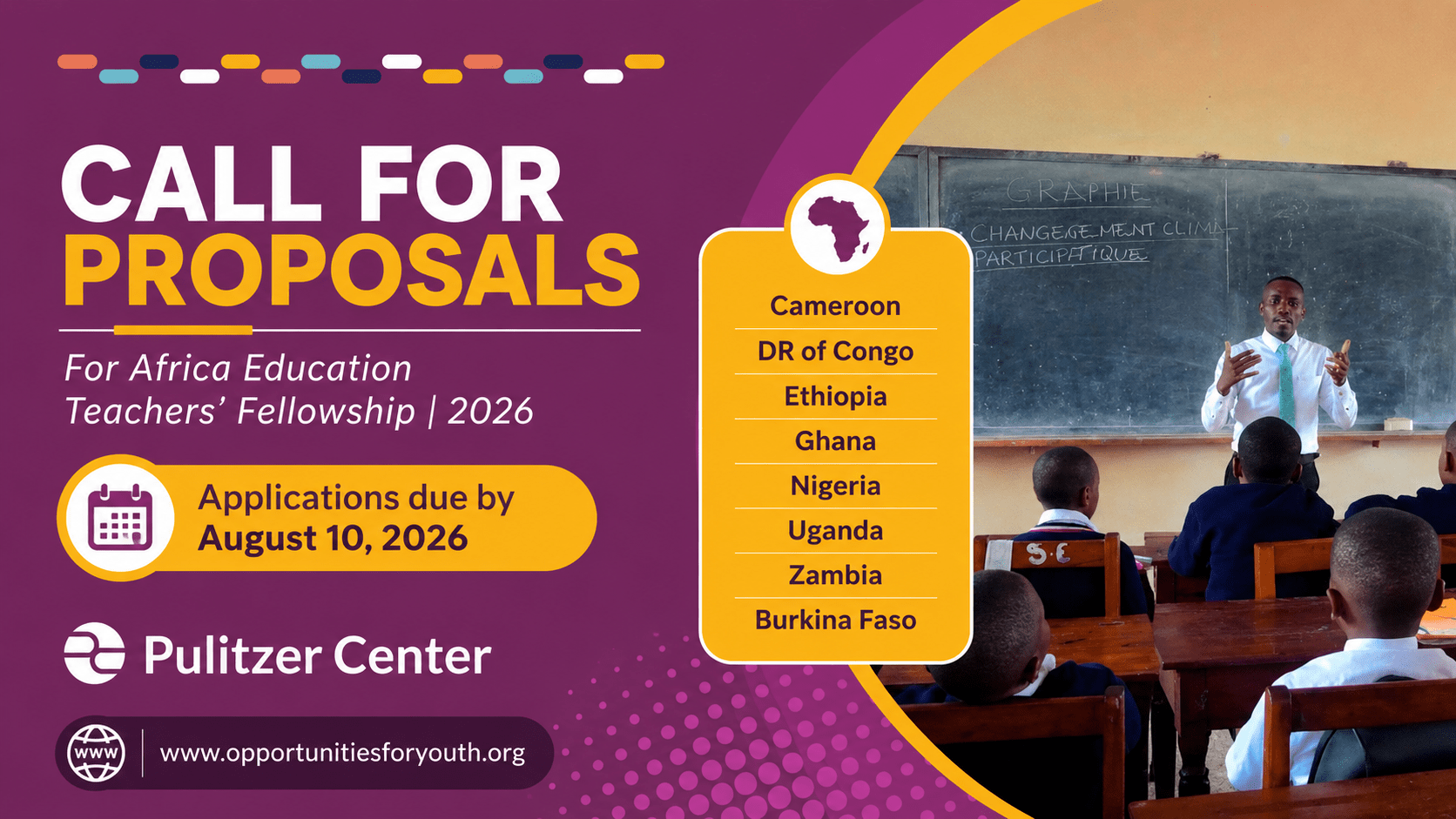
Africa Education Teachers’ Fellowship 2026: Fully Funded Pulitzer Center Fellowship for Teachers in Africa with Monthly Stipend
Unknown
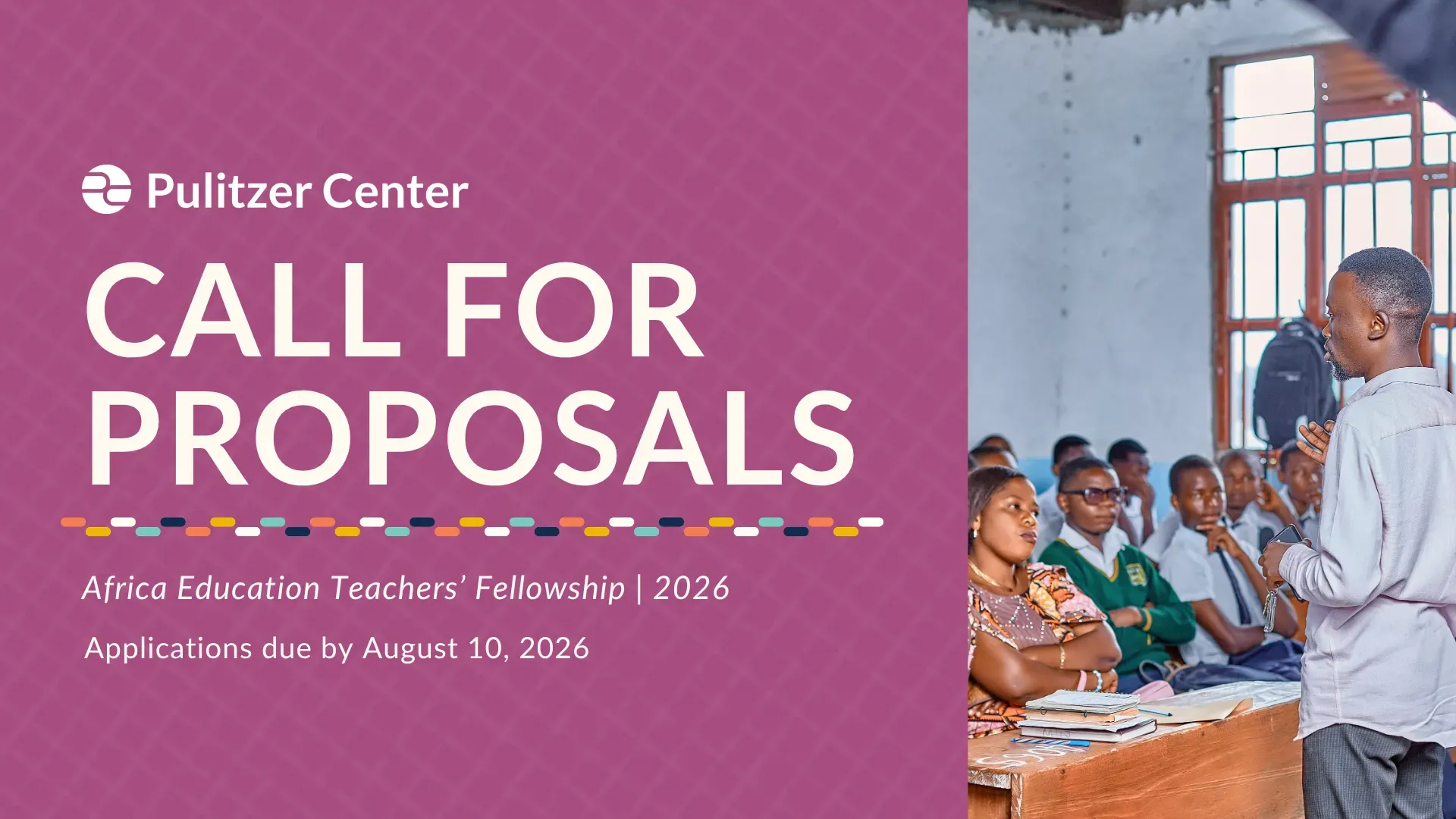
Pulitzer Center Africa Education Teachers’ Fellowship 2026 Invites Applications from African Educators
Unknown
Jefferson Scholars Foundation Graduate Fellowships Support Outstanding Scholars at the University of Virginia
the University of Virginia

Jefferson Scholars Foundation Undergraduate Scholarships at the University of Virginia Offer Fully Funded Study Opportunities – Apply By 1 December 2026
the University of Virginia Offer Fully Funded Study Opportunities – Apply By 1 December 2026
Open Source AI Fellowship 2026: Two-Year Opportunity to Advance AI Policy, Research, and Open Source Innovation
Year Opportunity to Advance AI Policy, Research, and Open Source Innovation