
Geographic Considerations in Evaluating Women’s Employment Opportunities 2026 – World Bank E-Learning Course on Gender, Geography, and Employment Access @World Bank E-Learning Course on Gender, Geography, and Employment Access
The Geographic Considerations in Evaluating Women’s Employment Opportunities 2026 course is an innovative e-learning program developed to deepen understanding of how geography and spatial environments influence women’s access to employment and economic opportunities.
This course introduces learners to the Geospatial Women’s Employment Analytical Framework (GeoWEAF), a cutting-edge tool developed by the World Bank Group. It explores how environmental, social, and infrastructural factors either enable or restrict women’s participation in the labor market.
Through interactive videos, readings, quizzes, and discussions, participants gain practical insights into the relationship between gender equality and geographic conditions shaping employment opportunities.
This training is part of a broader effort to promote inclusive development, gender equality, and evidence-based policymaking in employment systems globally.
About the Course
This e-learning program is designed to help participants understand how location and environment influence women’s ability to access jobs, education, transport, healthcare, and financial services.
It also introduces analytical tools and datasets used in modern gender and spatial analysis.
The course is structured to be flexible, accessible, and practical, making it suitable for professionals and students interested in gender, development, and urban planning.
Key characteristics of the course include:
- Fully online e-learning format
- Duration of approximately 2 hours
- Multiple video-based lessons
- Text materials and downloadable resources
- Interactive quizzes and assessments
- Online discussion forums
- Certification upon successful completion
Course Objectives
By the end of this course, participants will be able to:
- Understand the relationship between geography and gender in employment access
- Explore how environmental conditions influence women’s economic opportunities
- Learn the GeoWEAF analytical framework developed for gender and spatial analysis
- Identify and use open and proprietary data sources for gender-based spatial evaluation
- Understand the Gender Enabling Environments Spatial Tool (GEEST) and its applications in policymaking
Course Structure and Modules
The course is divided into six structured learning sections:
1. Geography and Gender Nexus
This module introduces the connection between geography and women’s employment opportunities.
Topics include:
- Introduction to GeoWEAF framework
- Geographic barriers affecting women’s employment
- Career access challenges based on location
- Pre-course assessment and introductory materials
2. Contextual Dimension
This module explores institutional and structural factors influencing women’s employment.
Key areas include:
- Workplace discrimination
- Regulatory frameworks affecting gender equality
- Financial inclusion and access to economic resources
3. Accessibility Dimension
This module focuses on access to essential services that support employment.
Topics include:
- Women’s mobility and travel patterns
- Access to public transportation systems
- Access to education and training institutions
- Access to healthcare and financial services
4. Place-Characterization Dimension
This module examines environmental and social conditions shaping women’s opportunities.
Key elements include:
- Safety and security conditions
- Conflict and fragility environments
- Education levels and digital inclusion
- Environmental hazards and water/sanitation access
5. Spatial Data and Analysis
This module introduces data-driven approaches to gender and geography.
Topics include:
- Spatial data collection and interpretation
- Data sources for accessibility analysis
- Contextual and environmental data evaluation
- Application of geospatial tools in policymaking
6. Closing Module
The final section includes:
- Final assessment and evaluation
- Post-course assessment
- Feedback submission
- Certificate issuance
- Acknowledgments and course completion
What’s Included in the Course
Participants will benefit from a structured learning experience including:
- Video lectures and expert presentations
- Text-based learning materials
- Interactive quizzes and assessments
- Discussion forums for peer learning
- Official certification upon completion
Learning Outcomes and Benefits
This course provides strong professional and academic value, especially for individuals working in gender, development, and policy-related fields.
Key benefits include:
- Strong understanding of gender and geography intersection in employment
- Practical knowledge of spatial and gender analytical tools
- Enhanced skills in data interpretation and policy analysis
- Improved ability to design gender-inclusive development strategies
- Professional certification from a recognized global institution
- Exposure to World Bank research methodologies and frameworks
Target Audience
This course is designed for:
- Urban planners and city development professionals
- Gender specialists and equality advocates
- Policymakers and government officials
- Researchers and academics
- Students in social sciences, development, and geography
- Professionals working in social development and employment policy
It is also suitable for anyone interested in understanding how geography affects women’s economic empowerment.
Duration and Format
- Total duration: 2 hours
- Format: Online e-learning
- Content: Videos, texts, quizzes, forums
- Certification: Available upon completion
Enrollment Information
Enrollment is currently open.
Course access begins on June 16, 2026 for registered participants.
Participants are encouraged to enroll early to secure access and prepare for the learning start date.
Conclusion
The Geographic Considerations in Evaluating Women’s Employment Opportunities 2026 course offers a unique opportunity to explore the intersection of gender, geography, and employment through a scientific and data-driven lens.
By combining theory, practical tools, and global frameworks like GeoWEAF, this course empowers learners to better understand and address the spatial barriers affecting women’s economic participation worldwide.
It is a valuable learning resource for anyone committed to advancing gender equality, inclusive development, and evidence-based policymaking.
Learn More
- For more information about this opportunity, Click here
- More global Training Program opportunities for youth, visit the OFY website: Click here
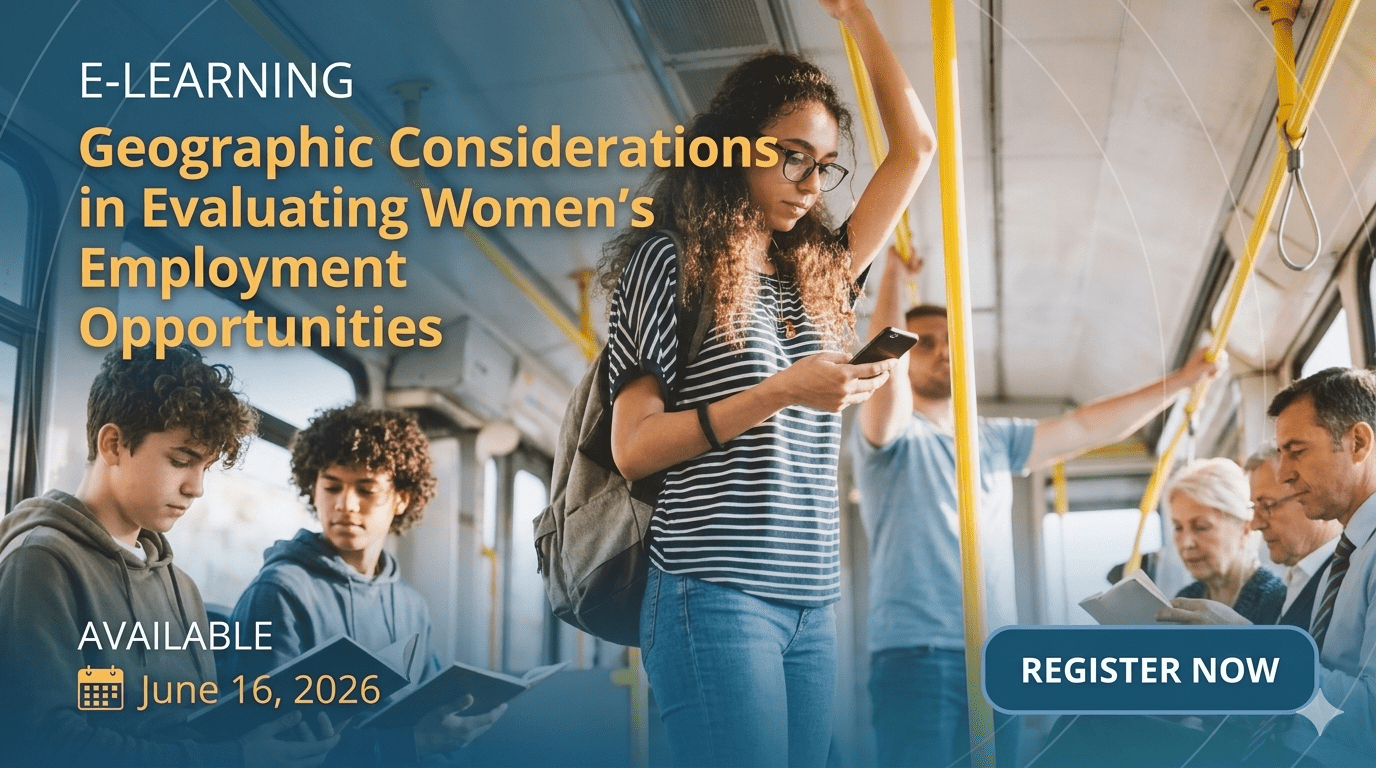
Geographic Considerations in Evaluating Women’s Employment Opportunities 2026 – World Bank E-Learning Course on Gender, Geography, and Employment Access
@World Bank E-Learning Course on Gender, Geography, and Employment Access
Location
Global
Work Mode
continent
Posted
about 4 hours ago
Beware of scams! When applying for jobs, you should NEVER have to pay anything. Learn more.
Get jobs in your inbox
Join over 10,000 subscribers receiving our weekly newsletter.
You might also like
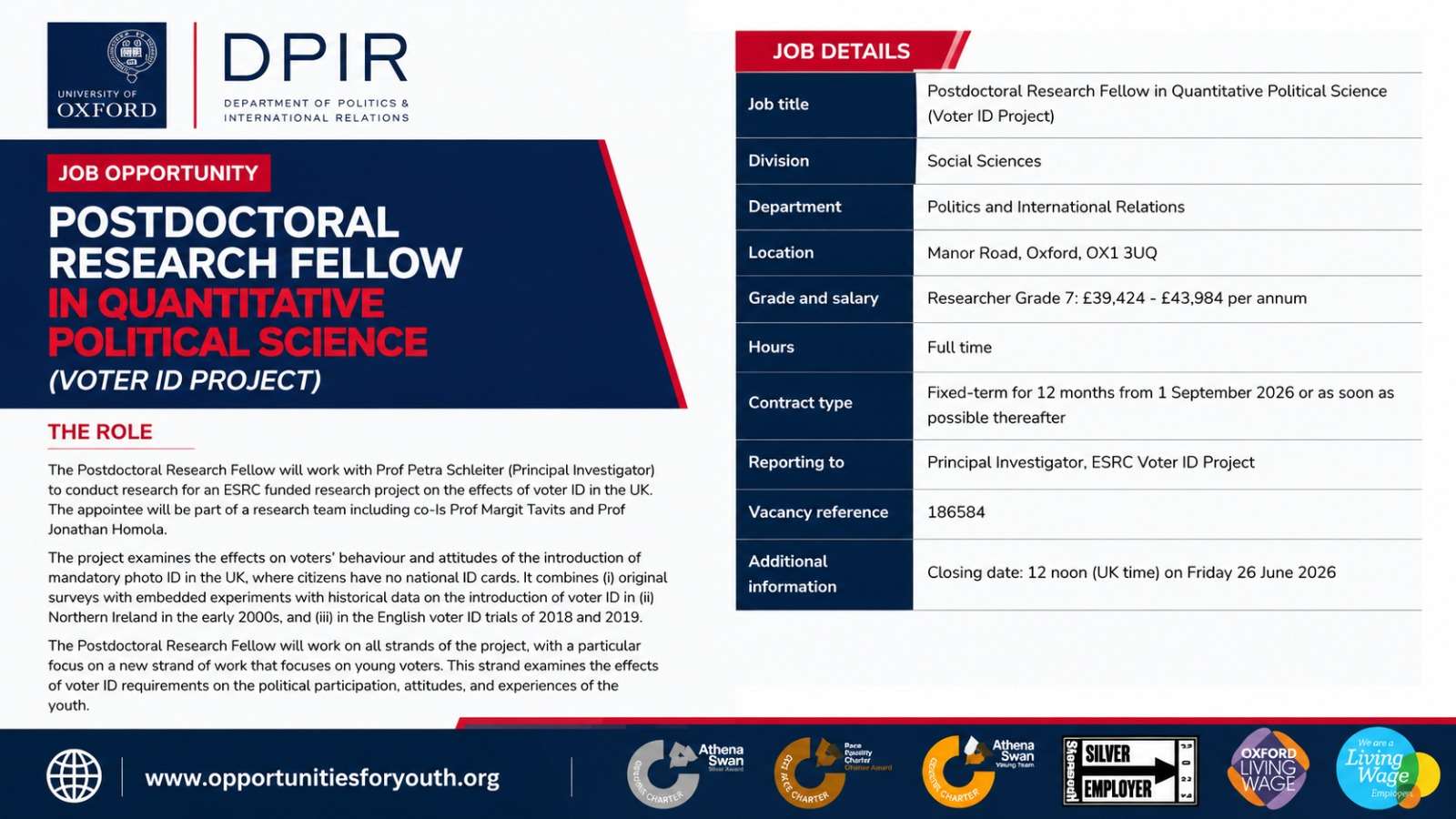
Postdoctoral Research Fellow in Quantitative Political Science at the University of Oxford (Voter ID Project)
the University of Oxford (Voter ID Project)
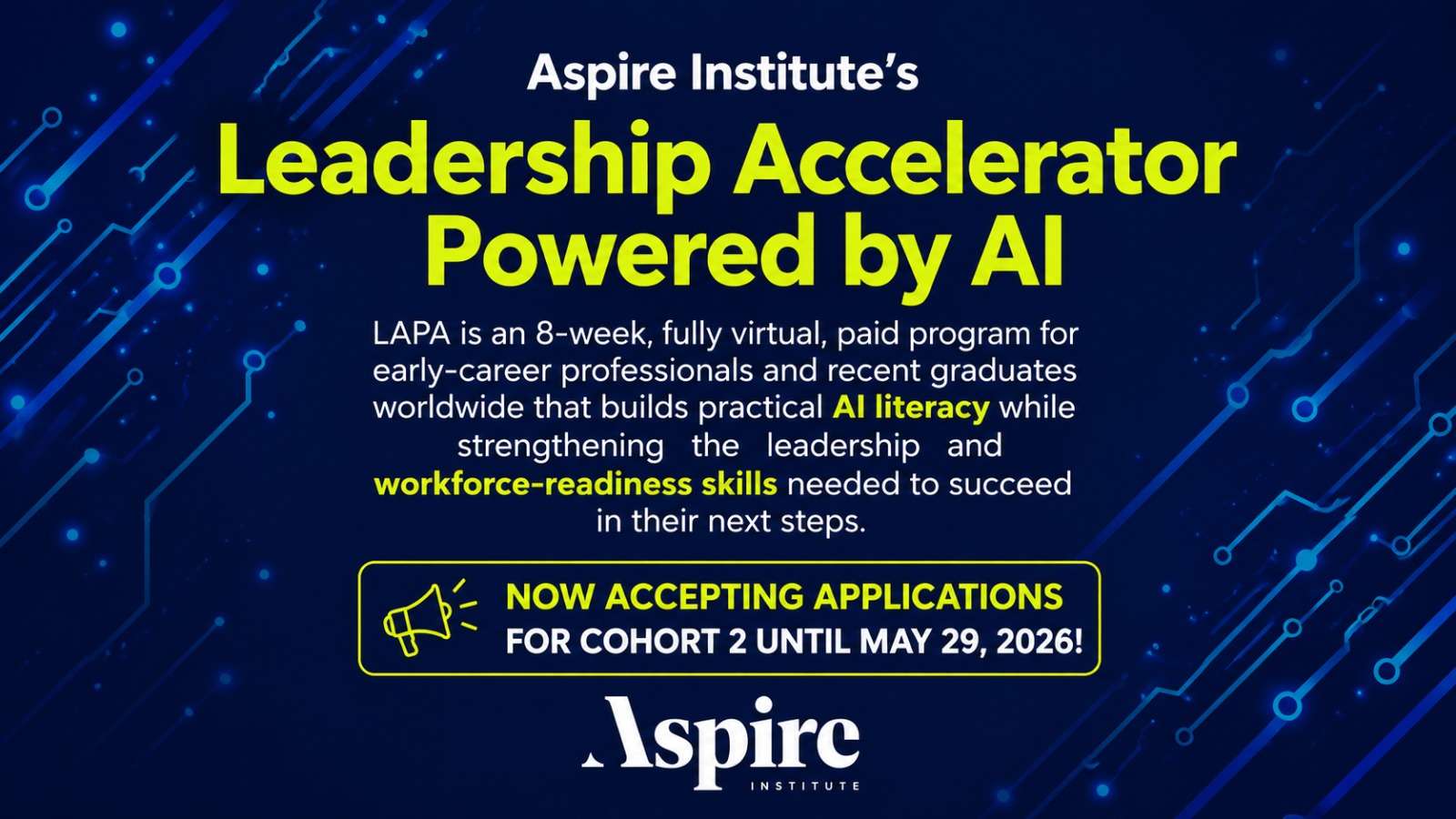
Leadership Accelerator Powered by AI 2026: A Comprehensive 8‑Week Program for Early‑Career Professionals Worldwide
Unknown
Partnership Advisor, Water & Resilience at The Nature Conservancy: A Comprehensive Guide for Global Applicants
The Nature Conservancy: A Comprehensive Guide for Global Applicants

Youth Development Intern
UNICEF
Volunteer Opportunity in Democratic Governance
EU Support to Democratic Governance Programme
AI for Asia Fellow
Unknown