
Global Environmental Journalism Fellowship 2026: Fully Funded Opportunity to Report from the GEF Assembly in Samarkand, Uzbekistan @Unknown
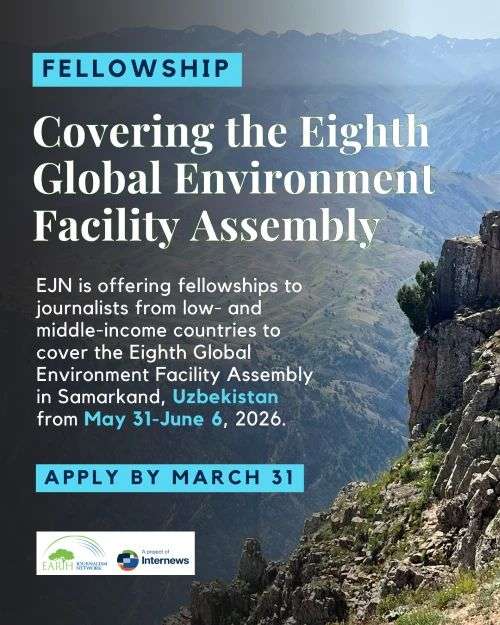
The Earth Journalism Network (EJN), a flagship initiative of Internews, has launched an exceptional opportunity for journalists from low- and middle-income countries to participate in a fully funded fellowship covering the Eighth Global Environment Facility (GEF) Assembly in Samarkand, Uzbekistan. This unique program is designed to empower journalists to deepen their expertise in environmental reporting while covering one of the world’s most influential global environmental governance meetings.
Selected fellows will travel to Uzbekistan to attend and report from the Assembly taking place between May 31 and June 6, 2026, where key decisions shaping global climate and environmental financing will be discussed. The fellowship will not only provide journalists with access to global environmental leaders and policymakers but also equip them with the training and mentorship necessary to report on complex environmental issues that affect millions worldwide.
The application deadline for this fellowship is March 31, 2026 (11:59 PM Pacific/Niue time).
Understanding the Global Environment Facility (GEF)
The Global Environment Facility (GEF) is a major international financial mechanism that supports environmental initiatives across the world. Since its establishment in 1991, the GEF has played a critical role in funding projects aimed at addressing the most pressing environmental challenges.
Over the past three decades, the GEF has provided more than $27 billion in funding, primarily through grants, and has mobilized an additional $155 billion in co-financing for environmental programs worldwide.
The facility works closely with global environmental agreements, including:
-
The Convention on Biological Diversity (CBD)
-
The United Nations Framework Convention on Climate Change (UNFCCC)
-
The Stockholm Convention on Persistent Organic Pollutants (POPs)
-
The United Nations Convention to Combat Desertification (UNCCD)
-
The Minamata Convention on Mercury
Through these partnerships, the GEF supports initiatives that protect biodiversity, improve climate resilience, strengthen food security, protect water resources, and promote sustainable development.
In addition to the GEF Trust Fund, several specialized funding mechanisms operate under the broader GEF umbrella, including:
-
The Least Developed Countries Fund (LDCF)
-
The Special Climate Change Fund (SCCF)
-
The Global Biodiversity Framework Fund (GBFF)
-
The Nagoya Protocol Implementation Fund (NPIF)
-
The Capacity-building Initiative for Transparency Trust Fund (CBIT)
These funds support critical environmental programs that influence agriculture, health systems, infrastructure development, disaster risk reduction, and ecosystem protection across vulnerable regions.
What is the GEF Assembly?
The GEF Assembly serves as the governing body of the Global Environment Facility and convenes representatives from all 186 member countries. It is responsible for reviewing and approving major policies, operational strategies, and institutional decisions related to the global environmental financing system.
The Eighth GEF Assembly in Samarkand will gather more than 1,000 participants, including:
-
Government ministers
-
International environmental experts
-
Civil society representatives
-
Indigenous leaders
-
Business and private sector leaders
-
Representatives of GEF partner agencies
-
Policymakers shaping global climate strategies
Throughout the week-long event, participants will deliberate on issues such as environmental financing, climate adaptation strategies, biodiversity protection, and sustainable development.
The Assembly program includes:
-
Nine high-level policy roundtables
-
A Civil Society Forum scheduled for June 3
-
Multiple thematic side events
-
Field visits to environmental project sites
-
Partnership and networking sessions
These discussions are expected to produce important outcomes that influence global environmental governance and funding priorities.
What the Fellowship Offers
Through this fellowship, five journalists will be selected to report directly from the Assembly in Samarkand. Fellows will receive extensive support and training to ensure they can effectively cover the complex environmental negotiations and policy discussions taking place during the event.
Pre-conference preparation
Before traveling to Uzbekistan, fellows will receive access to resources, tools, and preparatory materials from EJN. These resources are designed to help journalists understand the key environmental issues that will be debated during the Assembly and prepare them to develop impactful story ideas.
On-site training and mentorship
While attending the Assembly, fellows will participate in a structured program that includes:
-
Orientation sessions on the major environmental issues under discussion
-
Daily briefings to contextualize negotiations and policy developments
-
Opportunities to interview high-level policymakers and experts
-
Mentorship from an experienced senior journalist affiliated with EJN
This mentor will provide guidance on story development, reporting strategies, and analysis of the Assembly’s outcomes. Fellows will also receive feedback and editorial support to help refine their reporting.
Collaborative learning environment
The fellowship cohort will consist of journalists from different regions and media formats. Fellows will exchange ideas, share reporting strategies, and collaborate on covering environmental issues from diverse global perspectives.
Publishing and Reporting Requirements
Journalists participating in the fellowship may produce stories in a wide range of formats, including:
-
Print journalism
-
Online reporting
-
Radio broadcasts
-
Television or video reporting
Stories may be published in any language, allowing journalists to reach audiences in their home countries effectively.
However, fellows must provide:
-
English summaries of their stories
-
At least one full story translated into English for wider dissemination
This requirement ensures that the insights generated during the fellowship can be shared globally.
Editorial Independence and Attribution
The Earth Journalism Network fully respects the editorial independence of participating journalists. Fellows are free to report on the Assembly’s developments according to their professional judgment.
However, all stories produced through the fellowship must include the following acknowledgement:
“This story was produced as part of a reporting fellowship to the Eighth GEF Assembly supported by Internews’ Earth Journalism Network.”
Fellows may publish their work first through their affiliated media organizations. At the same time, EJN and its partners retain rights to edit, republish, broadcast, and distribute the stories.
Fellowship Funding and Coverage
The fellowship is fully funded, ensuring that selected journalists can participate without financial barriers.
The program covers:
-
Economy-class international airfare
-
Accommodation in Samarkand
-
Meals during the event
-
Travel insurance
-
Local transportation costs
-
Possible rail transportation between Tashkent and Samarkand
-
Press accreditation support
-
Logistical assistance during the conference
Participants may also receive financial support for transportation expenses during transit.
Visa application processes remain the responsibility of the fellows, though visa fees can be reimbursed.
Eligibility Requirements
Applicants must meet several eligibility criteria to be considered for the fellowship.
Eligible candidates must:
-
Be professional journalists working with or representing an established media outlet in a low- or middle-income country
-
Demonstrate prior experience reporting on environmental issues
-
Have a strong command of English
-
Be able to attend the entire Assembly in Samarkand from May 31 to June 6, 2026
-
Provide a letter of support from an editor or supervisor confirming publication of fellowship-related reporting
-
Submit samples of previous journalistic work related to environmental topics
Work samples may be submitted as documents or links and may be in any language, provided they include an English synopsis.
While journalists of any age may apply, preference will be given to applicants aged 35 and under.
Selection Criteria
Applications will be evaluated based on several factors, including:
-
Demonstrated experience in environmental and climate reporting
-
A well-developed reporting plan outlining story ideas from the Assembly
-
Potential audience reach of the applicant’s media outlet
-
A strong professional relationship with a reputable media organization
-
Geographic and media diversity among the selected fellows
Applicants who have engaged in unethical or improper professional conduct may be disqualified from consideration.
Application Process
Journalists interested in this fellowship must apply through the official Earth Journalism Network application platform.
Applicants will need to create or log into an account, complete the application form, and upload all required documents.
Required materials include:
-
A reporting proposal outlining story ideas
-
A letter of support from a media outlet editor or supervisor
-
Samples of relevant journalistic work
-
Supporting documentation requested during the application process
Applicants are strongly encouraged to submit their applications at least one day before the deadline to avoid technical issues.
Key Dates
Application Deadline: March 31, 2026 (11:59 PM Pacific/Niue Time)
Fellowship Event Dates: May 31 – June 6, 2026
Applicants will be notified of the selection results by mid-April 2026.
Why This Fellowship Matters
Environmental issues are among the most urgent global challenges of the 21st century. Climate change, biodiversity loss, pollution, and ecosystem degradation disproportionately affect communities in low- and middle-income countries.
By empowering journalists from these regions to report directly from high-level environmental negotiations, this fellowship helps ensure that global audiences receive accurate, contextualized, and impactful reporting on decisions that shape the future of the planet.
For journalists passionate about environmental storytelling and global climate governance, this fellowship represents an invaluable opportunity to expand their professional skills, strengthen international networks, and contribute to informed public dialogue on environmental policy.
For more information click here
Discover more opportunities here
Global Environmental Journalism Fellowship 2026: Fully Funded Opportunity to Report from the GEF Assembly in Samarkand, Uzbekistan
@Unknown
Location
Global
Job Type
fellowship
Posted
about 6 hours ago
Beware of scams! When applying for jobs, you should NEVER have to pay anything. Learn more.
You might also like

Call for Applications: International Summer School on Public Policy – Berkeley Edition 2026
Berkeley Edition 2026
IPCC AR7 Working Group I Review – Early Career Professionals Opportunity
Early Career Professionals Opportunity
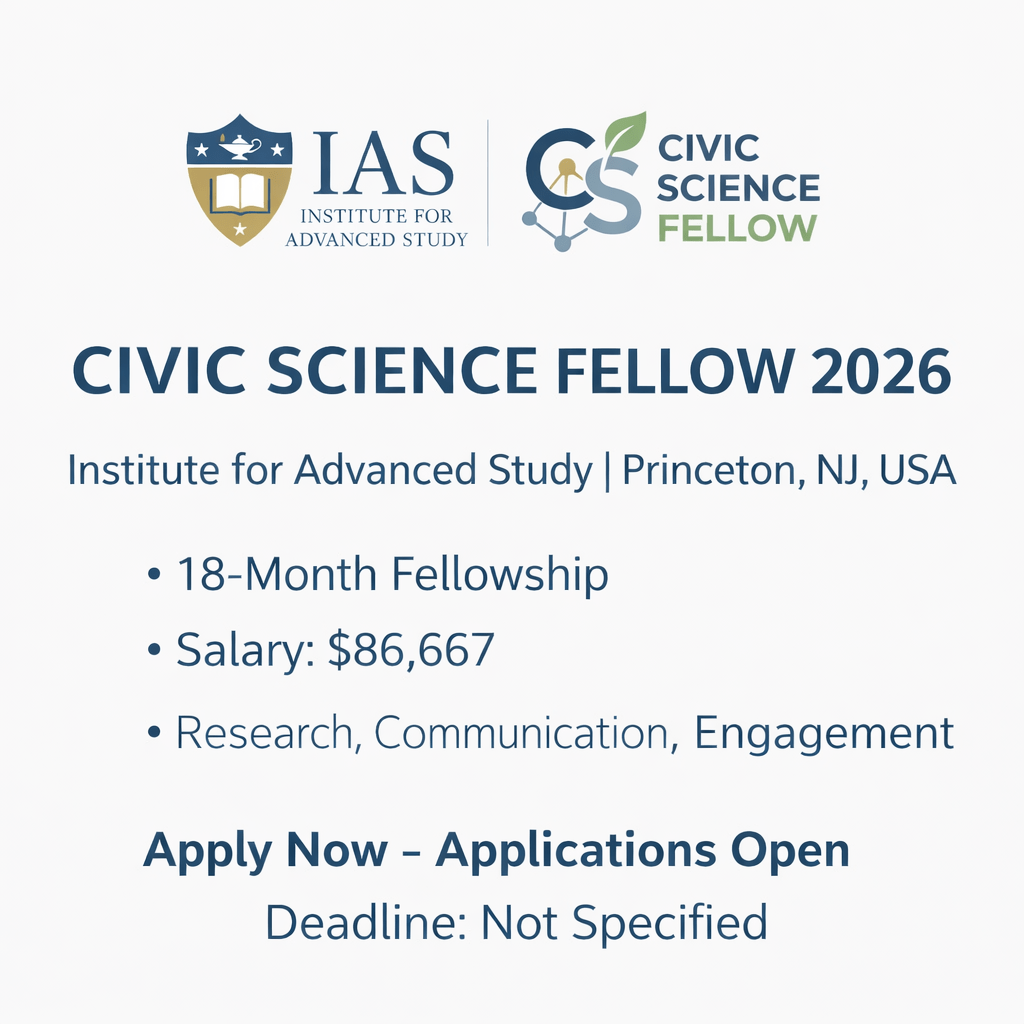
Civic Science Fellow 2026 at the Institute for Advanced Study (IAS) – $86,667 Salary for an 18-Month Fellowship in Princeton, USA
the Institute for Advanced Study (IAS) – $86,667 Salary for an 18-Month Fellowship in Princeton, USA
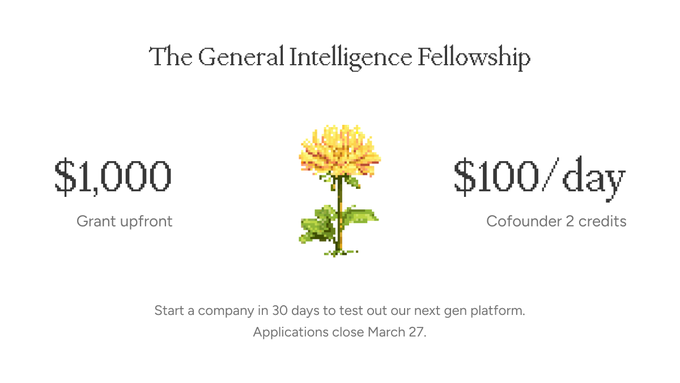
General Intelligence Fellowship – Build an AI-Powered Company in 30 Days
Build an AI-Powered Company in 30 Days
African Graduate Fellowship 2026 at AUC: Fully Funded Master’s Opportunity for African Students
AUC: Fully Funded Master’s Opportunity for African Students
Call for Applications: APWLD South to South Fellowship Programme – Apply By 25 March 2026
Apply By 25 March 2026