








Innovate Africa Challenge 2026: Smart Africa and FAO Launch 3rd Edition for AI-Driven Climate-Smart Agriculture Startups in Ghana, Kenya, Malawi, Rwanda and Uganda ·Driven Climate-Smart Agriculture Startups in Ghana, Kenya, Malawi, Rwanda and Uganda
Applications are open for the Innovate Africa Challenge 2026 (3rd Edition), a major continental innovation initiative jointly organized by Smart Africa and the Food and Agriculture Organization of the United Nations (FAO) to accelerate the deployment of Artificial Intelligence solutions that address agricultural and climate challenges across Africa.
Under the theme “From Ideation to Deployment,” the third edition marks an important shift from developing promising technological concepts toward deploying practical, scalable, and context-validated AI solutions capable of delivering measurable benefits to African farmers.
The Innovate Africa Challenge 2026 is specifically seeking startups, innovators, and solution developers working on AI-driven solutions for climate-smart agriculture. The selected solution will move beyond experimentation or pilot-stage development and be deployed within a Smart Africa Member State in collaboration with relevant government ministries, the Smart Africa Secretariat, FAO country offices, and technical experts.
The challenge focuses particularly on AI applications for precision agriculture, crop yield forecasting, pest and disease surveillance, climate risk modelling, adaptive agricultural decision-making, and water and natural resource optimization.
Importantly, this edition is geographically targeted. Applications are only open to eligible applicants from Ghana, Kenya, Malawi, Rwanda, and Uganda.
Innovate Africa Challenge 2026 at a Glance
Key details of the third edition include:
- Organizers: Smart Africa and the Food and Agriculture Organization of the United Nations (FAO)
- Edition: Third Edition
- Theme: “From Ideation to Deployment”
- Main Focus: Artificial Intelligence for Climate-Smart Agriculture
- Eligible Countries: Ghana, Kenya, Malawi, Rwanda, and Uganda
- Target Applicants: Startups, innovators, and solution developers
- Geographic Focus: Africa
- Main Objective: Deploy a proven and scalable AI-driven agricultural solution in a Smart Africa Member State
- Priority Areas: Precision agriculture, crop forecasting, pest and disease surveillance, climate risk modelling, decision support, and natural resource optimization
- Application Deadline: No application deadline is stated in the information provided
About the Innovate Africa Challenge
The Innovate Africa Challenge is a continental initiative created to advance technological innovation and accelerate the practical application of solutions capable of addressing major development challenges across Africa.
The third edition is jointly organized by Smart Africa and FAO and concentrates on one of the continent’s most important intersections: Artificial Intelligence, agriculture, food systems, and climate resilience.
Africa’s agricultural sector faces significant and interconnected challenges. At the same time, rapid advances in Artificial Intelligence, digital agriculture, data-driven technologies, and related innovations provide new opportunities to improve agricultural productivity, sustainability, resilience, resource management, and access to markets.
A persistent challenge, however, is moving technological innovations beyond the pilot stage.
Many potentially valuable solutions are developed and tested on a limited scale but are never successfully integrated into national agricultural systems or deployed widely enough to deliver meaningful benefits to farmers.
The Innovate Africa Challenge 2026 seeks to address this gap.
Rather than focusing exclusively on generating new ideas, the third edition emphasizes identifying technologies that have already demonstrated potential and helping move them toward practical deployment and validation.
2026 Theme: “From Ideation to Deployment”
The theme of the third edition is:
“From Ideation to Deployment”
This theme captures the central ambition of the 2026 challenge.
The organizers are seeking to move beyond promising ideas toward solutions that can operate effectively in real agricultural environments.
The challenge therefore places considerable emphasis on technological maturity, practical implementation, contextual relevance, measurable impact, and scalability.
Successful solutions should be capable of producing meaningful outcomes for farmers, agricultural extension services, government institutions, or other stakeholders in African agricultural systems.
Why the Innovate Africa Challenge Matters
Artificial Intelligence has enormous potential to transform African agriculture.
AI-powered agricultural technologies can potentially help farmers and institutions:
- Make better agricultural decisions
- Optimize inputs
- Improve resource efficiency
- Predict crop yields
- Detect pests and diseases earlier
- Respond to climate risks
- Improve water management
- Strengthen food security
- Reduce agricultural losses
- Improve climate resilience
- Increase agricultural productivity
Despite this potential, promising innovations frequently struggle to transition from prototypes and pilots to large-scale implementation.
Another challenge identified by the initiative is that innovations are sometimes developed without sufficient validation within the realities of African smallholder farming.
A solution that performs effectively in one technological or agricultural environment may not automatically work in settings characterized by unreliable connectivity, incomplete datasets, diverse languages, different agro-ecological conditions, and predominantly smallholder farming systems.
The third edition of the Innovate Africa Challenge therefore emphasizes deployment and real-world validation.
Building on Previous Innovate Africa Challenge Editions
Previous editions of the Innovate Africa Challenge demonstrated the potential for Artificial Intelligence to contribute to climate action and agriculture.
However, the third edition recognizes that demonstrating technological potential alone is not sufficient.
Many innovations still require deeper validation within African smallholder farming environments before they can achieve widespread adoption and sustainable impact.
The 2026 edition consequently seeks to bridge the gap between innovation and implementation by supporting a solution that can be deployed, validated, and demonstrated under real-world conditions.
Main Objective of the Innovate Africa Challenge 2026
The central objective of the third edition is to identify and support a proven AI-driven solution for climate-smart agriculture and facilitate its deployment within a Smart Africa Member State.
The selected solution is expected to be implemented through collaboration involving:
- National ministries responsible for Agriculture
- National ministries responsible for ICT
- National ministries responsible for Innovation
- Smart Africa Secretariat
- FAO country offices
- FAO technical experts
- Other relevant ecosystem stakeholders
This collaborative structure is intended to provide the institutional environment required to move an AI solution from a promising innovation toward meaningful implementation.
Expected Outcomes of the Challenge
The Innovate Africa Challenge 2026 is designed to produce three broad outcomes.
1. Deployment of a Scalable and Context-Validated AI Solution
One proven AI-driven solution will be selected, customized to African agricultural realities, deployed, validated, and demonstrated in a real-world setting.
The implementation is expected to contribute to measurable improvements in areas such as:
- Farmers’ decision-making
- Agricultural productivity
- Climate resilience
The deployment should also establish a foundation for potential wider adoption across Smart Africa Member States.
This is an important distinction of the third edition: the challenge is not simply searching for interesting AI ideas. It seeks a solution capable of demonstrating practical value in an authentic agricultural context.
2. Stronger Ecosystem and Multi-Stakeholder Collaboration
The initiative seeks to strengthen collaboration between the various institutions and stakeholders required for successful digital agricultural transformation.
These may include:
- Technology innovators
- Government ministries
- FAO country offices
- Private-sector organizations
- Research institutions
- Farmer organizations
- Agricultural stakeholders
By connecting these actors, the challenge aims to reduce institutional silos, encourage knowledge exchange, strengthen capacity, and establish an enabling environment for sustained digital transformation in agriculture.
3. Evidence Generation and a Replicable Scale-Up Model
Another important expected outcome is the generation of practical evidence from the deployment process.
Lessons learned from implementation should help create a replicable model for scaling AI-driven climate-smart agriculture solutions across Africa.
Such evidence could contribute to:
- Policy development
- Investment decisions
- Responsible AI adoption
- Digital agriculture strategies
- Wider technology deployment
- Future agricultural innovation programmes
The long-term objective is to amplify the benefits of responsible AI technologies for African farmers and food systems.
Priority Areas for the Innovate Africa Challenge 2026
The challenge identifies several primary areas of interest.
1. Precision Agriculture and Input Optimization
Solutions may use AI and data-driven technologies to help farmers make more precise decisions about agricultural inputs and resources.
The objective is to improve resource efficiency while reducing negative environmental impacts.
Potential applications could support better agricultural decision-making around the use and allocation of farm resources.
2. Crop Yield Prediction and Forecasting
The challenge is interested in AI solutions capable of supporting crop yield prediction and agricultural forecasting.
Improved forecasting can contribute to:
- Proactive agricultural planning
- Better decision-making
- Food security
- Risk management
Reliable predictions can help farmers, governments, and agricultural institutions anticipate challenges and make more informed decisions.
3. Pest and Disease Surveillance, Detection and Early Warning
Pests and diseases can cause substantial agricultural losses.
The challenge therefore welcomes AI solutions that strengthen:
- Surveillance
- Detection
- Early-warning capabilities
- Timely agricultural responses
Earlier identification can allow farmers and agricultural institutions to respond before problems become more widespread.
4. Climate Risk Modelling and Adaptive Decision Support
Climate variability and extreme weather conditions increasingly affect agricultural production.
AI technologies capable of modelling climate risks and providing adaptive decision support can help strengthen farmers’ resilience to climate-related shocks.
The challenge seeks solutions capable of translating climate and agricultural information into actionable guidance.
5. Water and Natural Resource Optimization
Efficient management of water and other natural resources is essential to sustainable agriculture.
AI-powered solutions that improve resource optimization therefore fall within the challenge’s priority areas.
Deployment and Validation Requirements
The Innovate Africa Challenge places strong emphasis on technologies capable of operating within actual African agricultural conditions.
Participating startups are expected to demonstrate that their solutions can generate reliable and actionable outputs for one or more of the following:
- Farmers
- Agricultural extension services
- Agricultural institutions
Solutions should be capable of functioning effectively within challenging and diverse environments.
Solutions Must Address African Agricultural Realities
The proposed technology should demonstrate its ability to operate in environments characterized by several important realities.
Smallholder and Informal Farming Systems
Smallholder farmers constitute an important part of African agriculture.
Solutions should therefore be relevant to farming environments that may differ substantially from highly industrialized agricultural systems.
Partial or Low-Frequency Data
AI solutions often depend on large amounts of high-quality data.
However, agricultural data in some settings may be:
- Partial
- Incomplete
- Irregular
- Collected at low frequency
Solutions should demonstrate an ability to operate effectively under these constraints.
Mobile-First and Low-Connectivity Environments
Digital solutions intended for African farmers should account for differences in connectivity and technology access.
The challenge specifically recognizes environments where mobile devices may be the primary digital platform and internet connectivity may be limited.
Multilingual and Heterogeneous Data Environments
Africa is characterized by significant linguistic, cultural, agricultural, and data diversity.
Proposed technologies should therefore demonstrate an ability to function in multilingual and heterogeneous data environments where appropriate.
Diverse Agro-Ecological Zones and Farming Practices
Agricultural conditions differ significantly across countries and regions.
Solutions should be capable of adapting to diverse:
- Agro-ecological zones
- Cropping systems
- Farming practices
- Environmental conditions
Integration with National Systems
The challenge is particularly interested in solutions capable of integration with:
- National agricultural extension systems
- Government ministry systems
- Existing agricultural institutions
This integration component is crucial to moving innovations beyond isolated pilots toward broader institutional adoption.
Who Can Apply for the Innovate Africa Challenge 2026?
The challenge is open to:
- Startups
- Innovators
- Solution developers
Applicants must be actively developing or deploying AI-driven solutions for climate-smart agriculture.
The challenge is not solely evaluating the technical sophistication of applicants.
Applicants are also expected to demonstrate:
- Technological maturity
- Commitment to strengthening the innovation ecosystem
- Potential for measurable impact
- Viable pathways toward scaling
- Financial sustainability
Click HERE to submit your application
Eligible Countries
The Innovate Africa Challenge 2026 is specifically restricted to applicants from five African countries:
- Ghana
- Kenya
- Malawi
- Rwanda
- Uganda
The source explicitly states that the call is only open to applicants coming from these countries.
Applicants outside these five countries should therefore not assume eligibility for this particular edition based solely on the challenge’s broader continental objectives.
Additional Eligibility Criteria
The source provided introduces a section stating that applicants must meet additional criteria, but the actual criteria following that heading are not included in the supplied information.
Prospective applicants should therefore carefully review the complete official challenge documentation before submitting an application to confirm all organizational, technical, operational, financial, or other eligibility requirements.
Responsible AI, Data Protection and Governance Requirements
All participating startups must comply with important principles governing data use and Artificial Intelligence.
Data Protection and Privacy
Participants must comply with applicable data protection and privacy requirements in the countries where they operate.
Responsible and Explainable AI
Solutions must apply responsible and explainable AI practices appropriate to agricultural decision-making.
This is particularly important where AI-generated recommendations could influence farmers’ production decisions, resource allocation, or livelihoods.
Bias Identification and Mitigation
Participating startups must demonstrate approaches for identifying and mitigating AI bias.
Particular attention should be given to bias related to:
- Gender
- Geography
- Farming systems
Farmer Data Rights
Participants must respect the rights of farmers whose data may be collected or processed.
Appropriate consent must be obtained for data use.
Confidentiality
All information shared under the challenge must be treated in accordance with applicable confidentiality requirements.
Smart Africa also reserves the right to establish and enforce additional requirements relating to:
- Data governance
- Responsible AI
- Information management
throughout the challenge.
Intellectual Property Rules
Participating startups will retain ownership of their pre-existing intellectual property.
This means intellectual property developed before participation in the challenge remains with the relevant participant.
However, the source establishes additional provisions concerning outputs developed under the initiative.
Smart Africa will retain rights over:
- Challenge outputs
- Reports
- Frameworks developed under the initiative
Any subsequent scale-up or deployment phase may be governed through separate contractual arrangements.
Those agreements may establish specific terms covering:
- Ownership
- Licensing
- Deployment rights
Applicants should therefore review all intellectual property and contractual conditions carefully before participating.
Collaboration with Governments and FAO
A significant feature of the challenge is the planned collaboration between innovators and institutional stakeholders.
The selected solution is expected to be implemented alongside relevant national ministries, Smart Africa, and FAO.
This structure can help ensure that the technology is not developed separately from the institutions responsible for agricultural policy and implementation.
It also provides an opportunity to test whether an innovation can integrate into existing national systems and respond effectively to local agricultural priorities.
Why Scalability Matters
The ultimate goal extends beyond deploying a single solution in one location.
The challenge aims to demonstrate an approach that could provide a foundation for broader adoption across Smart Africa Member States.
A successful solution should therefore have the potential to:
- Adapt to different agricultural environments
- Serve larger numbers of farmers
- Integrate with national systems
- Demonstrate measurable benefits
- Operate sustainably
- Support evidence-based policy and investment
- Provide a model that could be replicated elsewhere
Why Startups and AI Innovators Should Consider Applying
For startups developing AI solutions for African agriculture, one of the greatest challenges can be moving from product development to meaningful deployment.
The Innovate Africa Challenge directly addresses this transition.
The selected innovation will have an opportunity to demonstrate its capabilities within a real-world environment and work within a multi-stakeholder ecosystem involving government institutions, international organizations, researchers, farmer organizations, and other relevant actors.
For an eligible startup with a mature solution, this provides an opportunity to demonstrate that its technology can generate practical value under African agricultural conditions.
Application Deadline
The information supplied for the Innovate Africa Challenge 2026 states August 31, 2026 as the application deadline.
Click HERE to submit your application
Important Considerations Before Applying
Prospective applicants should carefully assess whether their solutions align with the challenge before submitting an application.
Applicants should be prepared to demonstrate:
- A clear AI component within their solution.
- Direct relevance to climate-smart agriculture.
- Evidence of technological maturity.
- Practical value for farmers, extension services, or agricultural institutions.
- Ability to operate under real African agricultural conditions.
- Potential for measurable impact.
- Potential for scaling.
- A pathway toward financial sustainability.
- Responsible and explainable AI practices.
- Compliance with data protection and farmer data rights.
- Ability to address potential bias.
- Relevance to one or more of the challenge’s priority agricultural areas.
Applicants should also carefully examine the complete official documentation because some detailed eligibility criteria referenced by the source are not included in the information provided.
Visit HERE to learn more about the Innovate Africa Challenge 2026.
Conclusion
The Innovate Africa Challenge 2026 (3rd Edition) represents an important opportunity for AI startups, innovators, and technology developers seeking to transform African agriculture through practical, scalable, and responsible Artificial Intelligence solutions.
Jointly organized by Smart Africa and the Food and Agriculture Organization of the United Nations, the challenge moves beyond the traditional innovation competition model by emphasizing real-world deployment. Under the theme “From Ideation to Deployment,” the initiative seeks one proven AI-driven solution that can be customized, deployed, validated, and demonstrated within African agricultural realities.
The challenge is particularly focused on precision agriculture and input optimization, crop yield prediction and forecasting, pest and disease surveillance, climate risk modelling, adaptive decision support, and water and natural resource optimization.
Solutions must also demonstrate their relevance to the realities faced by African agriculture, including smallholder farming systems, incomplete datasets, low-connectivity environments, multilingual contexts, diverse agro-ecological conditions, and integration with government and agricultural extension systems.
Only applicants from Ghana, Kenya, Malawi, Rwanda, and Uganda are eligible under the geographic restriction stated in the call. Eligible startups and innovators developing mature AI-powered climate-smart agriculture solutions should carefully review the full application requirements, responsible AI principles, data governance provisions, and intellectual property conditions before applying.
With its emphasis on deployment, government collaboration, evidence generation, scalability, and measurable farmer impact, the Innovate Africa Challenge 2026 provides a potentially significant platform for innovators seeking to move promising agricultural AI technologies from pilots toward wider adoption across Africa.
Discover more global Competition and AI opportunities on OFY.

Innovate Africa Challenge 2026: Smart Africa and FAO Launch 3rd Edition for AI-Driven Climate-Smart Agriculture Startups in Ghana, Kenya, Malawi, Rwanda and Uganda
@Driven Climate-Smart Agriculture Startups in Ghana, Kenya, Malawi, Rwanda and Uganda
Location
USA / Global
Work Mode
opportunity
Posted
about 5 hours ago
Beware of scams! When applying for jobs, you should NEVER have to pay anything. Learn about job scams.
Get jobs in your inbox
Join over 10,000 subscribers receiving our weekly newsletter.
You might also like

New vacancy with HSDF
Unknown

AEIP Scholars Programme 2026–2027: Fully Sponsored Africa-Europe Research Collaboration Programme for Young Scholars
2027: Fully Sponsored Africa-Europe Research Collaboration Programme for Young Scholars

Skills & Innovation Academy Ghana: Free Pre-Employment Training Connecting Graduates with SME Jobs in Ghana
Employment Training Connecting Graduates with SME Jobs in Ghana

Entry-Level Training Program With GTCO
Level Training Program With GTCO

TED-Ed Educator Talks Idea Workshop 2026: Free Virtual Professional Development Workshop for Educators Worldwide to Master Public Speaking and Storytelling
Ed Educator Talks Idea Workshop 2026: Free Virtual Professional Development Workshop for Educators Worldwide to Master Public Speaking and Storytelling
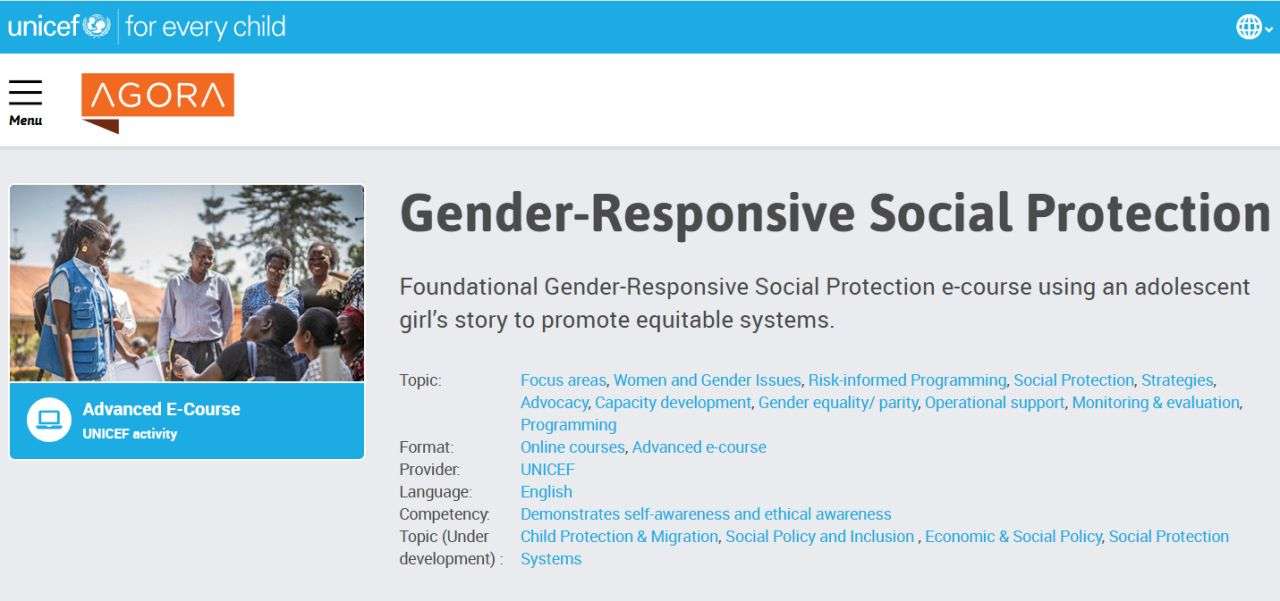
UNICEF Gender-Responsive Social Protection E-Course: Self-Paced Training for Practitioners and Development Professionals
Responsive Social Protection E-Course: Self-Paced Training for Practitioners and Development Professionals