
Kyoto University Launches 2026 Second Call for Joint Research Proposals Under Global Collaborative Research Programme @Unknown
The Kyoto University Centre for Southeast Asian Studies has announced the second call for applications for the 2026 Joint Use and Joint Research Programme under its Global Collaborative Research (GCR) initiative, inviting international scholars to submit proposals aimed at advancing interdisciplinary and globally oriented regional studies.
The programme is part of the International Collaborative Research Center for Southeast Asian Area Studies for Global Coexistence, which promotes cross-disciplinary research collaboration between humanities, social sciences, and natural sciences.
Research Programme Aims to Advance Global Coexistence Studies
The Kyoto University initiative is designed to strengthen academic collaboration while addressing global challenges through Southeast Asian regional studies as a core focus.
The programme outlines five key objectives:
- Promotion of interdisciplinary research integrating humanities and sciences
- Advancement of issue-based global regional studies frameworks
- Creation of research platforms linking academia, civil society, government, and business
- Strengthening collaboration between Japanese and Southeast Asian researchers
- Development of young researchers in international research environments
The centre emphasised that while the programme prioritises Southeast Asian studies, it remains open to broader innovative research proposals that contribute to global knowledge production.
Joint Research Funding Opportunities for 2026
The second call for proposals includes three categories of joint research and shared use programmes, each supporting collaborative academic engagement across international networks.
Available programme categories include:
- Field Stay Type Research
- Number of applications: 2
- Maximum funding: 400,000 yen per year
- Duration: 2 years
- Visiting Collaborative Research
- Number of applications: 1
- Maximum funding: 400,000 yen per year
- Duration: 2 years
- Material Sharing Programme
- Number of applications: 1
- Maximum funding: 400,000 yen per year
- Duration: 2 years
- Large-scale collection purchases may reach up to 1 million yen per item
These funding streams are designed to support fieldwork, academic exchange, and shared research infrastructure among international partners.
Strengthening International Academic Collaboration
The Global Collaborative Research (GCR) initiative under the Kyoto University seeks to build long-term research partnerships between Japan and Southeast Asia.
The programme prioritises:
- Cross-border academic collaboration between young researchers and established scholars
- Field-based research integrating local and international perspectives
- Institutional partnerships across academia, government, civil society, and industry
- Dissemination of research findings through global academic networks
By encouraging participation from early-career researchers and practitioners, the initiative aims to cultivate a new generation of scholars engaged in global coexistence research.
Application Process and Submission Requirements
Applicants are required to submit full research proposals in accordance with the programme guidelines for fiscal year 2026.
Key submission details include:
- Application deadline: Monday, 22 June 2026
- Submission format: PDF documents via email
- Subject line requirement: “GCR Secondary Collaborative Research Application”
- Form 4 (Research Organisation): must be submitted in Excel format
Required application documents include:
- Application Form
- Curriculum Vitae of the Principal Investigator
- Research Plan
- Research Organisation Details
- Foreign Researcher Invitation Information Form
All applications will be reviewed under the guidelines of the Joint Use and Joint Research Program framework.
Building Research Platforms Beyond Academia
The GCR initiative is structured to go beyond traditional academic boundaries by fostering collaboration between researchers and non-academic stakeholders.
The programme supports:
- Engagement with civil society organisations
- Collaboration with government institutions
- Partnerships with private sector actors
- Integration of local community perspectives into research design
This approach reflects the programme’s broader goal of creating research ecosystems that contribute to real-world solutions and policy-relevant knowledge production.
Supporting Early-Career Researchers in International Settings
A central component of the initiative is its emphasis on nurturing young researchers through international exposure and collaborative fieldwork.
The programme encourages:
- Participation of early-career academics in joint research design and implementation
- Field-based research experiences in Southeast Asia
- Cross-cultural academic exchange between Japanese and international institutions
- Capacity building through mentorship and research collaboration
The centre highlighted that such engagement is essential to developing globally competent researchers capable of addressing complex regional and international issues.
Continued Commitment to Global Knowledge Exchange
The Kyoto University Centre for Southeast Asian Studies reaffirmed its commitment to advancing global research collaboration through structured funding mechanisms and international partnerships.
By supporting joint research initiatives, the Global Collaborative Research programme continues to position Southeast Asian studies as a dynamic field contributing to broader discussions on global coexistence, interdisciplinary innovation, and sustainable development.
VISIT OFFICIAL WEBSITE TO APPLY
For more opportunities such as these please follow us on Facebook, Instagram, Twitter, LinkedIn and WPChannel
Disclaimer: Global South Opportunities (GSO) is not the organization offering this opportunity. For any inquiries, please contact the official organization directly. Please do not send your applications & CVs to GSO, as we are unable to process them. Due to the high volume of emails, we receive daily, we may not be able to respond to all inquiries. Thank you for your understanding.
JOIN GSO WHATSAPP CHANNEL NOW
Kyoto University Launches 2026 Second Call for Joint Research Proposals Under Global Collaborative Research Programme
@Unknown
Location
USA / Global
Work Mode
fellowship
Posted
about 3 hours ago
Beware of scams! When applying for jobs, you should NEVER have to pay anything. Learn about job scams.
Get jobs in your inbox
Join over 10,000 subscribers receiving our weekly newsletter.
You might also like
Call for Applications: Georgetown University Hillary Rodham Clinton Research Fellowship in Women, Peace and Security
Unknown

United Nations International Procurement Seminar June 2026: A Global Opportunity for Suppliers and Businesses to Engage with the UN Market
Unknown
IIDS Announces Internship Opportunity for Jr. Social Media Assistant/Analyst Under GYAN Teaching Fellowship
Unknown
University of Oxford’s Skoll Centre Opens Applications for 2026–27 Early Career Research Fellowship: £1,000 Stipend Available
27 Early Career Research Fellowship: £1,000 Stipend Available
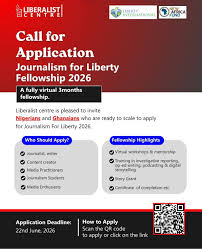
Applications Open for Journalism for Liberty Fellowship 2026 Targeting Media Professionals in Nigeria and Ghana
Unknown
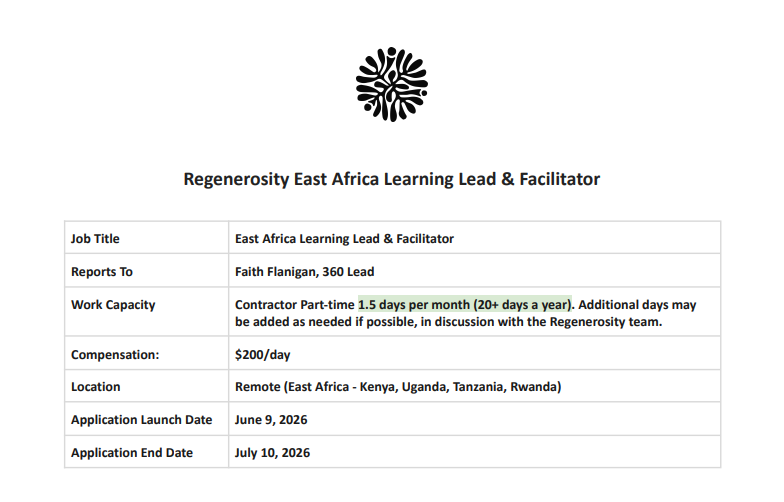
Regenerosity is Hiring: Remote East Africa Learning Lead and Facilitator to Support Grassroots Regeneration Programs – Apply by 10 July 2026
Unknown