
Marie Skłodowska-Curie Actions (MSCA) Fully Funded Postdoctoral Fellowships 2026: Step-by-Step Guide for Applicants Worldwide @Curie Actions (MSCA) Fully Funded Postdoctoral Fellowships 2026: Step-by-Step Guide for Applicants Worldwide
Marie Skłodowska-Curie Actions (MSCA) Fully Funded Postdoctoral Fellowships 2026
The 2026 call for the Marie Skłodowska-Curie Actions (MSCA) Postdoctoral Fellowships is now officially open, offering one of the most prestigious funding opportunities for early-career researchers worldwide.
Managed under the European Union’s research and innovation framework, the programme is designed to support highly qualified researchers in advancing their careers through international mobility, interdisciplinary training, and collaboration with leading institutions.
With a total budget of approximately €399.05 million, the 2026 call is expected to fund around 1,600 research projects across multiple disciplines.
What Are MSCA Postdoctoral Fellowships?
The Marie Skłodowska-Curie Actions Postdoctoral Fellowships 2026 are part of the broader Horizon Europe framework. These fellowships support researchers who hold a PhD and want to develop their careers by working in a different country or research environment.
The programme aims to strengthen research excellence while encouraging international collaboration, knowledge exchange, and career development across academia, industry, and public institutions.
Researchers benefit not only from funding but also from exposure to new scientific environments, advanced training opportunities, and access to global research networks.
Application Timeline for 2026
The official timeline for the 2026 MSCA Postdoctoral Fellowships is as follows:
- Opening date: 9 April 2026
- Closing date: 9 September 2026 (17:00 CEST)
- Expected results announcement: February 2027
Applicants are strongly encouraged to submit well before the deadline to avoid technical issues and last-minute complications.
Step-by-Step Guide to Applying
The application process is structured and competitive. Researchers are advised to follow six key preparation steps.
Step 1: Understand the Funding Scheme
Applicants are encouraged to first familiarize themselves with the structure and purpose of the MSCA programme. This includes reviewing:
- The official MSCA Work Programme
- Application and evaluation guidelines
- Budget structure and award criteria
- Supporting documentation on open science, sustainability, and research impact
The fellowship supports both European and Global mobility pathways, depending on the host institution and research plan.
Step 2: Check Eligibility Requirements
To apply, researchers must meet strict eligibility conditions:
- Hold a doctoral degree (PhD) by the application deadline
- Have a maximum of eight years of research experience after obtaining the PhD
- Account for allowable exclusions such as career breaks, non-research work, or mobility-related adjustments
- Comply with mobility rules, meaning applicants must not have lived or worked in the host country for more than 12 months in the last three years
Additional guidance and self-assessment tools are available through the European Research Executive Agency (REA) and MSCA National Contact Points to help applicants confirm eligibility.
Step 3: Find a Host Organisation and Supervisor
A crucial part of the application is securing a host institution and academic supervisor. Eligible host organisations include:
- Universities and higher education institutions
- Research centres and infrastructures
- Private sector companies and SMEs
- Public sector bodies such as government agencies and museums
- NGOs, foundations, and other research-active organisations
Applicants must develop a joint proposal with their chosen host institution, ensuring strong alignment between the research project and the host’s expertise.
For Global Fellowships, researchers may also spend time outside Europe before returning to a European host institution.
Finding a suitable match is often supported through platforms such as MSCA matchmaking services and EURAXESS hosting tools.
Step 4: Prepare the Application Proposal
Applicants are required to develop a detailed research proposal that is assessed based on several key criteria, including:
- Scientific excellence
- Training and career development
- Impact of the research
- Innovation and knowledge transfer
Additional elements such as gender balance, open science practices, dissemination strategies, and environmental sustainability are increasingly important under the Horizon Europe framework.
Researchers are encouraged to attend webinars, workshops, and training sessions organised by MSCA networks and host institutions to strengthen their applications.
Step 5: Seek Feedback and Improve the Application
Before submission, applicants are advised to seek feedback from multiple sources, including:
- Supervisors and host organisations
- MSCA National Contact Points in participating countries
- The Marie Curie Alumni Association, which offers peer support from former fellows
- Internal review teams within universities or research institutes
External feedback helps improve proposal clarity, competitiveness, and alignment with evaluation criteria.
Step 6: Submit the Application
The final step is submission via the EU Funding and Tenders Portal. Applicants should ensure:
- All sections of the proposal are complete
- Eligibility criteria are met
- Required documents are correctly uploaded
- The submission is completed before the deadline (9 September 2026, 17:00 CEST)
Once submitted, proposals can still be edited or withdrawn until the closing date. However, early submission is strongly recommended.
Evaluation and Results
After submission, applications undergo a rigorous evaluation process conducted by independent experts. The assessment period typically lasts around five months.
Results are expected to be published in February 2027, with successful applicants invited to begin preparations for project implementation shortly afterward.
Call for Action
The Marie Skłodowska-Curie Actions Postdoctoral Fellowships 2026 represent one of the most competitive and prestigious funding opportunities available to postdoctoral researchers worldwide.
Through the support of the Horizon Europe, the programme enables researchers to expand their expertise, build international collaborations, and accelerate their academic and professional careers.
For researchers willing to embrace international mobility and interdisciplinary collaboration, early preparation is essential. With careful planning, strong mentorship, and a well-developed proposal, applicants can significantly improve their chances of success in this highly competitive call.
LEARN MORE
For more opportunities such as these please follow us on Facebook, Instagram, Twitter, LinkedIn and WPChannel
Disclaimer: Global South Opportunities (GSO) is not the organization offering this opportunity. For any inquiries, please contact the official organization directly. Please do not send your applications & CVs to GSO, as we are unable to process them. Due to the high volume of emails, we receive daily, we may not be able to respond to all inquiries. Thank you for your understanding
Marie Skłodowska-Curie Actions (MSCA) Fully Funded Postdoctoral Fellowships 2026: Step-by-Step Guide for Applicants Worldwide
@Curie Actions (MSCA) Fully Funded Postdoctoral Fellowships 2026: Step-by-Step Guide for Applicants Worldwide
Location
USA / Global
Work Mode
fellowship
Posted
about 4 hours ago
Beware of scams! When applying for jobs, you should NEVER have to pay anything. Learn about job scams.
Get jobs in your inbox
Join over 10,000 subscribers receiving our weekly newsletter.
You might also like

African Union Youth SRH (Sexual and Reproductive Health) Ambassadors Initiative
Unknown
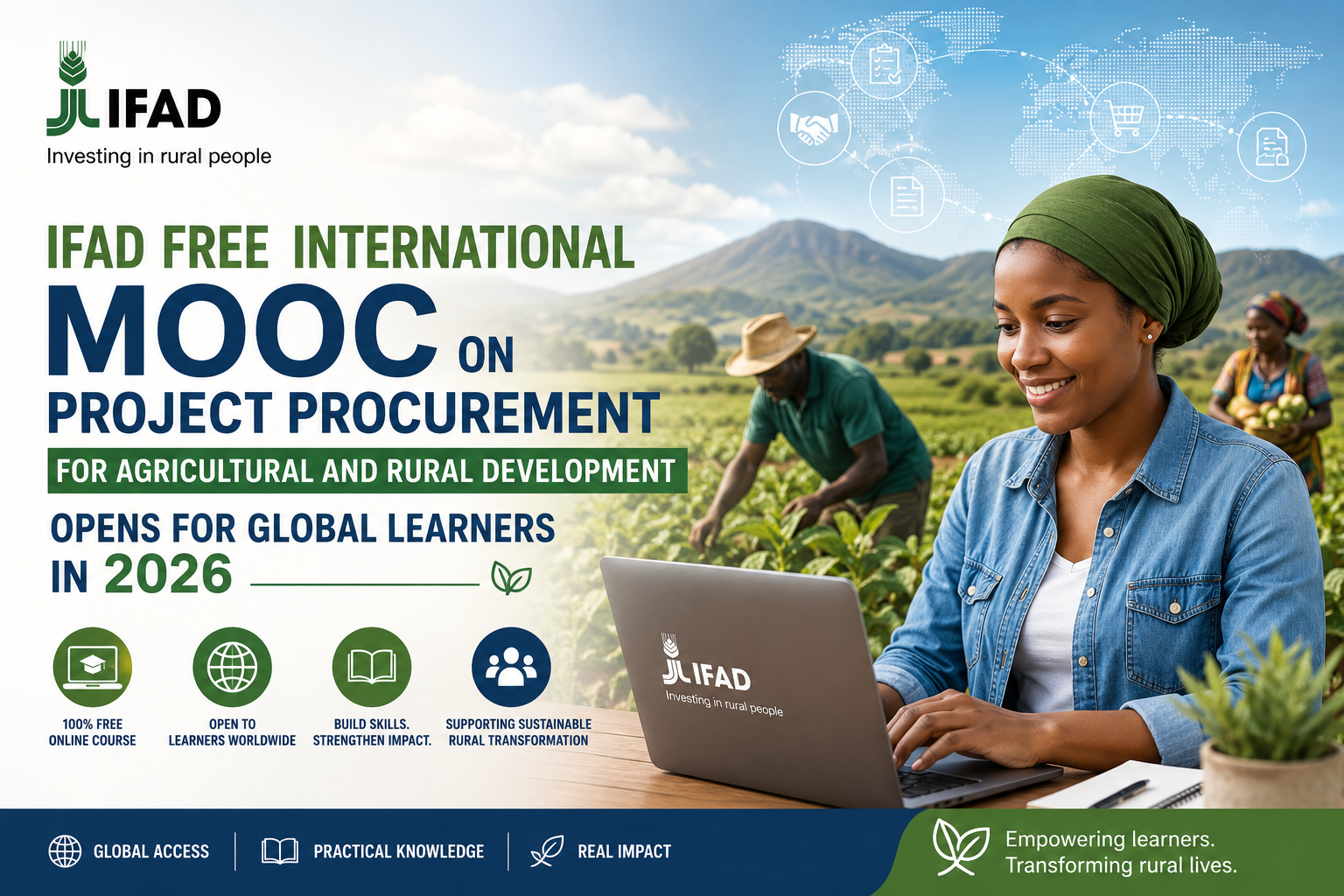
Apply for the IFAD Free International MOOC on Project Procurement for Agricultural and Rural Development Opens for Global Learners in 2026
Unknown
Apply for the University of Liverpool 2026 Fully Funded Graduate Teaching Fellowship in Sociology, Social Policy and Criminology
Unknown
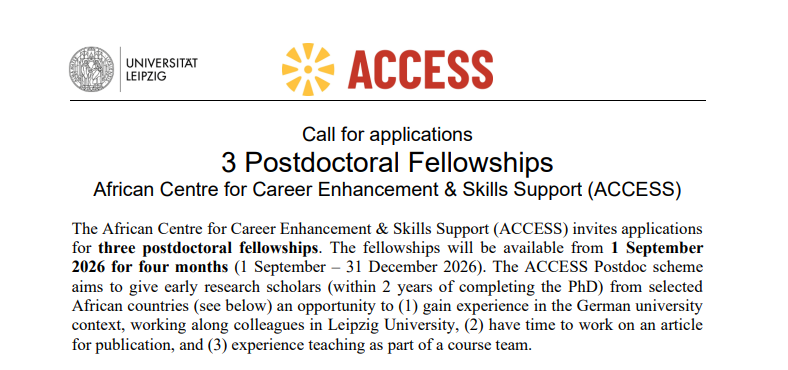
Call for Applications: African Centre for Career Enhancement & Skills Support (ACCESS) Announces 3 Fully Funded Postdoctoral Fellowships for Early-Career African Researchers
Career African Researchers
Democracy School Opens Applications for Young Political Aspirants Across Kenya: Apply by 26 June 2026
Unknown
CSAE Conference 2027 Opens Call for Papers on African Development and Economics Research: Fully Funded to St Catherine’s College in Oxford, United Kingdom
Unknown