








THRIVE Project 2026: Transforming Women’s Economic Empowerment, Climate Resilience, and Inclusive Livelihoods in Nigeria ·Unknown
Women continue to play a vital role in driving economic growth, strengthening families, and building resilient communities. However, many women—particularly those living in underserved communities and women with disabilities—still face significant barriers to accessing finance, markets, productive resources, and leadership opportunities. Addressing these challenges requires targeted interventions that promote gender equality, economic inclusion, and sustainable development.
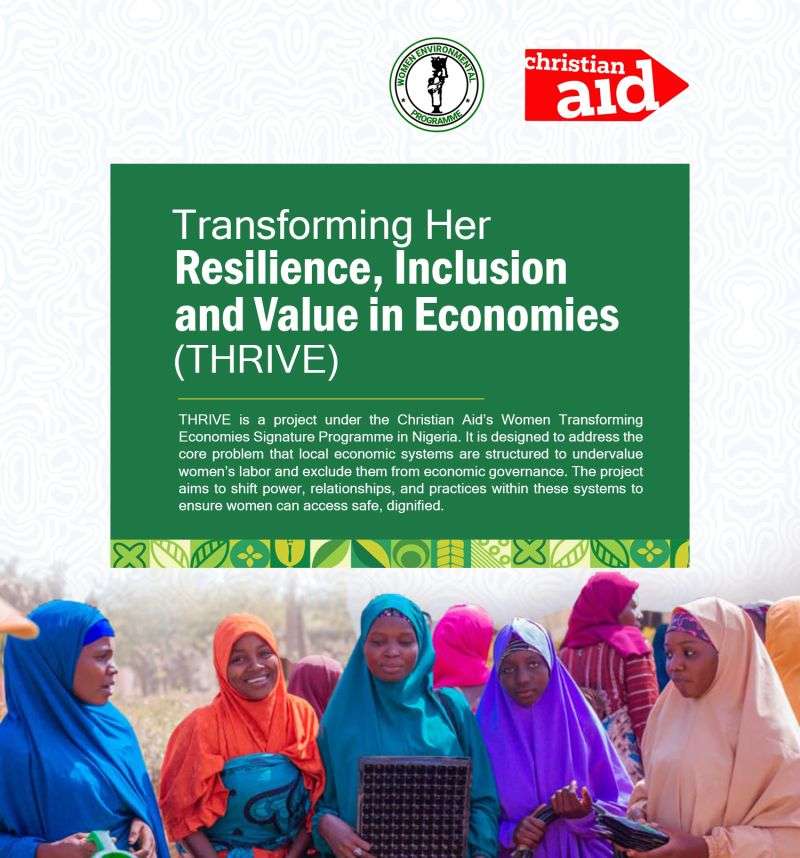
The Transforming Her Resilience, Inclusion and Value in Economies (THRIVE) project is one such initiative designed to empower women economically while transforming the systems that continue to limit their participation. Implemented by the Women Environmental Programme (WEP) as part of the Christian Aid Women Transforming Economies Signature Programme in Nigeria, THRIVE seeks to create lasting change by improving women’s access to dignified work, financial opportunities, entrepreneurship support, climate-resilient livelihoods, and decision-making processes.
This comprehensive 48-month initiative focuses on strengthening local economic systems so that women can thrive as entrepreneurs, farmers, business owners, and community leaders while promoting inclusive economic development.
About the THRIVE Project
The Transforming Her Resilience, Inclusion and Value in Economies (THRIVE) project is a four-year development initiative aimed at transforming local economies to become more inclusive, equitable, and sustainable for women.
The project recognizes that meaningful economic empowerment goes beyond providing financial support. It also requires changing the structures, relationships, policies, and social norms that prevent women from fully participating in economic activities.
Through collaboration with community stakeholders, financial institutions, women’s organizations, policymakers, and development partners, THRIVE seeks to build economic systems that value women’s contributions and ensure equal access to opportunities.
The project is funded by Christian Aid and implemented by the Women Environmental Programme (WEP) in Nigeria.
Project Duration
The THRIVE project will run for:
- 48 months (4 years)
This extended implementation period allows for sustainable interventions, long-term capacity building, and measurable improvements in women’s economic participation and resilience.
Geographic Focus
The THRIVE project is currently being implemented in:
- Nasarawa Eggon Local Government Area (LGA)
- Nasarawa State
- Nigeria
Communities participating in the project are carefully selected through detailed assessments that consider:
- Gender inclusion
- Disability inclusion
- Market accessibility
- Community needs
- Economic vulnerability
This approach ensures that resources reach women and communities with the greatest need.
The Challenges THRIVE Seeks to Address
Across many communities, women continue to face structural inequalities that prevent them from achieving economic independence.
THRIVE aims to address several key challenges, including:
Limited Access to Finance
Many women entrepreneurs and farmers struggle to obtain:
- Business financing
- Agricultural loans
- Investment capital
- Savings opportunities
- Financial services
Without adequate financial support, expanding businesses or increasing productivity becomes extremely difficult.
Limited Access to Productive Assets
Women often have fewer opportunities to access essential productive resources such as:
- Agricultural land
- Modern farming tools
- Equipment
- Technology
- Business infrastructure
These limitations reduce income generation and long-term economic growth.
Unsafe and Unequal Market Conditions
Many women operate within markets that present significant barriers, including:
- Gender discrimination
- Limited market access
- Low bargaining power
- Poor infrastructure
- Unfair trading conditions
THRIVE seeks to improve women’s ability to participate in profitable and inclusive markets.
Unpaid Care Responsibilities
Women frequently shoulder unpaid domestic and caregiving responsibilities that reduce the time available for:
- Business development
- Skills training
- Employment
- Leadership
- Economic participation
Reducing this burden is essential for achieving gender-equitable economies.
Limited Participation in Decision-Making
Women often have little influence over:
- Local economic policies
- Community planning
- Market governance
- Resource allocation
- Development priorities
THRIVE supports women’s participation in leadership and policy discussions that directly affect their livelihoods.
Project Goal
The primary goal of THRIVE is to build gender-just economies where women enjoy:
- Greater economic rights
- Increased income security
- Improved access to productive opportunities
- Equal participation in markets
- Stronger influence over economic policies
- Sustainable and resilient livelihoods
Ultimately, the project seeks to transform local economic systems into environments where women can succeed without discrimination or structural barriers.
THRIVE’s Four Strategic Pillars
The project is built around four integrated intervention areas that work together to strengthen women’s economic empowerment.
1. Evidence for Change
THRIVE generates research and evidence on barriers affecting women to promote informed policy development.
Activities include:
- Research on unpaid care work
- Studies on disability inclusion
- Gender analysis
- Policy advocacy
- Community consultations
- Evidence-based recommendations
The information gathered helps shape more inclusive economic policies and practices.
2. Enterprise Development and Skills Building
The project equips women with practical knowledge and business skills needed for long-term success.
Support includes:
- MSME coaching
- Entrepreneurship development
- Business management training
- Digital literacy training
- Enterprise growth support
- Skills development for young women
- Capacity building for women with disabilities
These interventions help women establish, strengthen, and expand their businesses.
3. Financial Inclusion and Market Access
Access to finance and profitable markets is critical for sustainable economic growth.
THRIVE strengthens women’s financial opportunities by:
- Supporting Village Savings and Loan Associations (VSLAs)
- Connecting women with financial institutions
- Improving access to capital
- Facilitating market linkages
- Expanding business networks
- Strengthening value chains
These efforts enable women to grow sustainable enterprises and increase household incomes.
4. Climate Resilience
Climate change continues to threaten livelihoods, particularly for women working in agriculture.
THRIVE promotes climate-smart economic activities including:
- Poultry production
- Apiculture (beekeeping)
- Dry-season gardening
- Climate-resilient farming
- Livelihood diversification
- Sustainable agricultural practices
These initiatives help women adapt to climate change while improving food security and income generation.
Who Will Benefit?
The THRIVE project directly supports 300 women from various economic backgrounds.
Primary beneficiaries include:
- Women-led Micro, Small and Medium Enterprises (MSMEs)
- Aspiring women entrepreneurs
- Women farmers
- Agro-processors
- Women with disabilities
The project prioritizes women facing economic exclusion and limited access to development opportunities.
Strategic Partnerships
Successful implementation of THRIVE relies on collaboration with multiple stakeholders.
Key partners include:
- Christian Aid
- Women Environmental Programme (WEP)
- Women’s Rights Organisations (WROs)
- Local policymakers
- Financial institutions
- Community leaders
- Development partners
These partnerships strengthen implementation while ensuring sustainable community ownership.
Expected Impact
Through its integrated approach, THRIVE aims to deliver long-term outcomes including:
- Increased economic independence for women
- Improved entrepreneurship capacity
- Greater financial inclusion
- Enhanced market participation
- Stronger climate resilience
- Improved policy influence
- Better livelihoods for women and families
- Inclusive local economic development
- Reduced gender inequality
- Sustainable community growth
Why the THRIVE Project Matters
Women’s economic empowerment is one of the strongest drivers of sustainable development. When women have equal access to financial resources, education, entrepreneurship opportunities, and leadership positions, communities become more resilient, economies become stronger, and poverty declines.
The THRIVE project addresses not only individual economic challenges but also the systemic barriers that prevent women from fully participating in economic life. By investing in women entrepreneurs, farmers, and women with disabilities, the project contributes to inclusive development while supporting broader goals of gender equality, climate resilience, and economic justice.
Its comprehensive model demonstrates how coordinated interventions across finance, skills development, policy, and climate adaptation can create lasting and transformative change.
Visit HERE to learn more about the THRIVE Project 2026
Conclusion
The Transforming Her Resilience, Inclusion and Value in Economies (THRIVE) project represents a significant investment in women’s economic empowerment in Nigeria. Through entrepreneurship support, financial inclusion, climate-resilient livelihoods, policy advocacy, and capacity building, the project seeks to create lasting opportunities for women while transforming the local economic systems that shape their lives.
By directly supporting women-led enterprises, aspiring entrepreneurs, farmers, and women with disabilities, THRIVE contributes to building more inclusive, resilient, and gender-just economies. As implementation continues over its 48-month duration, the project is expected to deliver meaningful improvements in livelihoods, economic participation, and sustainable community development across Nasarawa Eggon Local Government Area.
For more international fellowships, internships, scholarships, grants, conferences, jobs, and leadership opportunities, visit Opportunities for Youth (OFY) at www.opportunitiesforyouth.org.
THRIVE Project 2026: Transforming Women’s Economic Empowerment, Climate Resilience, and Inclusive Livelihoods in Nigeria
@Unknown
Location
USA / Global
Work Mode
opportunity
Posted
about 4 hours ago
Beware of scams! When applying for jobs, you should NEVER have to pay anything. Learn about job scams.
Get jobs in your inbox
Join over 10,000 subscribers receiving our weekly newsletter.
You might also like
Inter-Parliamentary Union (IPU) Announces Multiple Consultancy and Advisory Vacancies for 2026
Parliamentary Union (IPU) Announces Multiple Consultancy and Advisory Vacancies for 2026

Google News Initiative AI Skills Program 2.0 Opens Applications for Journalists in India
Unknown

Nigeria Inter-Bank Settlement System Plc (NIBSS) Graduate Trainee Programme 2026
Bank Settlement System Plc (NIBSS) Graduate Trainee Programme 2026

Google Data Analytics Apprenticeship 2027 in India Offers Career Pathway for Aspiring Data Professionals
Unknown

Innovate Africa Challenge 2026: Smart Africa and FAO Launch 3rd Edition for AI-Driven Climate-Smart Agriculture Startups in Ghana, Kenya, Malawi, Rwanda and Uganda
Driven Climate-Smart Agriculture Startups in Ghana, Kenya, Malawi, Rwanda and Uganda

MSF Belgium Recruitment in Nigeria
Unknown