
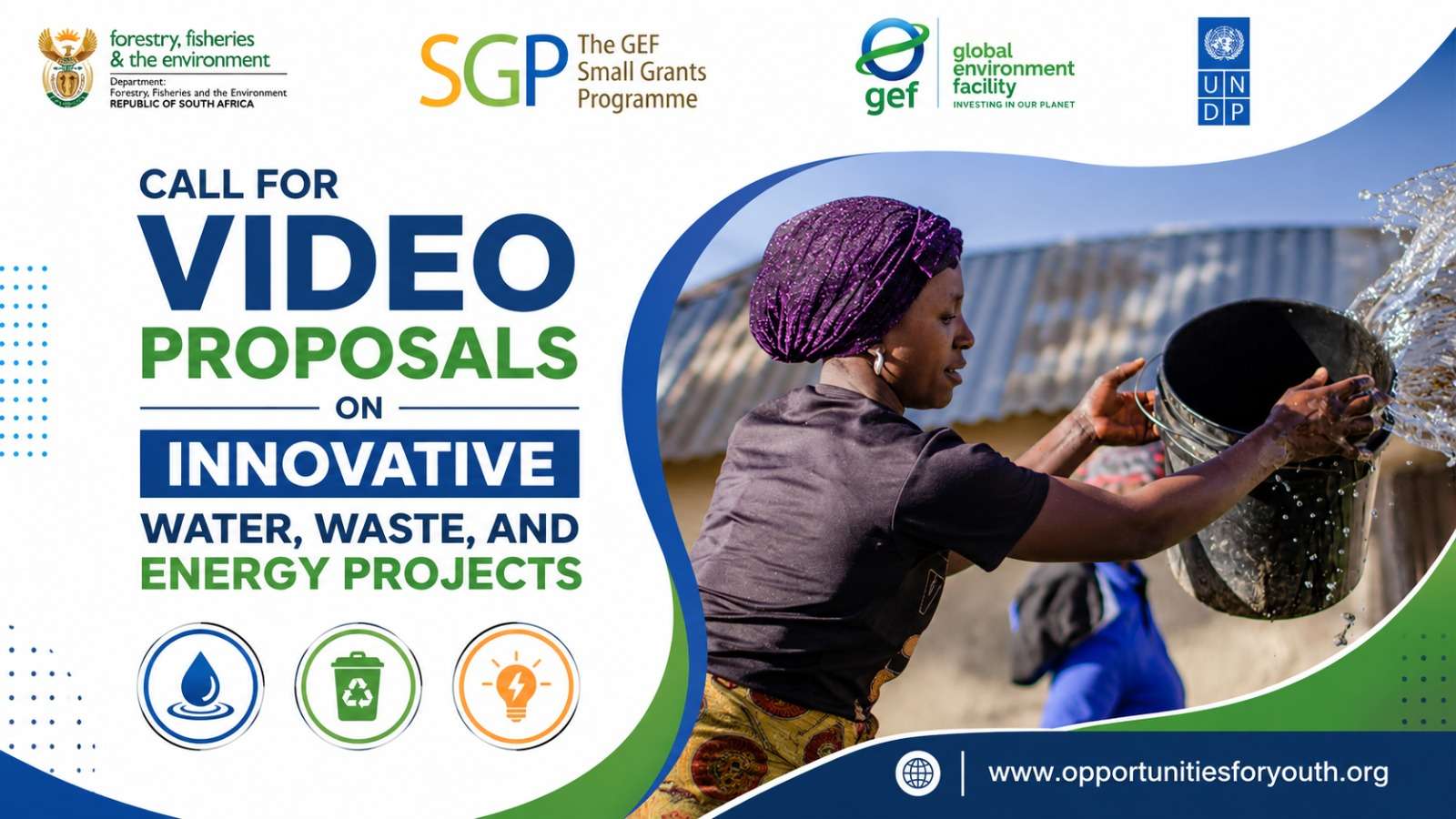
UNDP South Africa GEF Small Grants Programme 2026: Up to US$40,000 for Innovative Community-Led Water, Waste, and Energy Projects @Led Water, Waste, and Energy Projects
Community organizations across South Africa now have an exciting opportunity to secure funding for innovative environmental solutions through the Global Environment Facility (GEF) Small Grants Programme (SGP), implemented by the United Nations Development Programme (UNDP) South Africa.
The programme has officially launched a Call for Video Proposals seeking innovative, community-led initiatives that address some of South Africa’s most pressing environmental and socio-economic challenges. Organizations can receive grants ranging from US$25,000 to US$40,000 to implement impactful projects in the areas of water management, waste reduction, renewable energy, climate resilience, and sustainable livelihoods.
This funding opportunity is designed to support practical, scalable, and low-cost interventions that not only generate environmental benefits but also improve local livelihoods, strengthen climate resilience, create jobs, and promote inclusive green economic development.
About the GEF Small Grants Programme
The Global Environment Facility Small Grants Programme is a globally recognized initiative that supports community-driven environmental action. Implemented in South Africa through UNDP, the programme focuses on empowering local communities to develop and implement innovative solutions to environmental challenges while simultaneously improving socio-economic outcomes.
The current call aligns with the SGP Country Programme Strategy, which prioritizes community-led projects capable of delivering measurable environmental benefits alongside sustainable livelihood opportunities.
By supporting grassroots innovation, the programme seeks to strengthen local resilience and contribute to South Africa’s broader environmental sustainability goals.
Why This Call Is Important
South Africa faces numerous environmental and developmental challenges that require urgent and innovative responses.
Some of the key challenges include:
- Increasing energy shortages and energy insecurity
- Water scarcity and drought conditions
- Declining drinking water quality
- Rising waste generation
- Climate change vulnerability
- High unemployment levels
- Pressure on natural resources
- Environmental degradation
Communities are increasingly expected to develop locally appropriate and sustainable solutions that address these interconnected challenges.
This grant programme recognizes the important role that local organizations play in driving environmental innovation and sustainable development.
Objectives of the Call
The primary objective of this funding opportunity is to support projects that:
- Promote sustainable water management and conservation
- Improve access to renewable and sustainable energy
- Advance circular economy approaches
- Reduce waste generation
- Strengthen climate resilience
- Improve environmental stewardship
- Create jobs and sustainable livelihoods
- Empower women and young people
- Promote innovation and indigenous knowledge systems
- Deliver measurable environmental benefits
The programme particularly encourages initiatives that combine environmental sustainability with economic empowerment and social inclusion.
Priority Funding Areas
Applicants may submit projects focusing on one or multiple sectors. Integrated approaches that address several environmental challenges simultaneously are highly encouraged.
1. Energy Projects
The programme seeks innovative renewable energy and energy efficiency initiatives that can improve access to sustainable energy while reducing environmental impacts.
Eligible activities may include:
- Solar photovoltaic (PV) systems
- Community solar projects
- Renewable energy enterprises
- Clean cooking technologies
- Low-smoke cooking solutions
- Energy-efficient appliances
- Energy-saving technologies
- Sustainable building materials
- Small-scale renewable energy systems
- Community clean energy businesses
Projects should demonstrate how they improve energy access while supporting local development.
2. Water Projects
Water scarcity remains one of South Africa’s most significant challenges.
The programme welcomes innovative water management and conservation initiatives such as:
- Rainwater harvesting systems
- Greywater recycling and reuse
- Water-saving technologies
- Sustainable irrigation solutions
- Water monitoring systems for agriculture
- Water purification technologies
- Community water treatment systems
- Nature-based water conservation approaches
- Indigenous knowledge-based water management solutions
- Climate-smart agricultural water systems
Projects should contribute to improved water security, efficiency, and resilience.
3. Waste and Circular Economy Projects
The waste sector presents significant opportunities for innovation, job creation, and environmental protection.
The programme supports initiatives such as:
- Waste reduction programmes
- Recycling initiatives
- Reuse systems
- Circular economy enterprises
- Composting programmes
- Organic waste management
- Food waste reduction projects
- Plastic waste value-addition initiatives
- Rubber recycling innovations
- Biodegradable materials development
- Compostable product innovations
- Agricultural residue utilization
- Informal waste picker empowerment and inclusion
Projects should demonstrate environmental and socio-economic benefits.
Funding Available
Selected projects may receive funding ranging from:
- Minimum Grant: US$25,000
- Maximum Grant: US$40,000
The final grant amount awarded will be determined by the SGP National Steering Committee based on the project’s scope, impact potential, and feasibility.
Who Can Apply?
Applications are open to the following South African registered entities:
- Non-Governmental Organizations (NGOs)
- Community-Based Organizations (CBOs)
- Civil Society Organizations (CSOs)
- Cooperatives
- Community Associations
- Research Institutions
- Academic Institutions working with communities
Applicants must submit proof of registration as part of their application.
Who Is Not Eligible?
The following entities are not eligible:
- Private companies
- Individual applicants
- Government departments and entities
- Organizations with ongoing SGP-funded projects
- Organizations with outstanding SGP reporting obligations
- Projects consisting solely of one event or workshop
Only one application per organization will be accepted.
Video Proposal Requirements
Instead of traditional concept notes, applicants must submit a video proposal.
Video Specifications
- Maximum length: 5 minutes
- Format: MP4 file or accessible online link
- Smartphones may be used for recording
- Language: English or local languages
- English subtitles required for local language submissions
- Audio must be clear and understandable
Information to Include in the Video
Applicants should clearly address the following:
Organization Introduction
Provide information on:
- Organizational background
- Mission and vision
- Community engagement experience
- Relevant project history
Problem Statement
Explain:
- The environmental challenge being addressed
- The socio-economic issues affecting the community
- Why intervention is needed
Proposed Solution
Describe:
- The project concept
- Planned activities
- Project implementation location
- Technology being used
- How funding will be utilized
- Expected value addition
Applicants are encouraged to showcase the project site where possible.
Innovation and Expected Results
Explain:
- What makes the project unique
- Innovative elements of the solution
- Expected environmental outcomes
- Expected socio-economic benefits
Direct Beneficiaries
Identify:
- Target beneficiaries
- Community members involved
- Women beneficiaries
- Youth beneficiaries
Community Participation
Demonstrate:
- Community ownership
- Community involvement
- Stakeholder engagement mechanisms
- Local participation strategies
Sustainability
Explain:
- Long-term viability
- Future funding mechanisms
- Revenue generation opportunities
- Community management plans
Evaluation Criteria
Video proposals will be reviewed by the SGP National Steering Committee according to the following weighted criteria:
Relevance to SGP Objectives (20%)
Projects should align strongly with SGP priorities and environmental objectives.
Clarity and Coherence (15%)
The project concept should be clear, logical, and well-articulated.
Innovation and Feasibility (25%)
Projects should demonstrate innovative thinking while remaining practical and achievable.
Environmental and Socio-Economic Impact (25%)
Applicants should show how the project will generate measurable environmental and community benefits.
Sustainability and Replicability (15%)
Projects should demonstrate long-term sustainability and potential for replication in other communities.
Partnerships and Co-Financing
The programme strongly encourages partnerships with:
- Government agencies
- Private sector organizations
- Community associations
- Research institutions
- Development organizations
- Other relevant stakeholders
Co-financing arrangements are also encouraged as a way to strengthen project sustainability and impact.
Application Deadline
The deadline for submitting video proposals is:
25 June 2026 at 23:59 South African Standard Time (SAST).
Applicants are strongly advised not to wait until the final day to submit their applications.
What Happens After Submission?
Following the review process:
- Shortlisted organizations will be invited to submit full written project proposals.
- Successful projects will proceed through the formal grant assessment process.
- Organizations that do not receive feedback within three months after the deadline should consider their applications unsuccessful.
Contact Information
For questions regarding this call, applicants can contact:
Email: Gefsgp.sa@undp.org
Final Thoughts
The UNDP South Africa GEF Small Grants Programme presents an outstanding opportunity for community organizations to secure significant funding for innovative environmental projects. With grants of up to US$40,000 available, organizations working on renewable energy, sustainable water management, waste reduction, and circular economy initiatives can access the resources needed to scale impactful solutions.
Organizations with innovative ideas that can improve environmental sustainability, strengthen community resilience, create livelihoods, and support inclusive green development are strongly encouraged to apply before the deadline.
Learn More
- For more information about this opportunity, Click here
- More global Grants opportunities for youth, visit the OFY website: Click here
UNDP South Africa GEF Small Grants Programme 2026: Up to US$40,000 for Innovative Community-Led Water, Waste, and Energy Projects
@Led Water, Waste, and Energy Projects
Location
USA / Global
Work Mode
continent
Posted
about 6 hours ago
Beware of scams! When applying for jobs, you should NEVER have to pay anything. Learn about job scams.
Get jobs in your inbox
Join over 10,000 subscribers receiving our weekly newsletter.
You might also like

Request for Proposal for Links to Work Programme
UNICEF Kenya
Policy & Advocacy Fellow at Anthropocene Alliance (A2): Fully Remote U.S. Environmental Justice Job Paying $65,000 Per Year
Anthropocene Alliance (A2): Fully Remote U.S. Environmental Justice Job Paying $65,000 Per Year

Research Grant for Conflict Research
Foreign, Commonwealth & Development Office (FCDO)

External Expert for Review of Global Entrepreneurship Ecosystems Programming
International Labour Organization (ILO)

Unlock the Power of Intellectual Property: Your Complete Guide to 16 Free WIPO Online Courses (2026–2027)
2027)
Tech Team Internship
World Food Programme (WFP)