








Youth Ambassador at the 8th German-Baltic Conference 2026 in Estonia: Apply to Shape Europe’s Future Through Policy and Leadership ·the 8th German-Baltic Conference 2026 in Estonia: Apply to Shape Europe’s Future Through Policy and Leadership
Young people across Europe have an exciting opportunity to become part of one of the continent’s most influential youth policy initiatives. The German-Baltic Future Foundation (DBJW) has officially opened applications for the Youth Ambassador Programme at the 8th German-Baltic Conference, which will take place in Tallinn, Estonia, from 15–18 October 2026.
The conference offers motivated young Europeans an opportunity to engage in high-level policy discussions, collaborate with fellow changemakers, develop policy recommendations for European institutions, and potentially present their work directly to Members of the European Parliament (MEPs) in Brussels.
Unlike many youth conferences, participants will not simply attend presentations—they will actively contribute to developing practical policy proposals addressing some of Europe’s most pressing challenges.
Applications are open until 2 August 2026 (23:59 CEST).
About the German-Baltic Conference
The German-Baltic Conference is an international youth policy conference organized by the German-Baltic Future Foundation (DBJW). The conference brings together young people from across Europe who are interested in democracy, European cooperation, leadership, security, public policy, and civic participation.
The conference creates a platform where participants exchange ideas, debate current European challenges, and jointly create policy recommendations intended for European decision-makers.
Rather than functioning as a traditional academic event, the conference emphasizes collaboration, practical problem-solving, and youth participation in shaping Europe’s future.
Conference Theme 2026: Self-Determination
The central theme for the 2026 conference is:
Self-Determination
Participants will explore what self-determination means for Europe in today’s rapidly changing geopolitical landscape.
The discussions will revolve around three major policy clusters, each addressing a different dimension of Europe’s resilience, democracy, and future.
Conference Policy Clusters
Cluster A: Total Defence and Preparedness
Head of Cluster: Jonas Hoppe
This policy group examines how European societies can strengthen their resilience against crises through comprehensive preparedness.
Key discussion areas include:
- Total defence strategies
- Crisis preparedness
- Civilian and military cooperation
- National resilience
- Political leadership
- Public support for defence strategies
- European security cooperation
- NATO and EU coordination
- Local, national, and European crisis responses
Participants will examine how societies can preserve their ability to make independent decisions during emergencies while strengthening democratic resilience.
Cluster B: Countering Disinformation
Head of Cluster: Maisa Mattila
Disinformation has become one of the greatest threats facing democratic societies.
This cluster focuses on:
- Combating fake news
- Fighting online misinformation
- Addressing foreign information manipulation
- Protecting democratic institutions
- Building media literacy
- Strengthening digital resilience
- Supporting young people against manipulation
- Creating community-based responses to disinformation
Participants will work together to develop practical policy recommendations that empower young Europeans to recognize and counter misleading information.
Cluster C: EU Enlargement—Seizing the Momentum
Head of Cluster: Yulia Dziuba
European enlargement has regained strategic importance due to evolving geopolitical realities.
This cluster explores:
- EU enlargement policy
- European integration
- Candidate country accession
- Democratic governance
- Security cooperation
- Institutional readiness
- Sustainable expansion of the European Union
- Peacebuilding across Europe
Participants will discuss practical recommendations for improving the EU enlargement process while ensuring both current and future member states are prepared for a stronger European Union.
What Will Youth Ambassadors Do?
Selected Youth Ambassadors will become active contributors throughout the entire programme.
Participants will:
- Join one policy cluster
- Attend weekly online preparation sessions
- Learn policy paper writing
- Collaborate with experts and fellow participants
- Participate in policy discussions
- Draft policy recommendations
- Exchange ideas with young Europeans
- Develop leadership and teamwork skills
- Expand their understanding of European affairs
- Build an international professional network
Some participants may also be selected to present their completed policy papers before Members of the European Parliament in Brussels in December 2026.
Three Phases of the Programme
The programme is designed as a multi-stage learning experience.
Phase 1: Online Preparation
Beginning in September, participants will attend weekly online meetings where they will:
- Meet fellow Youth Ambassadors
- Learn about their policy topic
- Receive guidance from their Head of Cluster
- Develop research skills
- Learn policy drafting techniques
Phase 2: Conference in Tallinn
From 15–18 October 2026, participants will travel to Tallinn, Estonia.
During the conference they will:
- Participate in intensive workshops
- Discuss policy challenges
- Collaborate with international peers
- Begin drafting policy recommendations
- Engage in networking sessions
Phase 3: Policy Development
Following the conference, participants will continue collaborating online to:
- Finalize their policy paper
- Refine recommendations
- Prepare presentations
- Potentially participate in a parliamentary hearing in Brussels
Completed policy papers will be distributed to policymakers at:
- European Parliament
- European Union institutions
- National governments
- Local decision-makers
- DBJW partner networks
Benefits of Becoming a Youth Ambassador
Participants will receive numerous academic, professional, and networking benefits, including:
- Opportunity to influence European policy discussions
- Direct engagement with European policymakers
- International networking with young leaders
- Policy writing experience
- Leadership development
- Teamwork and collaboration experience
- Public policy exposure
- Practical understanding of European governance
- International conference participation
- Enhanced communication skills
- Exposure to European democratic processes
- Cross-cultural exchange
- Potential opportunity to present policy papers in Brussels
Financial Support
The conference organizers provide significant financial support for participants.
Support includes:
- Accommodation in shared double rooms
- Catering throughout the conference
- Partial travel reimbursement
Travel compensation includes:
Participants from:
- Estonia
- Latvia
- Lithuania
Receive up to €100 in travel reimbursement.
Participants from the rest of Europe
Receive up to €200 in travel reimbursement.
Participation Fee
Participants contribute a reduced participation fee based on their country of residence.
€50 participation fee
Applicable to applicants residing in:
- Estonia
- Latvia
- Lithuania
- Poland
- Czechia
- Slovakia
- Ukraine
- Slovenia
- Hungary
- Croatia
- Serbia
- Bosnia and Herzegovina
- Kosovo
- North Macedonia
- Albania
- Romania
- Bulgaria
- Moldova
- Georgia
- Armenia
- Türkiye
€100 participation fee
Applicable to participants living in all other European countries.
Applicants experiencing financial hardship are encouraged to contact the organizers, as financial barriers should not prevent participation.
Who Can Apply?
Applicants must meet the following eligibility requirements:
- Be between 16 and 30 years old
- Live in any European country
- Be fluent in English
- Be interested in European affairs, leadership, democracy, or policy
- Be willing to participate in online preparation sessions
- Be available to attend the conference in Tallinn
- Be interested in collaborative policy development
Importantly, applicants do not need an academic background.
The organizers explicitly encourage applications from:
- Young people with non-academic backgrounds
- Individuals with limited prior knowledge of European politics
- First-time participants
- Young people from diverse educational and professional experiences
Application Process
Interested applicants should complete the official online application form before the deadline.
During the application process, candidates are encouraged to:
- Share original ideas
- Demonstrate creativity
- Reflect on personal experiences
- Avoid relying on AI-generated responses
- Present authentic perspectives
Originality and independent thinking are strongly valued during the selection process.
Important Dates
- Applications Open: Currently Open
- Application Deadline: 2 August 2026 (23:59 CEST)
- Online Preparation Begins: September 2026
- Conference Dates: 15–18 October 2026
- Policy Development Continues: After the conference
- Potential Parliamentary Hearing in Brussels: December 2026
Why You Should Apply
The Youth Ambassador Programme is far more than a conference. It offers participants the opportunity to become active contributors to discussions shaping Europe’s future. By working alongside peers from across the continent, participants will develop practical policy recommendations addressing security, democracy, information integrity, and European cooperation.
Whether your passion lies in public policy, international relations, civic engagement, journalism, security studies, or leadership, this programme provides valuable experience that can strengthen your academic, professional, and personal development while allowing your voice to be heard by European decision-makers.
Visit HERE for more information about the Youth Ambassador at the 8th German-Baltic Conference 2026 in Estonia.
How to Apply
Interested applicants should complete the official online application before 2 August 2026 (23:59 CEST).
Conclusion
The Youth Ambassador Programme at the 8th German-Baltic Conference 2026 is an outstanding opportunity for young people across Europe to develop leadership skills, engage with pressing European policy issues, and contribute meaningful recommendations to influential policymakers. Through a combination of online collaboration, an international conference in Estonia, and the possibility of presenting policy papers in Brussels, participants will gain practical experience, expand their international networks, and play an active role in shaping Europe’s future. If you are passionate about democracy, cooperation, security, or European integration, this programme offers a unique platform to transform your ideas into real policy impact.
For more global Conference opportunities, visit OFY HERE
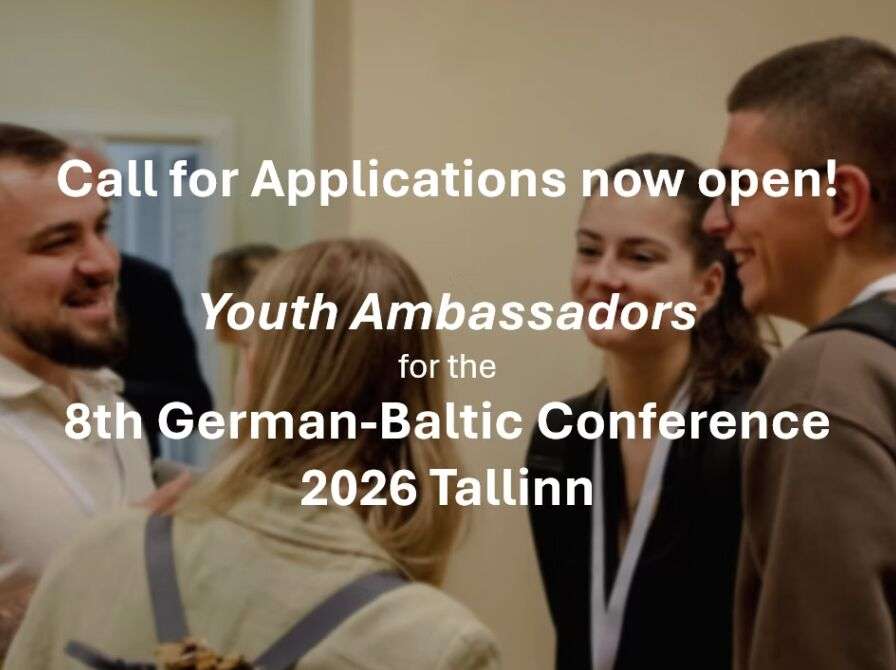
Youth Ambassador at the 8th German-Baltic Conference 2026 in Estonia: Apply to Shape Europe’s Future Through Policy and Leadership
@the 8th German-Baltic Conference 2026 in Estonia: Apply to Shape Europe’s Future Through Policy and Leadership
Location
USA / Global
Work Mode
conference
Posted
about 3 hours ago
Beware of scams! When applying for jobs, you should NEVER have to pay anything. Learn about job scams.
Get jobs in your inbox
Join over 10,000 subscribers receiving our weekly newsletter.
You might also like
Evidence for Climate Action Opens Its Call for COP31: Calling All Researchers to Get Involved
Unknown
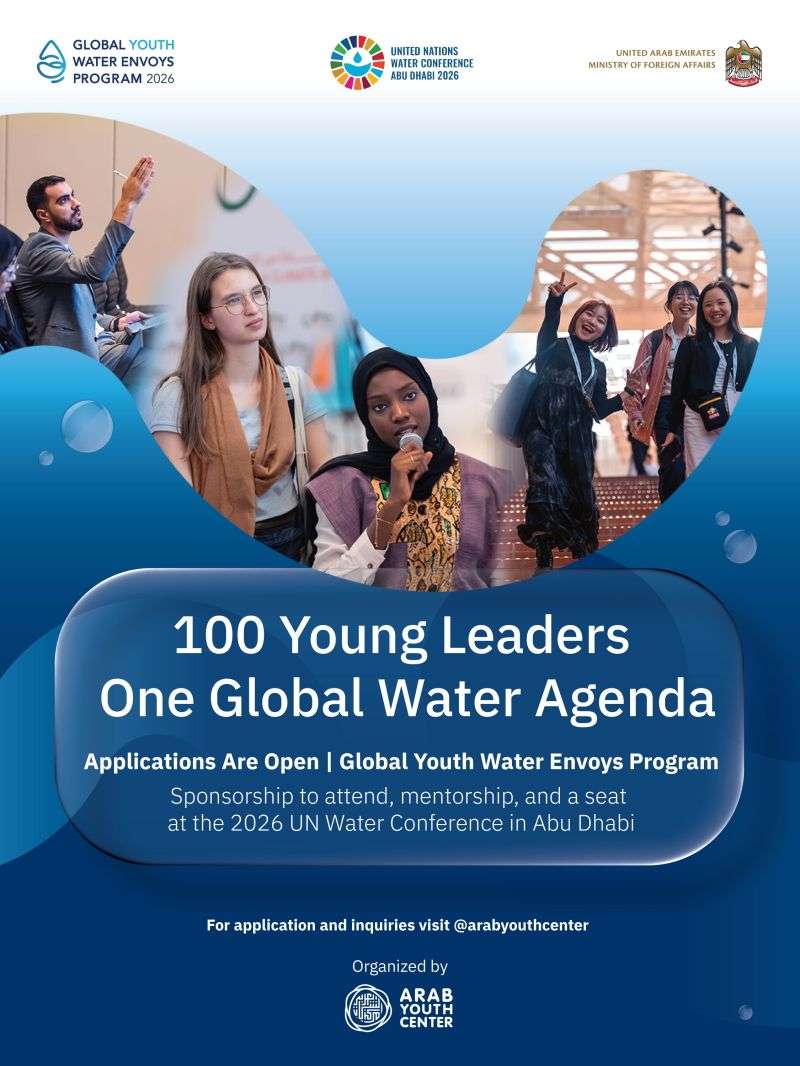
Global Youth Water Envoys Program 2026: Fully Funded Opportunity for 100 Young Leaders to Participate in the UN Water Conference in Abu Dhabi
Unknown
Regional Dialogue Academy “Dialogue for Resilience” 2026 in Lithuania: Fully Funded International Learning Programme for Educators, Youth Workers, Journalists, Civic Leaders and Community Professionals
Unknown
Call for Session Proposals for the African Union Innovation Festival (AU InnoFest’26): Help Shape Africa’s Digital Future
Unknown
COP31 Türkiye 2026: Everything You Need to Know About the Global Climate Conference in Antalya
Unknown

Apply to the African Union Innovation Festival – AU InnoFest’26
AU InnoFest’26