
FAJI and Scholars for Social Justice Launch $75,000 Research Collaborative Program for 2026–2027 @2027
Apply for the FAJI and Scholars for Social Justice $75,000 Research Collaborative Program for 2026–2027
Scholars for Social Justice (SSJ) and the Freedom and Justice Institute (FAJI) have announced the launch of the 2026–2027 FAJI Research Collaborative Program, inviting teams of scholars to submit proposals addressing some of the most pressing issues in higher education, governance, and social justice.
The initiative will support collaborative research projects focused on strengthening movements for racial, economic, gender, and social justice through rigorous scholarship and strategic analysis. Organizers are seeking proposals from small teams of two to three researchers with demonstrated experience in transformative academic and community-based work.
Applications are due by June 22, 2026, at 11:59 p.m. PST.
Research Program Designed to Advance Social Justice Scholarship
The FAJI Research Collaborative aims to foster research that contributes directly to movement-building efforts and policy discussions. The program encourages scholars to develop innovative frameworks and actionable insights that address structural inequalities and political challenges.
Selected teams will receive funding and institutional support to conduct research that can influence public discourse, strengthen grassroots organizing, and inform future social justice initiatives.
Research Collaborative Program Insights: Two Research Themes Open for Applications
For the 2026–2027 cycle, proposals are being accepted under two major research tracks.
Transforming the Jim Crow University
The first collaborative focuses on reimagining higher education systems and exploring alternatives to traditional university structures.
Building on SSJ’s Abolition, Reparations, Investment, and Safety Framework, the initiative seeks research that examines how universities reproduce social inequalities and how they can be transformed into more democratic, community-centered institutions.
Researchers are encouraged to investigate topics including:
- Cooperative and alternative governance models in higher education
- Institutional mechanisms that reinforce racial and economic inequality
- Historical and contemporary efforts to democratize universities
- Alternative funding and policy frameworks for higher education
- Strategies for developing accessible and community-owned educational institutions
According to program organizers, the long-term vision is to support the creation of universities grounded in anti-racist, anti-colonial, feminist, and democratic values.
Research Collaborative Program Building Radical Municipalism
The second collaborative will support two research teams examining the opportunities and challenges associated with radical municipal governance.
The project focuses on how social movements transition from advocacy and organizing into governing power at the city level. Researchers will study prominent municipalist experiments and political movements from around the world.
Examples highlighted by the program include:
- Barcelona en Comú and the leadership of Ada Colau
- Porto Alegre under Brazil’s Workers’ Party administration
- Cooperation Jackson in Mississippi
- Political developments in New York City involving Zohran Mamdani
- Governance initiatives led by Brandon Johnson in Chicago
The research track seeks to better understand how municipal governments can advance social justice, strengthen democratic participation, resist authoritarianism, and create conditions for long-term political transformation.
Key Questions for Municipal Governance Research
Applicants focusing on radical municipalism are invited to address questions such as:
- How universities and municipal governments should interact and collaborate
- The role of sanctuary cities and public safety reforms in future governance models
- Challenges faced by social movements when transitioning into government
- Lessons from successful and unsuccessful municipalist experiments
- Strategies for building durable political power beyond election cycles
- Pathways toward municipal socialism and post-capitalist urban development
Research Collaborative Program Funding and Proposal Requirements
Participating teams will be expected to submit a budget proposal based on a funding allocation of $75,000.
Proposal submissions must include:
Project Proposal
- Maximum five pages, double-spaced
- Must address one or more questions within the selected theme
Team Philosophy and Impact Statement
- Maximum three pages
- Outline project goals and expected outcomes
- Explain how impact will be measured
Project Team Statement
- Maximum two pages
- Background and expertise of team members
- History of collaboration and relevant experience
Project Timeline
- One-page implementation schedule
- Key milestones and deliverables
Budget Statement
- One-page budget plan
- Breakdown of stipends, research expenses, and program costs
Research Collaborative Program Deadline for Applications
Research teams interested in participating in the FAJI Research Collaborative Program must submit their proposals by June 22, 2026.
The initiative represents a significant opportunity for scholars committed to producing impactful research that advances social justice movements, informs public policy, and contributes to transformative change in higher education, governance, and community development.
VISIT OFFICIAL WEBSITE HERE TO APPLY
For more opportunities such as these please follow us on Facebook, Instagram, Twitter, LinkedIn and WPChannel
Disclaimer: Global South Opportunities (GSO) is not the organization offering this opportunity. For any inquiries, please contact the official organization directly. Please do not send your applications & CVs to GSO, as we are unable to process them. Due to the high volume of emails, we receive daily, we may not be able to respond to all inquiries. Thank you for your understanding
JOIN GSO WHATSAPP CHANNEL NOW
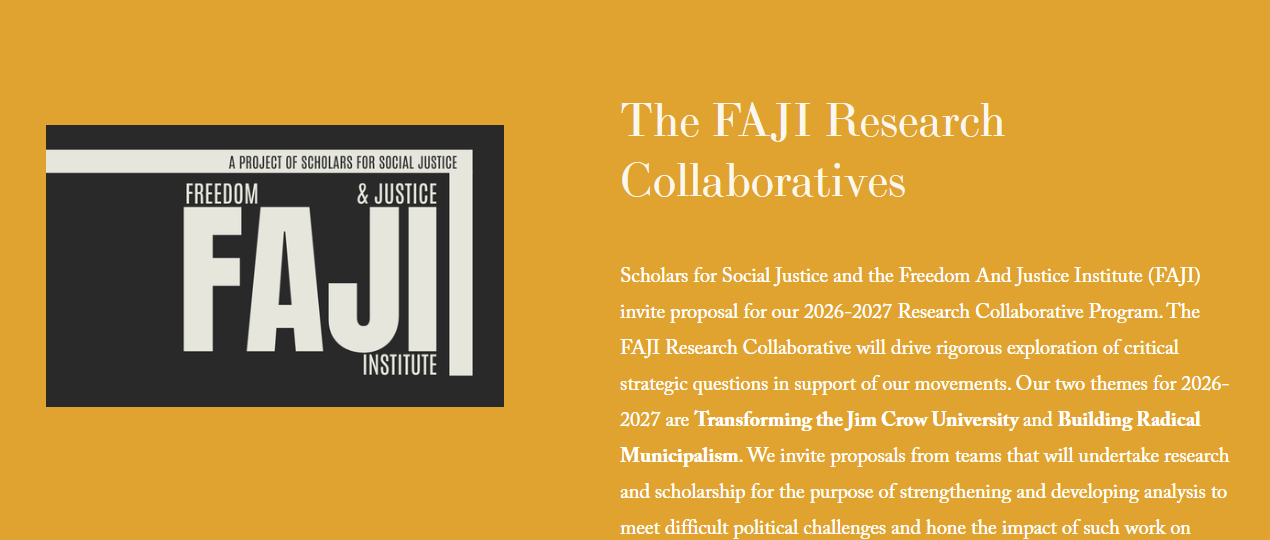
FAJI and Scholars for Social Justice Launch $75,000 Research Collaborative Program for 2026–2027
@2027
Location
USA / Global
Work Mode
funding
Posted
about 4 hours ago
Beware of scams! When applying for jobs, you should NEVER have to pay anything. Learn about job scams.
Get jobs in your inbox
Join over 10,000 subscribers receiving our weekly newsletter.
You might also like

Exciting Opportunity:Paid Communications Intern at The Earth Foundation | Remote, 6-Month Contract | Apply Now
The Earth Foundation | Remote, 6-Month Contract | Apply Now
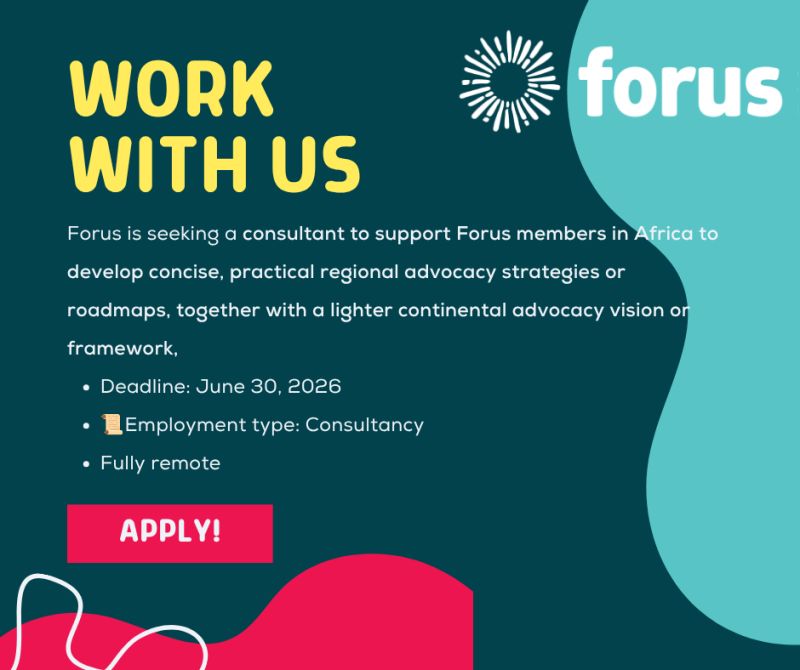
Forus Launches €20,000 Remote Consultancy Opportunity to Develop Africa Regional Advocacy Strategy and Power Mapping Framework
Unknown
Applications Open for Gender Just Climate Solutions Awards 2026
Unknown

adidas Foundation Launches Play for the Lead Funding Opportunity for Youth Sport Organizations in Europe
Unknown

UNDP Remote Internship 2026: Program Management & Operations Opportunity in Food Systems – Apply Now
Apply Now
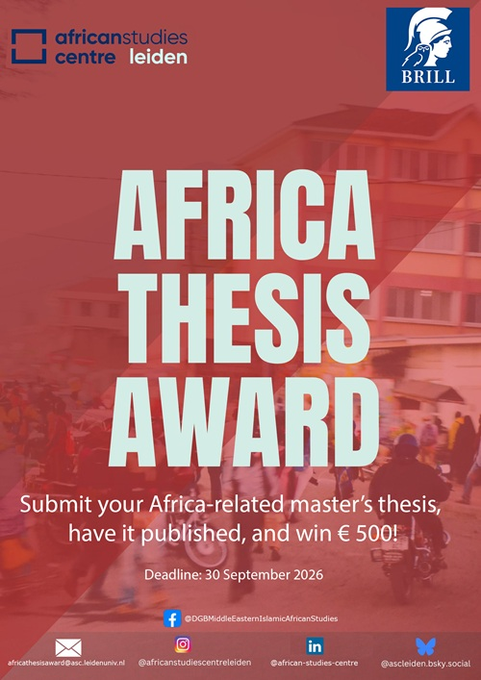
Applications Open for the 2026 Africa Thesis Award: Win €500 and Get Published
Unknown