








Lexicon Fellowship ·Code for Africa
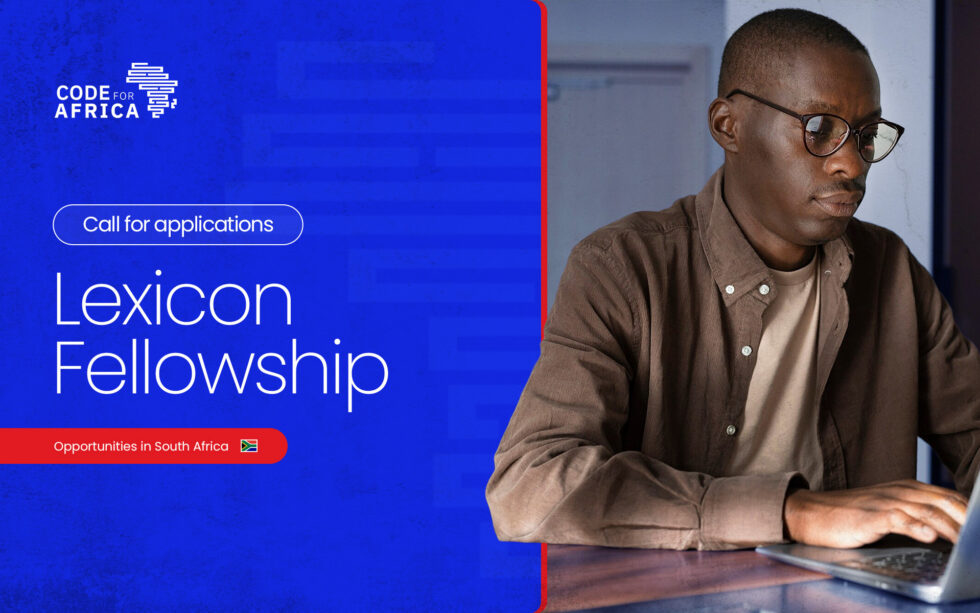
Code for Africa (CfA) has announced applications for its Lexicon Fellowship, inviting computational linguists and Natural Language Processing (NLP) practitioners based in South Africa to contribute to innovative research tackling hate speech and harmful online narratives. The three-month, part-time fellowship aims to strengthen information integrity by developing structured hate speech lexicons that support AI-powered human rights monitoring.
Applications are open until July 13, 2026, with successful fellows receiving a monthly stipend, mentorship, and the opportunity to work alongside leading researchers and human rights organisations.
Fellowship Supports AI Solutions for Human Rights Monitoring
The Lexicon Fellowship forms part of a collaborative initiative between Code for Africa and the Norwegian Ministry of Foreign Affairs to improve the detection and monitoring of online hate speech across South Africa.
The programme seeks experts capable of identifying and analysing weaponised language, including:
- Hate speech.
- Incitement to violence.
- Harmful online narratives.
- Slurs and discriminatory language.
- Coded expressions and emerging hate terminology.
- Slogans and hashtags linked to coordinated online campaigns.
The initiative focuses on several high-priority themes, including:
- Municipal elections.
- Xenophobia.
- LGBTQ+ communities.
- Gender-based hate and online violence.
- Protection of minority groups.
By creating structured, machine-readable lexicons, fellows will contribute to tools that help monitor online spaces while respecting international human rights principles.
Building NLP Models for Low-Resource African Languages
A major objective of the fellowship is strengthening Natural Language Processing capabilities for African languages, particularly those with limited digital language resources.
Selected fellows will work directly with:
- Tokenisation techniques.
- Word embeddings.
- Classification pipelines.
- Machine learning workflows.
- Transformer-based language models.
- Low-resource language processing.
The fellowship also encourages participants to develop models capable of identifying emerging hate speech that may not appear in existing datasets. Rather than relying solely on predefined vocabularies, fellows will design flexible classification systems that continuously detect new slurs, coded language, and evolving harmful narratives.
Responsibilities of Selected Fellows
Participants will play a key role in developing high-quality hate speech lexicons for research and monitoring purposes.
Key responsibilities include:
- Collecting and validating words, phrases, slogans, slang, and coded language associated with hate speech.
- Categorising harmful expressions using internationally recognised human rights frameworks.
- Ensuring datasets remain machine-readable and suitable for AI applications.
- Supporting the development of NLP models that detect harmful online content.
- Contributing to analytical tools such as:
- Polarisation scores.
- Disinformation vulnerability indices.
- Early warning indicators for online violence.
The fellowship incorporates ethical safeguards to ensure language analysis accounts for cultural context, bias, and freedom of expression while complying with international standards, including the Rabat Plan of Action and the International Covenant on Civil and Political Rights (ICCPR).
Diverse Data Sources Will Inform Research
To create comprehensive hate speech lexicons, fellows will analyse information gathered from multiple online and offline sources.
These include:
- Facebook.
- TikTok.
- X.
- YouTube.
- Telegram.
- WhatsApp.
- Historical incident archives.
- Human rights reports.
- Election observation reports.
- Fact-checked news articles.
- Community reporting channels.
- Public speeches.
- Focus group discussions.
- Key informant interviews.
This broad evidence base will enable the development of contextual AI systems capable of recognising harmful narratives before they escalate into coordinated violence or discrimination.
Fellowship Benefits
Successful applicants will receive a range of professional and financial benefits throughout the fellowship.
These include:
- Competitive monthly stipend.
- Three-month part-time fellowship.
- Technical mentorship from CfA’s iLab and TechLab teams.
- Access to regional innovation and research networks, including Omdena local chapters.
- Collaboration with human rights defender organisations.
- Opportunities to contribute to real-world information integrity initiatives across Africa.
The programme also provides technical support for testing, refining, deploying, and scaling NLP models and hate speech detection systems.
Eligibility Requirements
Code for Africa is seeking highly skilled NLP practitioners with strong technical and research backgrounds.
Applicants should possess:
- Advanced Python programming skills.
- Strong knowledge of Google Workspace.
- At least two years of experience in data science, preferably specialising in NLP.
- Experience working with machine learning and NLP pipelines.
- Familiarity with transformer models and the Hugging Face ecosystem.
- Experience fine-tuning Large Language Models using PEFT, LoRA, or QLoRA.
- Knowledge of encoder models such as Afro-XLMR or AfriBERTa.
- Experience adapting tokenisation systems for morphologically rich African languages.
- Familiarity with collecting and analysing social media datasets.
Additional advantages include experience working with low-resource South African languages and knowledge of regional political, cultural, and conflict dynamics.
Applicants must also demonstrate:
- Fluency in English.
- Proficiency in at least one South African language, including Afrikaans, isiZulu, isiXhosa, Sepedi, Sesotho, or Setswana.
- A commitment to advancing African language technologies.
- A portfolio showcasing previous NLP or machine learning projects.
- Strong communication and collaboration skills.
Application Deadline
Interested candidates must submit their applications by July 13, 2026.
Applicants selected for interviews will be contacted directly by Code for Africa following the review process.
Advancing African Language Technology Through Civic Innovation
As Africa’s largest civic technology and open data incubator, Code for Africa continues to invest in innovative technologies that strengthen digital democracy, combat misinformation, and improve public accountability.
Through the Lexicon Fellowship, the organisation aims to advance AI applications for African languages while supporting human rights monitoring, protecting vulnerable communities, and strengthening information resilience across South Africa.
VISIT OFFICIAL WEBSITE TO APPLY
For more opportunities such as these please follow us on Facebook, Instagram, Twitter, LinkedIn and WPChannel
Disclaimer: Global South Opportunities (GSO) is not the organization offering this opportunity. For any inquiries, please contact the official organization directly. Please do not send your applications & CVs to GSO, as we are unable to process them. Due to the high volume of emails, we receive daily, we may not be able to respond to all inquiries. Thank you for your understanding.
Lexicon Fellowship
@Code for Africa
Location
USA / Global
Work Mode
fellowship
Posted
about 6 hours ago
Beware of scams! When applying for jobs, you should NEVER have to pay anything. Learn about job scams.
Get jobs in your inbox
Join over 10,000 subscribers receiving our weekly newsletter.
You might also like

UNICRI Fellowship in CBRN and Nuclear Security
UNICRI
Indiana University Announces Postdoctoral Fellowship Opportunity in Community-Engaged Implementation Research – Apply By 28 July 2026
Indiana University
ARIN Launches BIOCAM4 Mini-Grant Fellowship for Early-Career African Climate and Biodiversity Researchers
Africa Research and Impact Network (ARIN)

Youth Impact Bootcamp LATAM 2026
International Trade Centre

Smitu Kothari Fellowship 2026
Centre for Financial Accountability
UNDP Launches African Youth Co-Creators Council to Shape the Future of Youth Development Across Africa – Apply by 31 July 2026
United Nations Development Programme